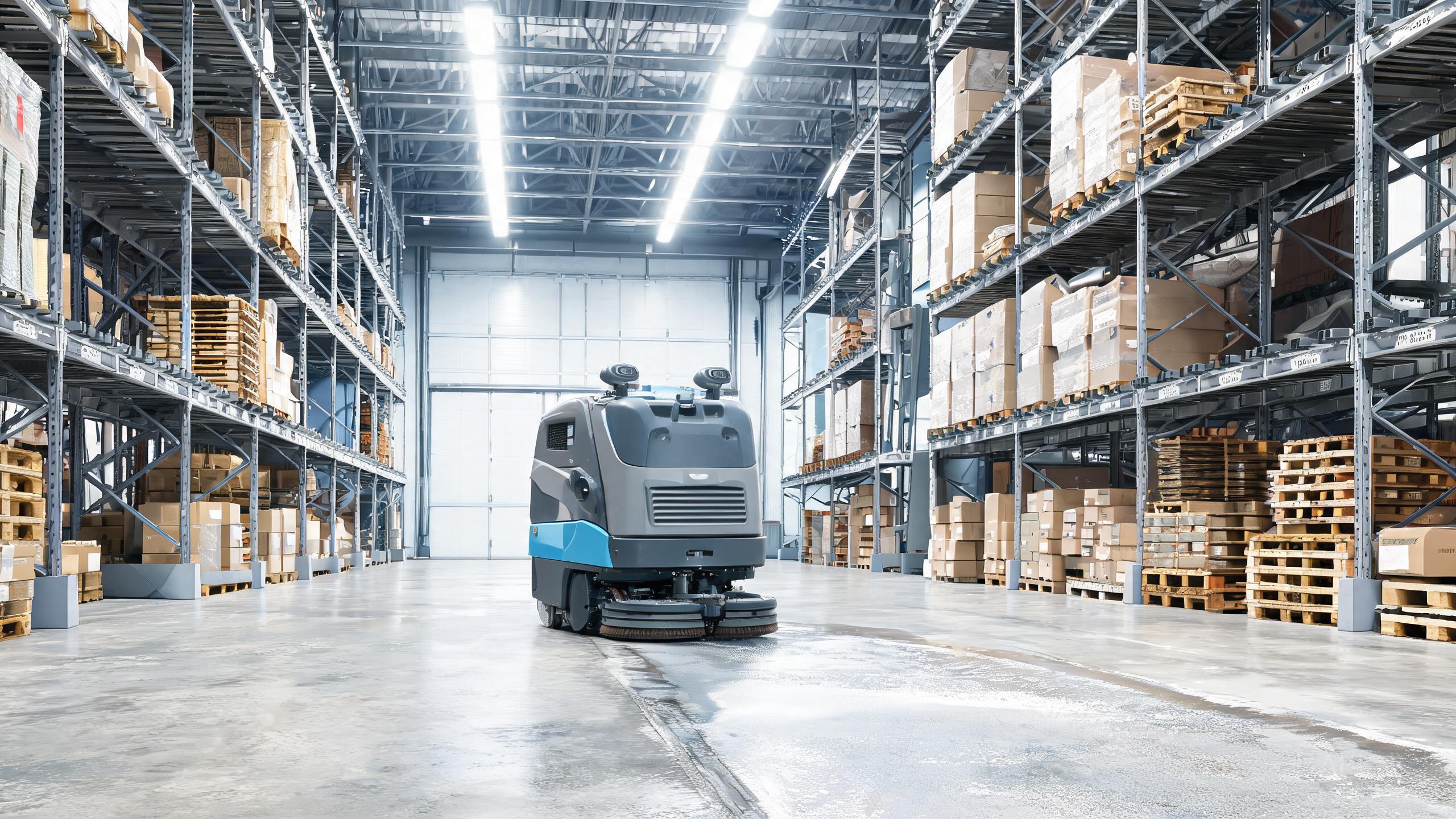
If you have already read our Tennant X6 ROVR review and ROI analysis, you know this machine is built for one job: covering enormous warehouse floors on a single shift. This guide takes a different angle. Instead of re-reviewing performance, we walk through the actual setup and installation process, from delivery to the first autonomous cleaning run. Because the X6 ROVR is a high-capacity autonomous scrubber with a large footprint, proper site preparation matters more than with smaller robotic floor scrubber brands. Follow these steps to get it deployed correctly the first time.
Step 1: Prepare the Site Before the Robot Arrives
The X6 ROVR is designed for warehouse and logistics environments, and its high-capacity design means it needs room to maneuver. Before delivery, clear main aisles of pallets, shrink wrap, and debris. Map out the zones you want cleaned first, ideally large open runs rather than cluttered pick faces. Confirm charging location: the dock needs a stable power source and enough clearance for the machine's footprint. Because this is an autonomous scrubber vs manual cleaning decision at scale, treat site prep as a mini project, not an afterthought. Label any permanent obstacles, floor seams, or ramps so your mapping run captures them accurately.
Step 2: Unbox, Assemble, and Power Up
Position the crate near the intended operating zone to avoid moving the machine long distances before setup. Remove packaging and inspect for transit damage, especially the squeegee, brushes, and sensor housings. Attach any components shipped separately, such as the squeegee assembly, and fill the solution tank per the manual. Charge the battery fully before the first mapping run; a partial charge can interrupt a long warehouse scan. Once powered on, confirm the display boots and the emergency stop releases cleanly. This is also the moment to register the unit for Tennant service support, which is one of the strongest arguments for choosing this brand over cheaper robotic floor scrubber brands.
Step 3: Map the Warehouse and Set Cleaning Routes
This is the SLAM floor scrubber step that determines everything downstream. Drive or guide the X6 ROVR through the full area you want covered, including aisles, cross-docks, and staging zones. Keep the mapping pass slow and steady so the system captures walls, racks, and fixed equipment. After the map is built, define cleaning routes by zone and priority: high-traffic aisles first, then back-of-house areas. Set no-go zones around pallet stacks that change position, and set speed limits near pedestrian crossings. Because the X6 ROVR can cover up to 75,000 square feet per shift, your route design directly affects warehouse cleaning robot ROI. A poorly split route wastes the machine's throughput advantage.
Step 4: First Run, Docking, and Handover to Your Team
Run the first autonomous cycle with a supervisor present. Watch how the machine handles turns, dock edges, and any floor transitions. Verify that the scrubber leaves a consistent dry path and that the squeegee tracks properly. Test the return-to-dock sequence at least twice, since charging behavior affects uptime across shifts. Once the first run is clean, document the route names and schedules, then train your crew on daily checks: tank levels, brush condition, and sensor cleaning. For a commercial cleaning robot review, this handover step is often skipped, yet it decides whether the machine delivers its rated coverage every shift. Keep a simple log for the first two weeks to catch mapping drift early.
Our verdict
The Tennant X6 ROVR is not a plug-and-play gadget; it is a high-capacity autonomous floor scrubber that rewards careful installation. Site prep, a clean mapping pass, and disciplined route design are what turn its 75,000-square-foot single-shift rating into real savings. If you treat setup as the first phase of your commercial cleaning robot review rather than a formality, you will see the throughput and labor replacement that justify its steep price. For very large warehouses, that discipline is exactly what makes it the best autonomous floor scrubber 2026 candidate on the market.