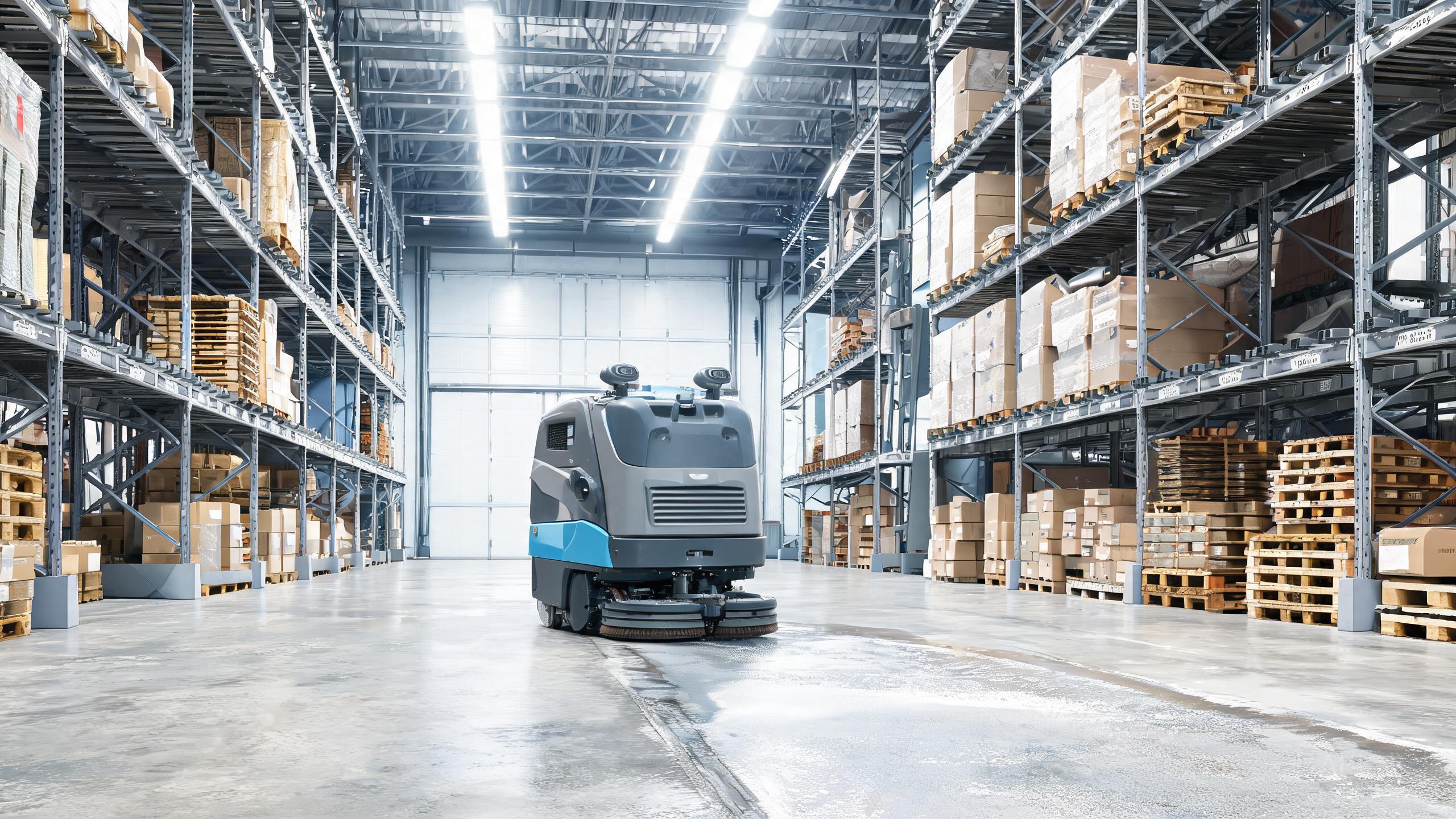
Most commercial cleaning robot reviews focus on a single task: scrubbing. The Pudu CC1 Pro takes a different path. Instead of asking facility managers to buy four separate machines, it bundles sweeping, scrubbing, dusting and disinfecting into one chassis, then adds AI targeted spot cleaning and VSLAM+ navigation. In this 2026 news update, we look at what that 4-in-1 approach actually means for daily operations, budgets and the wider robotic floor scrubber brands landscape.
Why 4-in-1 Matters More Than Raw Speed
The CC1 Pro covers 1,500–3,000 m²/h, which is respectable but not record-breaking. The real story is the cleaning modes: sweep, scrub, dust and disinfect. A traditional cleaning team often needs a sweeper for debris, a scrubber for floors, a dust mop for fine particles and a sprayer for disinfection. Each pass costs labor hours. The CC1 Pro consolidates those duties, so a single robot deployment can cover a full cleaning cycle. For buyers comparing an autonomous scrubber vs manual cleaning, the value is not just speed — it is fewer handoffs, fewer machines and fewer shifts to schedule.
VSLAM+ Navigation and AI Spot Cleaning in Real Facilities
VSLAM+ navigation lets the CC1 Pro map and localize without relying solely on expensive LiDAR arrays, which helps keep the SLAM floor scrubber cost down compared with some rivals. In practice, that means faster setup in warehouses and retail floors where reflective shelving or changing layouts can confuse lesser systems. AI targeted spot cleaning adds another layer: instead of re-scrubbing an entire aisle, the robot can focus on detected stains. Our review notes that setup still requires tuning, and the component feel is more commodity than premium. But for teams that want a warehouse cleaning robot ROI story built on multi-tasking rather than single-task perfection, those trade-offs are worth understanding.
Cost Logic: Where the CC1 Pro Fits in 2026 Budgets
The CC1 Pro is positioned as a multi-function value pick, not a flagship. That framing matters for 商用清洁机器人成本 calculations. If a facility currently runs separate sweepers, scrubbers and disinfection equipment, the CC1 Pro can reduce capital outlay and storage footprint. If a facility only needs heavy-duty scrubbing on a fixed route, a dedicated scrubber may still be simpler. The key question is task diversity. Sites with mixed surfaces, public-facing areas and periodic disinfection needs get more from the 4-in-1 design. Sites with uniform, high-traffic concrete floors may find the ROI math tighter. Either way, the CC1 Pro gives buyers a middle option between manual crews and fully specialized robotic fleets.
What This Means for the Robotic Floor Scrubber Brands Race
In 2026, robotic floor scrubber brands are splitting into two camps: specialists that optimize one cleaning mode, and multi-function platforms like the CC1 Pro. Pudu's bet is that most commercial sites do not want to manage a fleet of single-purpose robots. The CC1 Pro's rating of 7.5 reflects that it is not the fastest or the most premium build, but it covers more jobs per unit. For facility managers building a 2026 equipment roadmap, the CC1 Pro is worth shortlisting if your cleaning tasks are varied and your budget favors consolidation over specialization.
Our verdict
The Pudu CC1 Pro is not trying to win a speed contest. It is trying to replace a cleaning closet. With 4-in-1 modes, VSLAM+ navigation, AI spot cleaning and 1,500–3,000 m²/h coverage, it offers a practical answer for facilities that need versatility more than peak single-task performance. As the best autonomous floor scrubber 2026 conversations shift toward total cost of ownership, the CC1 Pro's multi-function value pitch becomes harder to ignore.