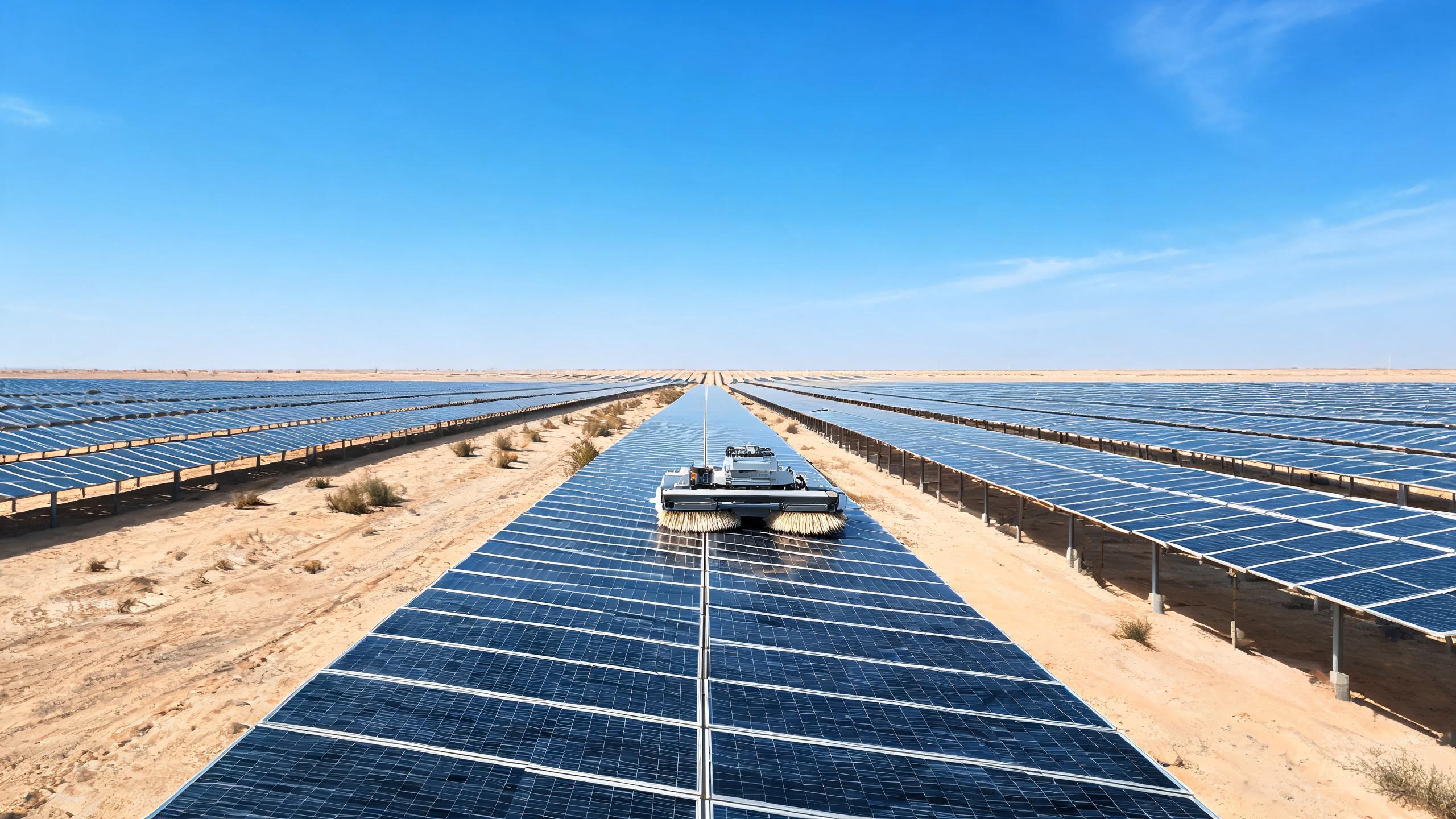
If you manage a utility scale PV plant, you know that soiling can silently erode your profits. The SolarCleano F1 promises a solution: a remote-controlled robot that cleans both wet and dry, operated by a single technician. But with a price that varies by configuration, is it truly worth the investment? In this analysis, we cut through the hype to examine whether the F1 earns its place in your O&M arsenal.
The Hidden Cost of Dirty Panels: Does Solar Panel Cleaning Improve Output?
Before evaluating any robot, you must quantify the problem. Soiling losses can range from 1% to over 5% in moderate climates, and much higher in dusty regions. For a 10 MW plant, even a 3% loss can mean tens of thousands of dollars in lost revenue annually. The SolarCleano F1 directly addresses this by enabling regular cleaning without costly water trucks or manual labor. By keeping panels cleaner, you restore lost output—making the robot not just a cost, but a revenue recovery tool. The key is frequency: the easier cleaning is, the more often you do it.
Dry vs Wet Solar Panel Cleaning: Why the F1's Dual Mode Matters
The debate between dry and wet cleaning is not about which is better—it's about which is appropriate. Dry cleaning excels at removing loose dust and is ideal for water-scarce regions, but it can risk scratching if grit is abrasive. Wet cleaning removes stubborn grime and bird droppings but requires water access and can leave streaks if not done properly. The SolarCleano F1 does both, giving operators the flexibility to switch based on conditions. As a waterless solar panel cleaner, it can run dry for routine maintenance, then switch to wet for deep cleans. This versatility means you don't need two separate machines—a significant advantage for large sites.
Solar Panel Cleaning Robot Cost: Breaking Down the F1's Value Proposition
The SolarCleano F1's price band covers a range of configurations that scale with your installation. While the upfront cost may seem high compared to manual labor, consider the total cost of ownership. Manual cleaning requires crews, safety equipment, and water—often costing thousands per cleaning cycle. The F1, with its single-operator remote control, reduces labor to one person and can be deployed quickly. Over a 5-year period, the savings in labor and water can offset the initial investment. Moreover, as the best solar panel cleaning robot 2026, it future-proofs your O&M strategy, adapting to evolving regulations and water restrictions.
Utility Scale PV Cleaning Robot: Is the F1 Ready for Your Plant?
For utility scale PV cleaning robot applications, the F1's design shines. It handles both rooftop and ground arrays, and its remote control lets one operator clean from the edge of the array—no need to walk on panels. This is crucial for large sites where safety and speed matter. However, the F1 requires an operator present, so it's not fully autonomous. If your site is massive and you want lights-out cleaning, you might need a different solution. But for many plants, the F1 strikes a balance: semi-automated, flexible, and reliable. The range pricing means you can configure it to your budget, making it accessible for smaller utilities too.
Our verdict
The SolarCleano F1 is not a magic bullet, but it's a powerful tool for the right buyer. If you value flexibility, single-operator efficiency, and the ability to switch between dry and wet cleaning, it justifies its cost. For utility-scale plants struggling with soiling losses, the F1 can pay for itself through recovered generation. However, if your site demands fully autonomous operation, you may need to look elsewhere. Ultimately, the F1 is worth buying if you prioritize control and adaptability over full automation.