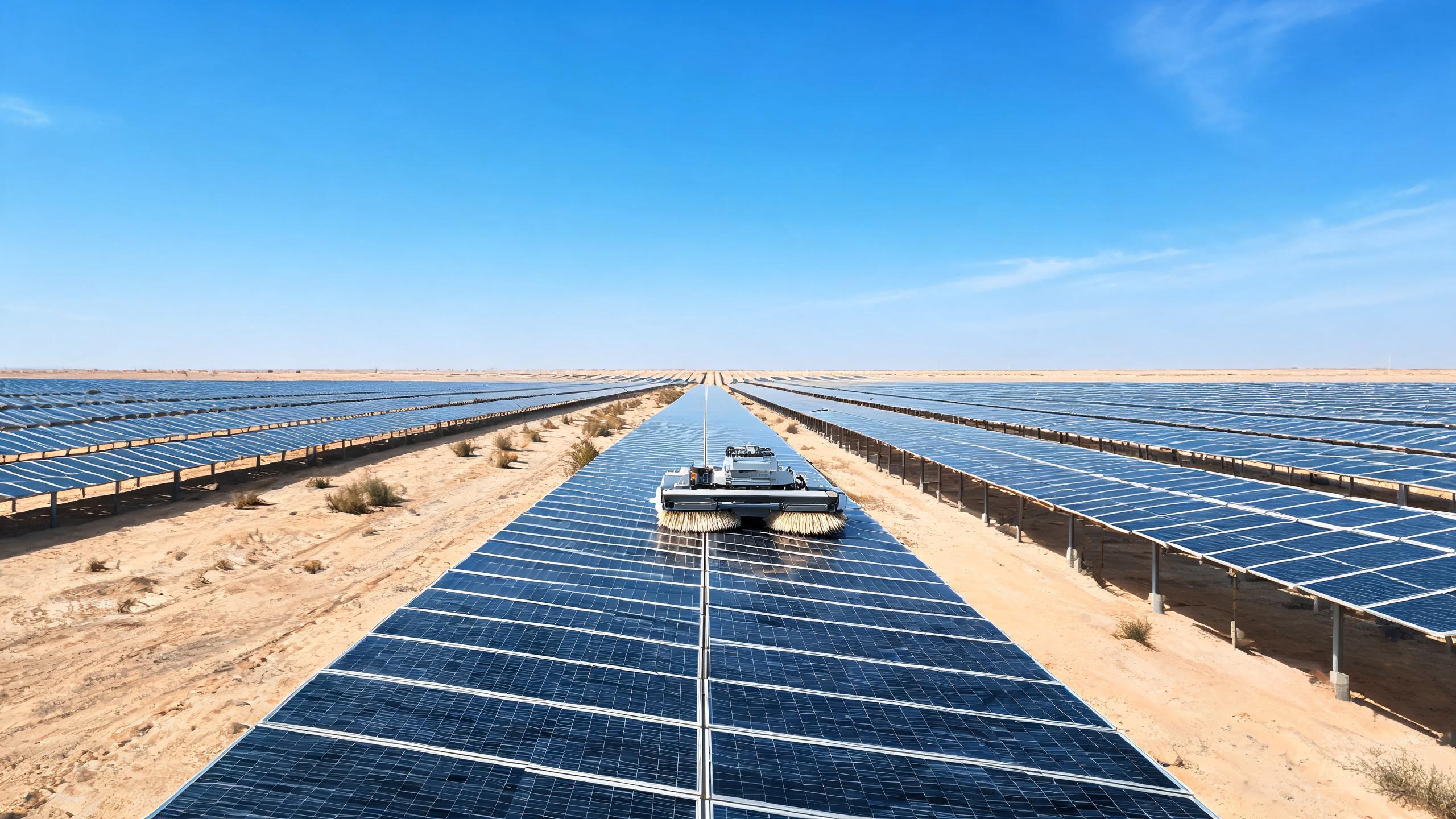
As solar farms expand and labor costs rise, the choice between automated robots and manual cleaning becomes critical. In 2026, the best solar panel cleaning robot 2026 models offer waterless operation, remote control, and utility-scale efficiency. But does solar panel cleaning improve output enough to justify the investment? This editorial compares solar cleaning robots vs manual cleaning, covering dry vs wet solar panel cleaning, solar panel cleaning robot cost, and top products like Ecoppia T4, SolarCleano F1, and IFBOT X3.
Why Cleaning Matters: Does Solar Panel Cleaning Improve Output?
Dust, pollen, and bird droppings can reduce solar panel efficiency by up to 25% in dry regions. Does solar panel cleaning improve output? Absolutely—regular cleaning restores lost generation and extends panel life. Manual cleaning with brushes and water is traditional, but it risks scratches, water waste, and safety issues on steep roofs. Robots offer a consistent, scratch-free alternative. For utility-scale farms, a utility scale PV cleaning robot like Ecoppia T4 (rating 9.5) uses waterless microfiber to clean at night, eliminating water costs and daytime downtime. For residential and commercial roofs, the IFBOT X3 (8.8) excels at dry cleaning on steep slopes, while SolarCleano F1 (9.0) provides remote wet/dry flexibility.
Dry vs Wet Solar Panel Cleaning: Which Method Wins?
Dry vs wet solar panel cleaning is a key decision. Dry cleaning uses microfiber or brushes to remove loose dust without water—ideal for arid regions and waterless solar panel cleaner designs. Wet cleaning uses water or detergent to tackle stubborn grime, bird droppings, and pollen. Robots like GEKKO Solar Fox (8.7) and Neexgent NXR-IV (8.5) support both modes, making them versatile for service fleets. However, wet cleaning requires water access and can leave streaks if not dried properly. Dry cleaning is faster, safer, and more eco-friendly, but may not remove baked-on soiling. For most utility-scale sites, a waterless approach like Ecoppia T4 is preferred. For mixed conditions, a remote wet/dry robot like SolarCleano F1 offers the best of both worlds.
Solar Panel Cleaning Robot Cost vs Manual Labor
Solar panel cleaning robot cost varies widely. Budget models like Lovsun PV Cleaner Robot (7.5) start low but may lack autonomy. Premium utility-scale robots like Ecoppia T4 cost more but deliver rapid ROI through water savings and labor reduction. Manual cleaning costs include labor, water, equipment, and safety training—and risks human error. For a 10 MW plant, manual cleaning can cost thousands per cycle, while a robot fleet pays back in 1–2 years. The SDZ NCE Fugo X1 (8.3) offers 7-hour runtime for autonomous rooftop cleaning, reducing labor further. For ground-mounted plants, X8 Robotics X8 Plus (6.8) provides tracked mobility. When calculating solar panel cleaning robot cost, factor in downtime, water, and panel lifespan. Robots win on consistency and scalability.
Top Robots for 2026: From Utility-Scale to Budget
For utility-scale PV cleaning robot needs, Ecoppia T4 leads with waterless, autonomous operation. SolarCleano F1 is the best remote wet/dry panel robot for flexibility. IFBOT X3 shines on steep roofs with dry cleaning. GEKKO Solar Fox and Neexgent NXR-IV serve fleets needing both modes. SDZ NCE Fugo X1 offers long runtime for rooftops. Budget options include Lovsun PV Cleaner Robot and TEAMANTS TAR01 (7.2, CE-certified semi-autonomous). Tengda TT-1500 (7.0) is a lightweight handheld for RV panels. X8 Robotics X8 Plus (6.8) handles ground plants with tracks. When choosing, match robot to site: waterless for deserts, wet/dry for mixed climates, and handheld for small arrays. The best solar panel cleaning robot 2026 balances cost, output gain, and durability.
Our verdict
Solar cleaning robots vs manual cleaning is no contest for large-scale solar. Robots deliver consistent, waterless or wet/dry cleaning, reduce labor and safety risks, and improve output. While solar panel cleaning robot cost may seem high, the ROI through restored generation and lower O&M is compelling. For 2026, prioritize a utility scale PV cleaning robot like Ecoppia T4 for farms, SolarCleano F1 for versatility, or IFBOT X3 for steep roofs. Manual cleaning remains viable only for tiny arrays or tight budgets. The future is automated, and it's already here.