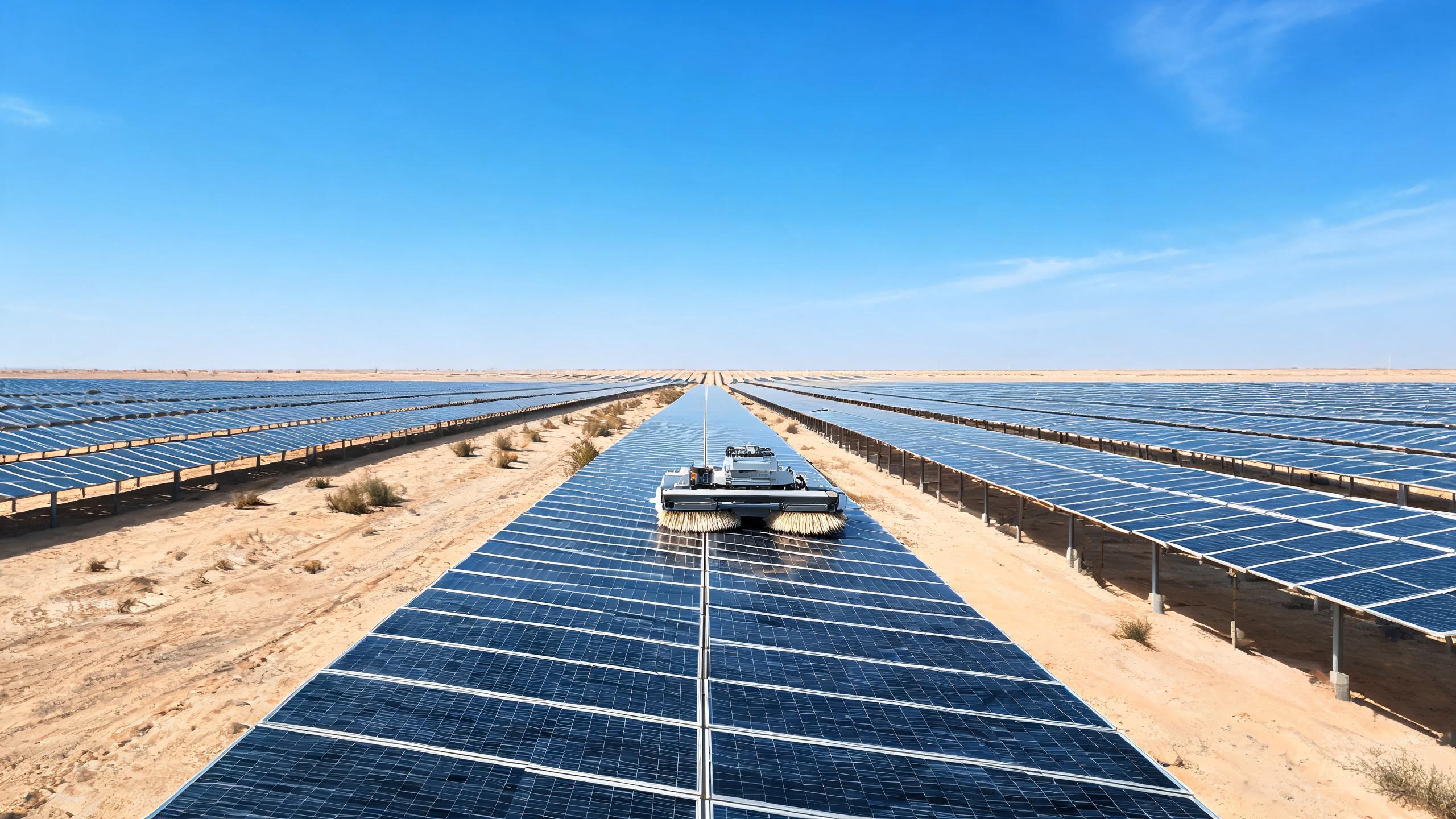
The SolarCleano F1 has earned a 9.0 rating as a remote-controlled wet/dry robot, but does its price band justify the investment? This breakdown focuses purely on cost, pricing tiers, and value-for-money—helping you decide if this is the best solar panel cleaning robot 2026 for your array. We examine how its waterless solar panel cleaner capability and single-operator design impact total cost of ownership, especially for utility scale PV cleaning robot projects.
Understanding SolarCleano F1 Pricing Tiers
The SolarCleano F1 is not sold at a single fixed price. Its solar panel cleaning robot cost varies by configuration, and the price band scales with the installation size. Entry-level setups suit smaller rooftop arrays, while larger ground-mounted systems require additional components that push the price higher. Because the F1 runs both wet and dry, you are effectively buying two cleaning modes in one machine—a key value driver. For operators comparing dry vs wet solar panel cleaning, this dual capability eliminates the need for a separate waterless solar panel cleaner, reducing equipment outlay. The remote control and single-operator design further cut labor costs, which is often the largest ongoing expense in utility scale PV cleaning robot operations.
Labor Savings and the Single-Operator Advantage
One of the F1's strongest value propositions is that a lone operator can clean roof or ground arrays from the edge of the array using remote control. This directly attacks the labor line item. In traditional cleaning, you might need two or more workers—one on the array and one managing water or safety. With the F1, that headcount drops to one. Over a season, the savings can offset a significant portion of the purchase price. However, the trade-off is that the operator must be present during cleaning. This is not an autonomous robot; it requires active human guidance. For sites where labor is scarce or expensive, the single-operator model is a major plus. For sites expecting fully autonomous operation, the F1's pricing may feel less attractive compared to autonomous alternatives.
Does Solar Panel Cleaning Improve Output Enough to Justify the Cost?
The core financial question is whether the F1's cleaning performance generates enough additional energy revenue to pay for itself. Soiling—dust, pollen, bird droppings—reduces solar panel output. Regular cleaning restores that lost generation. The F1's wet/dry capability means you can clean effectively even in water-scarce regions by using the dry mode, or switch to wet for stubborn grime. This flexibility helps maintain a consistent cleaning schedule, which is critical for maximizing energy yield. When evaluating value-for-money, compare the F1's price band against the projected increase in kWh production over its service life. For utility scale PV cleaning robot deployments, even a small percentage gain in output across thousands of panels can translate into substantial revenue. The 9.0 rating suggests the F1 balances capability and cost well, but the actual ROI depends on your local soiling rate, energy prices, and labor costs.
Comparing F1 Ownership Costs to Alternatives
When benchmarking the SolarCleano F1 against other options, consider total cost of ownership: purchase price, maintenance, labor, water (if used), and downtime. The F1's remote control and wet/dry design reduce water dependency and labor hours. Its price band covers a range of configurations, so you can scale the investment to your installation—whether a small rooftop or a large ground mount. For those seeking the best solar panel cleaning robot 2026, the F1's value lies in its versatility. However, if your site already has abundant water and cheap labor, a simpler wet-only robot might cost less upfront. Conversely, if water is costly or unavailable, the F1's waterless solar panel cleaner mode becomes a major cost saver. The cons—range pricing varies and operator must be present—are manageable trade-offs for many operators. Ultimately, the F1's value-for-money proposition is strongest for medium-to-large arrays where labor savings and dual-mode cleaning compound over time.
Our verdict
The SolarCleano F1 delivers strong value-for-money for operators who need a versatile, single-operator cleaning solution. Its wet/dry capability, remote control, and suitability for both rooftop and ground arrays make it a compelling choice. While the solar panel cleaning robot cost varies by configuration and requires an operator present, the labor savings and dual-mode cleaning can justify the investment—especially for utility scale PV cleaning robot projects where output gains matter. If you are weighing dry vs wet solar panel cleaning and want one machine that does both, the F1 is a top contender for the best solar panel cleaning robot 2026.