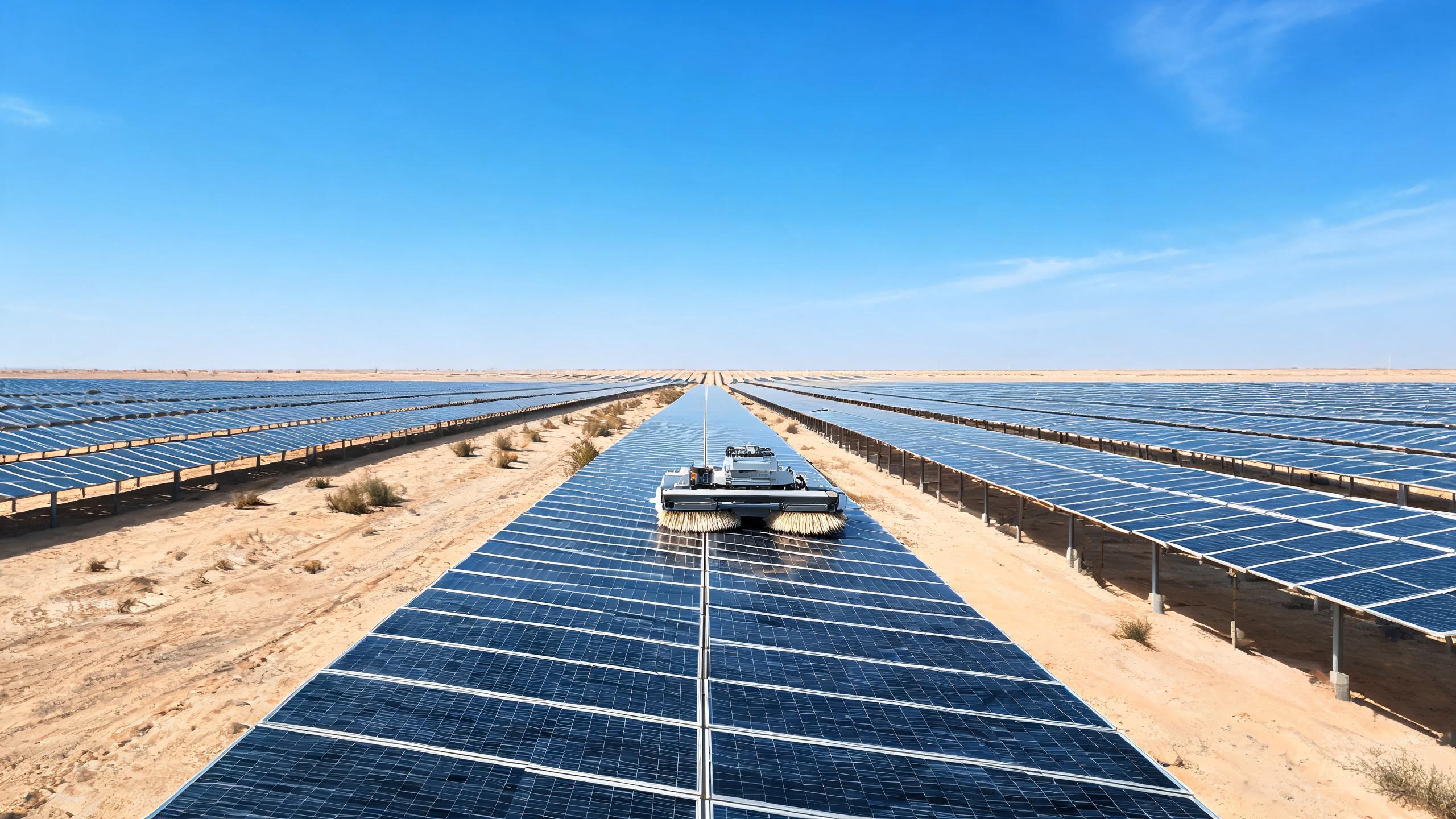
Choosing between the SolarCleano F1 and the TEAMANTS TAR01 comes down to how you clean and where you clean. The F1 is a wet/dry, remote-controlled unit rated 9.0; the TAR01 is a CE-certified semi-autonomous brusher rated 7.2. This head-to-head covers performance, features, value, and who each one suits best.
Performance and Cleaning Method
The SolarCleano F1 supports both wet and dry cleaning, so you can match the method to the soiling. That flexibility matters when you ask does solar panel cleaning improve output: heavy dust often responds to a waterless solar panel cleaner pass, while stubborn grime may need wet scrubbing. Because it is remote-controlled, one operator can guide it from the edge of a rooftop or ground array, covering more area with less walking. The TEAMANTS TAR01 relies on a CE-certified brushing system and semi-autonomous operation. Brushing is effective, but the TAR01 is noted as slower on steep terrain, which can matter on angled rooftops. The F1's single-operator, remote-guided design gives it the performance edge for mixed roof and ground work.
Features and Specifications
The F1's headline features are its wet/dry method, remote control, rooftop/ground application, and single-operator use. Those four specs make it a versatile tool for crews that want one machine for many array types. The TAR01 counters with CE certification, semi-autonomous autonomy, a brushing cleaning system, and an EU-compliant market position. For buyers in Europe, that CE mark can simplify procurement and site compliance. The trade-off is scope: the TAR01 is built around brushing and semi-autonomy, while the F1 adds waterless solar panel cleaner capability alongside wet washing. If your projects span both utility scale PV cleaning robot deployments and smaller rooftop jobs, the F1's broader method coverage is the more flexible feature set.
Value and Solar Panel Cleaning Robot Cost
Value here is not just sticker price. The F1's price band covers a range of configurations that scale with the installation, so solar panel cleaning robot cost rises with the size and spec you choose. That range pricing is a con for budget planners, but it also means you only pay for the capability you need. The TAR01 uses contact-only pricing, which makes direct cost comparison harder up front; you must request a quote. Its CE certification can offset that uncertainty for EU buyers who would otherwise face compliance costs. On raw rating, the F1 leads 9.0 to 7.2. If you want transparent scaling and maximum method flexibility, the F1 justifies its cost. If certification and a straightforward design top your list, the TAR01 is the value pick for EU-focused projects.
Who Each One Suits Best
The SolarCleano F1 suits contractors and operators who handle mixed roof and ground arrays and want one person to run the machine remotely. Its wet/dry capability answers the dry vs wet solar panel cleaning debate by letting you choose per job, and its single-operator design keeps labor lean. The TEAMANTS TAR01 suits EU buyers who prioritize CE compliance and a semi-autonomous brushing routine, especially on gentler terrain where its slower steep-slope performance is not a factor. If your procurement requires CE paperwork, the TAR01 removes friction. If your priority is throughput and method flexibility across varied sites, the F1 is the stronger fit.
Our verdict
Verdict: choose the SolarCleano F1 if you want the best solar panel cleaning robot 2026 for mixed roof and ground arrays, wet/dry flexibility, and true single-operator remote cleaning. Choose the TEAMANTS TAR01 if CE certification and a semi-autonomous brushing system are non-negotiable for your EU project. On rating and versatility, the F1 wins; on compliance-first procurement, the TAR01 earns its place.