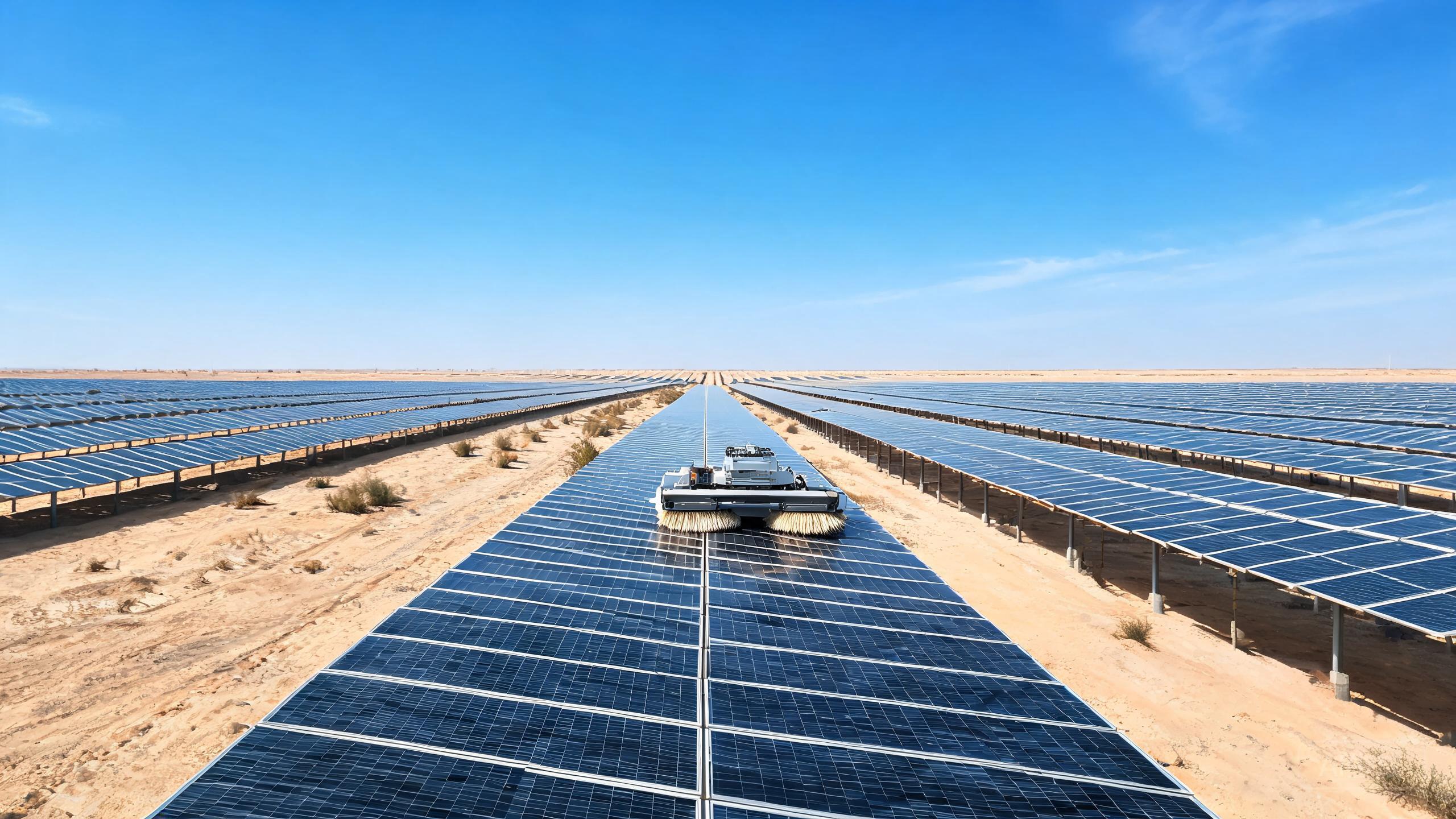
Weight is the quiet variable in every solar cleaning decision. A robot that is too heavy can stress mounting rails and glass; one that is too light may not hold traction on steep arrays. In this editorial, TopCleanRobots examines how panel load interacts with cleaning method, and why the best solar panel cleaning robot 2026 shortlist balances mass, traction and output gains rather than chasing specs alone.
Why Panel Load Matters More Than Raw Weight
Panel load is the force a robot transfers to glass, frames and rails as it moves, brushes and changes direction. Two machines of similar mass can load a panel very differently depending on track design, brush pressure and how the chassis distributes weight. For rooftop systems, load limits are tighter; for ground-mounted arrays, rails and foundations tolerate more. This is why a utility scale PV cleaning robot like Ecoppia T4 is engineered around waterless, low-mass traversal, while a service-fleet machine such as GEKKO Solar Fox carries more hardware for wet/dry flexibility. Buyers should ask for load figures per square metre, not just kilogrammes.
Dry vs Wet Cleaning and the Weight Penalty
The dry vs wet solar panel cleaning debate is partly a weight debate. Wet systems need tanks, pumps and water lines, adding mass that must be carried across the array. A waterless solar panel cleaner avoids that payload, which helps on steep roofs and large fields where refilling is costly. SolarCleano F1 earns its 9.0 rating by offering remote wet/dry operation, letting operators choose method by site rather than by machine. IFBOT X3, rated 8.8, leans into dry cleaning for steep roofs where extra water weight is unwelcome. Neexgent NXR-IV (8.5) adds PLC control for flexible wet/dry duty, while Tengda TT-1500 (7.0) stays lightweight and handheld for RV panels. The trade-off is real: water improves stubborn soiling removal, but every litre adds load.
Matching Robot Class to Array Type
Rooftop arrays favour lighter, autonomous units. SDZ NCE Fugo X1 (8.3) pairs autonomous rooftop operation with long runtime, reducing the need for heavy support equipment. Ground plants can accept tracked machines such as X8 Robotics X8 Plus (6.8), where mass is less critical but stability is. Utility scale PV cleaning robot fleets prioritise throughput and low water logistics, which is where Ecoppia T4 leads at 9.5. Budget buyers eyeing Lovsun PV Cleaner Robot (7.5) or TEAMANTS TAR01 (7.2, CE-certified semi-autonomous brushing) should confirm panel load ratings before committing, since lower-cost chassis sometimes concentrate weight differently. Does solar panel cleaning improve output? Yes, but only if the robot's load does not damage the array it is meant to protect.
Cost, Output and the Load Equation
Solar panel cleaning robot cost reflects engineering for load control: better traction systems, pressure regulation and lighter composites raise price but protect assets. When weighing does solar panel cleaning improve output, factor in soiling rate, water access and panel load tolerance. A heavy wet robot may deliver excellent cleaning but require structural checks; a waterless unit may need more passes. The best solar panel cleaning robot 2026 choices, in our view, are those that document load limits clearly and match method to site. That is how 光伏板清洁机器人排名 2026 should be read: not by rating alone, but by fit between mass, method and array.
Our verdict
Weight and panel load deserve a place beside rating and price on every specification sheet. Whether you choose a utility scale PV cleaning robot, a waterless solar panel cleaner or a flexible wet/dry unit, confirm load figures, match the machine to your array type and treat solar panel cleaning robot cost as an investment in asset protection. Used well, dry vs wet solar panel cleaning becomes a site-specific decision, and does solar panel cleaning improve output becomes a measurable yes rather than a marketing claim.