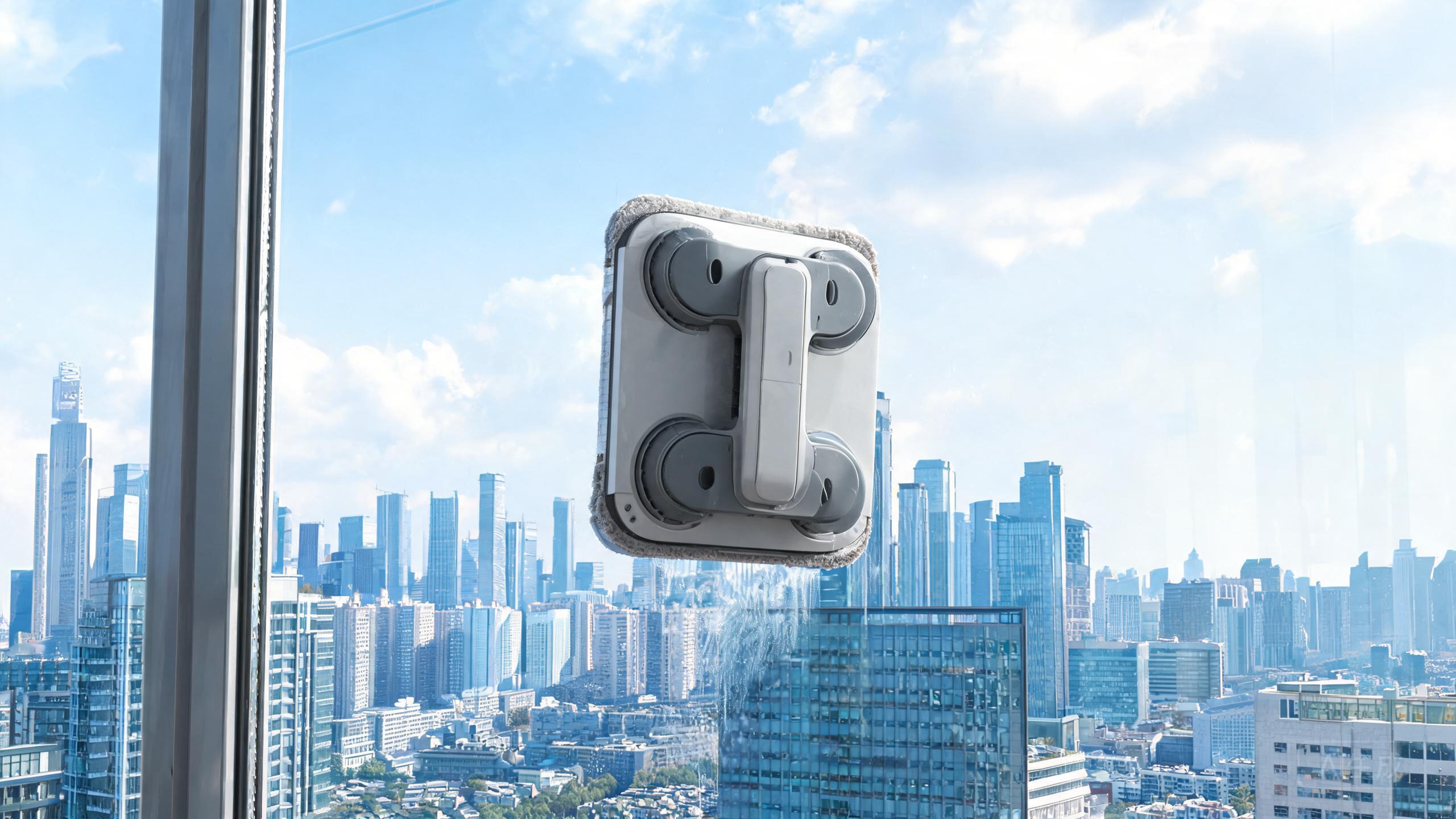
Most robot window cleaner reviews focus on surface impressions. This technical deep dive goes beneath the glass to examine what actually makes the Mamibot iGLASSBOT W200 SkyBot tick. With a 7.4 rating and a tagline of 'Cordless long-runtime cleaner,' the W200 SkyBot makes a deliberate engineering bet: sacrifice peak suction for untethered freedom. But what does that mean at the component level? We break down the four core specifications — power, runtime, adhesion, and charging — to understand exactly how this machine performs on vertical glass, and whether it deserves a place in the conversation for best window cleaning robot 2026.
Power Architecture: What 'Cordless (Battery)' Really Means for a Vertical Robot
The W200 SkyBot's power specification is deceptively simple: cordless, battery-operated. But for a robot that must defy gravity on a vertical pane, removing the cord changes everything about the engineering equation. A tethered window cleaner can draw unlimited current from a wall outlet, allowing the vacuum motor to run at maximum draw indefinitely. A cordless unit must budget every milliamp-hour across three simultaneous loads: the vacuum adhesion system, the drive motors that navigate the glass, and the onboard control electronics. This is why window cleaner suction power becomes the central technical tension in the W200 SkyBot's design. The battery pack must be large enough to sustain adhesion without interruption — because unlike a floor robot, a window robot that loses suction does not simply stall; it falls. The W200 SkyBot's long runtime specification indicates Mamibot sized the battery to prioritize sustained operation over peak burst power, a trade-off that defines its entire performance envelope.
Adhesion System: Vacuum Physics on Vertical Glass
The W200 SkyBot uses vacuum adhesion, the same fundamental principle employed by every serious window cleaning robot. A pump evacuates air from a sealed chamber between the robot's base and the glass, creating a pressure differential that presses the unit against the surface. The force holding the robot up equals the pressure difference multiplied by the contact area. Two variables matter here: how low the pump can drive the internal pressure, and how well the seal maintains that pressure as the robot moves. The W200 SkyBot's lower suction specification — listed as a con in its own product data — directly affects both. Lower suction power means less pressure differential, which translates to reduced payload capacity and a smaller safety margin when the robot encounters a slick patch, a seam between panes, or a sudden change in surface friction. This is the engineering reality behind the 'trades some suction for true freedom of movement' verdict. For window cleaning robot safety, that margin is not a marketing detail — it is the difference between a working robot and a fallen one.
Runtime and Charging: The Recharge Cycle as a Design Constraint
The W200 SkyBot's runtime is specified as 'long,' and its charging method is rechargeable — straightforward on the surface, but consequential in practice. A cordless robot window cleaner review must account for the full cycle: clean, deplete, recharge, repeat. Because the robot cannot be tethered during operation, every cleaning session is bounded by battery capacity. The longer the runtime, the more glass the robot can cover before needing to return to its charging base or be manually retrieved. But there is a second-order effect that matters for anyone weighing whether an automatic window washer is worth it: recharge time. If runtime is long but recharge time is equally long, the effective duty cycle may still limit the robot to one or two full window cycles per day. The W200 SkyBot's cordless design is genuinely liberating — no cord management, no outlet hunting, no tangling around window frames — but that freedom is purchased with a recharge interval that tethered competitors simply do not have. Understanding this cycle is essential for high-rise residents who may need to clean multiple panes in sequence.
What the 7.4 Rating Says About the Spec Sheet
A 7.4 rating is neither a dismissal nor an endorsement — it is a precise signal about where the W200 SkyBot sits in the market. The pros column reads like a manifesto for untethered operation: truly cordless, long runtime, untethered cleaning. The cons column reads like an engineering audit: lower suction, needs recharging. Together, they describe a robot optimized for a specific use case rather than universal dominance. For a high-rise resident who values the ability to deploy a window cleaner without running a cord across a living room — or who simply cannot reach an outlet near the window — the W200 SkyBot's trade-offs may be entirely acceptable. For a user with ground-floor access to power and a preference for maximum adhesion margin, a tethered unit with higher suction may be the better fit. The 7.4 reflects this: strong on freedom, moderate on raw holding force. In the context of best robot for high rise windows, the W200 SkyBot competes on convenience and autonomy, not on maximum vacuum pressure.
Our verdict
The Mamibot iGLASSBOT W200 SkyBot is a study in deliberate engineering trade-offs. Its cordless battery architecture, vacuum adhesion system, long runtime, and rechargeable design form a coherent package built around one priority: freedom from the cord. That priority costs it peak suction power, which in turn narrows its safety margin on challenging surfaces and introduces a recharge cycle that tethered competitors avoid. For the right user — someone who values untethered deployment and can accommodate the recharge interval — the W200 SkyBot delivers exactly what its tagline promises. For those who prioritize maximum adhesion and continuous operation, the spec sheet points elsewhere. Either way, the 7.4 rating is honest: a capable cordless specialist, not a universal champion.