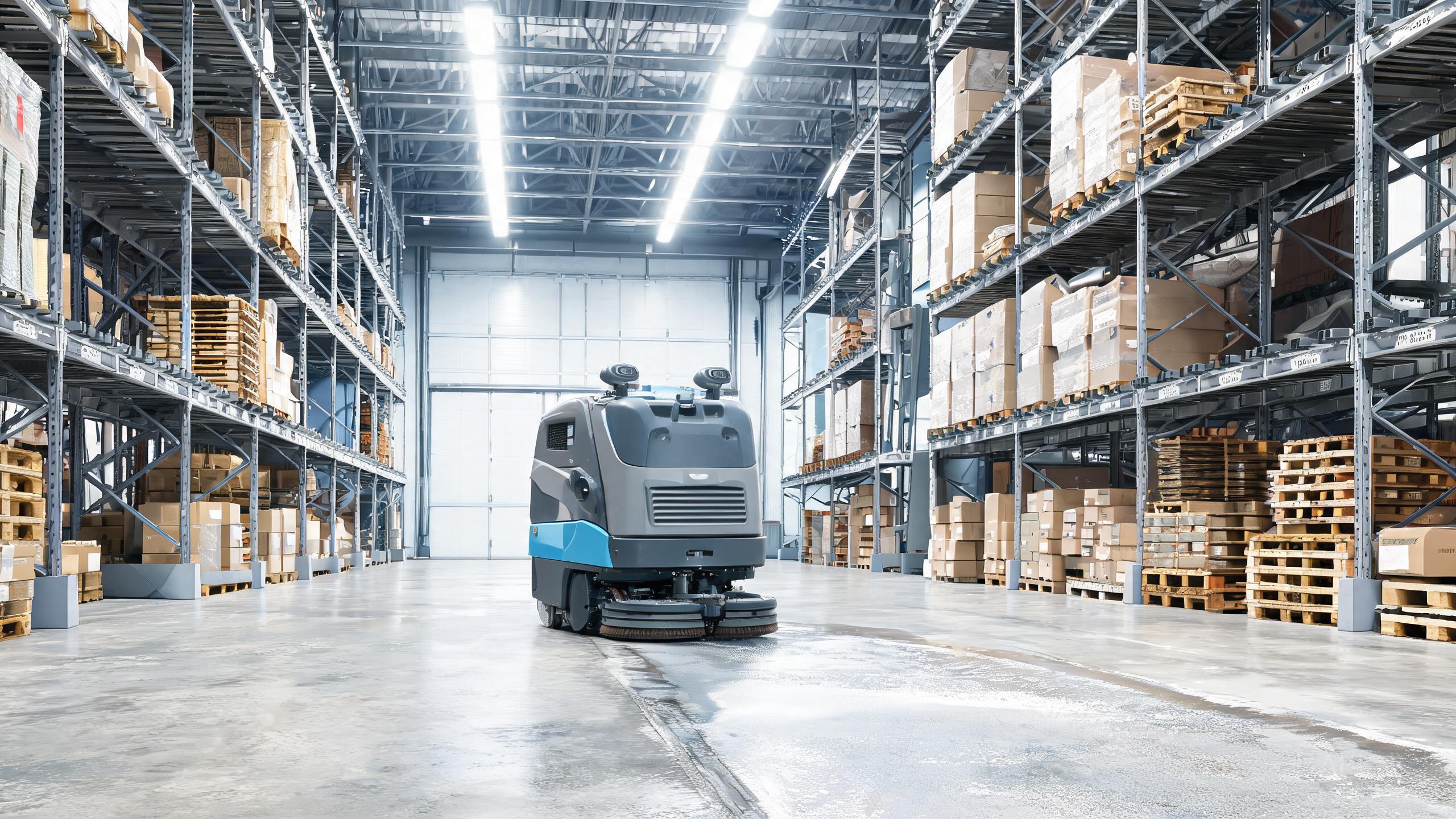
Two flagship robots dominate the commercial cleaning robot review conversation in 2026: the Kärcher KIRA B 200 (rated 8.8) and the Avidbots Neo 2 (rated 8.0). Both run fully autonomous routes, but they solve different problems. One is a large-area flagship built for fleet coordination; the other is a high-throughput workhorse built for continuous heavy scrubbing. This head-to-head breaks down performance, features, value and the buyer each one fits best, so you can decide which deserves a place in your facility.
Performance: Autonomous Routing vs Raw Throughput
The KIRA B 200 leans on fully autonomous operation with autonomous routing, designed for large areas where deep scrubbing must happen with minimal staffing. It does not publish a throughput figure, but its positioning is clear: sprawling facilities that need dependable, repeatable coverage. The Neo 2 takes the opposite approach, publishing 4,400 m²/h throughput and a 105 L tank for long, uninterrupted runs. In an autonomous scrubber vs manual cleaning comparison, that throughput matters most in high-traffic venues like airports and big-box retail, where the Neo 2 is already proven. If you measure success in square metres per shift, the Neo 2 is the stronger performer; if you measure it in coverage consistency across a vast site, the KIRA B 200 competes hard.
Features: Fleet Interface vs Remote Monitoring
Feature-wise, the KIRA B 200 stands out with a VDA 5050 fleet interface, which lets it coordinate at fleet level — a meaningful advantage for operators scaling multiple robots across one site. The Neo 2 counters with remote fleet monitoring, so managers can track long runs without walking the floor. Both are fully autonomous; neither requires an operator to steer. The KIRA B 200 also benefits from Kärcher's service network, a real factor when downtime costs money. The Neo 2's 105 L tank reduces refill interruptions, which is a feature in itself for continuous heavy scrubbing. For buyers comparing robotic floor scrubber brands, this is the clearest split: Kärcher sells integration and service depth, Avidbots sells uptime and monitoring simplicity.
Value and ROI: SLAM Floor Scrubber Cost and Payback
Neither vendor publishes list prices. The KIRA B 200 is contact-priced, and the Neo 2 carries a high upfront cost with a trained setup requirement. That makes SLAM floor scrubber cost a quote-by-quote exercise, and it means warehouse cleaning robot ROI depends on your labour math. The Neo 2's 4,400 m²/h throughput and 105 L tank let one unit cover more floor per shift, which can shorten payback in large venues. The KIRA B 200's fleet interface and service network can lower long-run operating friction when you run multiple units. Honest take: if your site is small, the KIRA B 200 is overkill, and the Neo 2's upfront cost may be hard to justify without heavy daily scrubbing hours.
Who Each One Suits Best
Choose the Kärcher KIRA B 200 if you operate a sprawling facility, want fully autonomous deep scrubbing with minimal staffing, and plan to coordinate robots at fleet level via VDA 5050. Its Kärcher service network is a genuine safety net. Choose the Avidbots Neo 2 if you need continuous heavy scrubbing with published 4,400 m²/h throughput, a 105 L tank for long uninterrupted runs, and remote fleet monitoring — especially in airports and big-box retail where it is already proven. In short: KIRA B 200 for scale and integration, Neo 2 for throughput and uptime.
Our verdict
Verdict: the Kärcher KIRA B 200 wins on integration and service depth, while the Avidbots Neo 2 wins on raw throughput and proven uptime. For most large facilities that value fleet coordination and a strong service network, the KIRA B 200 is the better strategic pick; for high-traffic venues that need maximum square metres per shift, the Neo 2 is the better operational pick. Match the robot to your floor size and labour math, and either can deliver strong warehouse cleaning robot ROI.