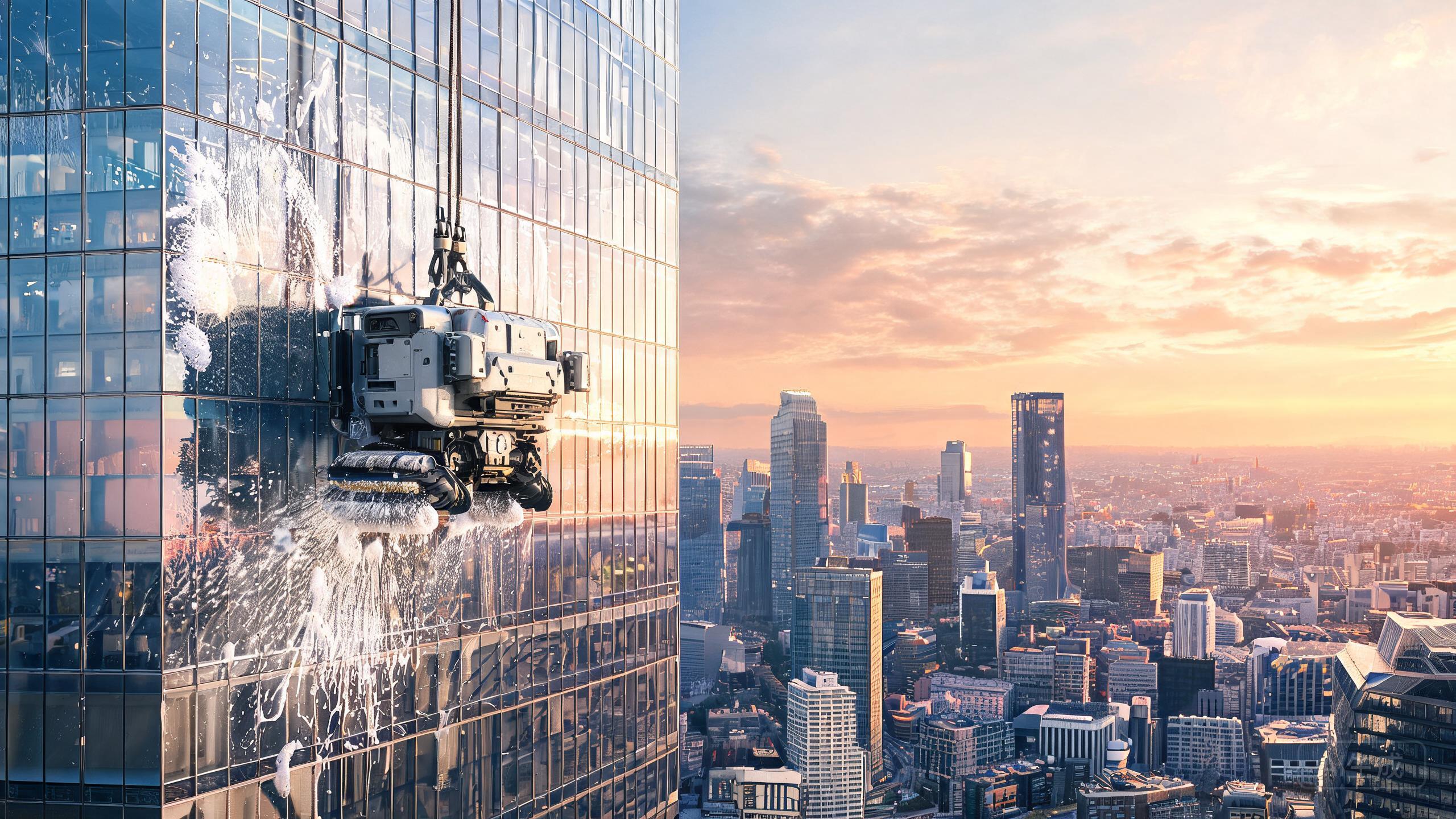
A stuck facade robot is more than an inconvenience. It stalls a crew, strands a machine hundreds of metres up, and can turn a routine wash into a recovery operation. As high rise facade cleaning automation matures in 2026, the question our readers ask most is simple: how do you keep the unit moving? This building facade cleaning robot review breaks down the real causes of stalls and the habits that prevent them, referencing the machines we have tracked, including the Ozmo window cleaning robot and the Serbot GEKKO.
Why Facade Robots Get Stuck
Stalls rarely come from one dramatic failure. In our tracking of the category, they cluster around a few causes: suction loss on smooth glass, tether or cable snagging, navigation drift near mullions and seals, and debris trapped under the chassis. Machines that climb by adhesion, such as the Serbot GEKKO, depend on a clean, consistent glass surface, while rail-free research systems like the Fraunhofer IFF SIRIUS show how much stability depends on sensing rather than mechanical guides. The Ozmo window cleaning robot, built around a KUKA arm, avoids climbing altogether, which removes a whole class of snag risks but shifts attention to reach limits and base positioning. Understanding which failure mode applies to your machine is the first step.
Pre-Flight Checks That Prevent Most Stalls
Most stuck-robot incidents we hear about were preventable before launch. Start with the glass itself: remove grit, dried sealant flakes and bird debris along the run path, because a single hard particle under a suction chassis can break the seal. Inspect seals and skirts for wear, and confirm suction or adhesion readings against the manufacturer's baseline. Route tethers and power cables with deliberate slack and anchor points so they cannot loop around mullions. For tethered designs such as the Lincinco F19-02, the base position matters as much as the robot. Finally, verify navigation calibration in daylight and shadow conditions, since reflective curtain wall panels confuse optical sensors.
Operating Habits for High Rise Facade Cleaning Automation
Once airborne, discipline matters. Run slower passes on complex facades and around corners, where the Kite Robotics Kite is rated to reach 200 m on glass and complex structures; speed gains there are rarely worth the recovery cost. Keep an operator monitoring suction and current draw, not just video. On high-throughput machines such as Jacky's K3, rated at 600 m working height and 720 m²/h, schedule pauses at panel transitions rather than pushing continuously through them. For arm-based systems like the Ozmo window cleaning robot, confirm the base is level and within reach envelope before each cycle. And treat weather as a hard gate: wind gusts and wet seals change adhesion behaviour in ways no calibration fully offsets.
Choosing Machines Less Prone to Stalls
Specification choices shape stall risk. Climbing robots suit large, uniform glass walls; arm-based and base-tethered systems suit complex geometry and smaller commercial windows. In our 幕墙清洁机器人排名 2026 tracking, the Serbot GEKKO (9.0) and Verobotics Facade Robot (8.8) score well for stable climbing and combined AI inspection, while the X-Human LingKong K3 (8.2) targets skyscraper curtain walls. When weighing robotic facade cleaning vs rope access, remember that a stalled robot still needs a recovery plan, whereas rope crews self-recover; the trade-off is safety and labour exposure. On glass facade cleaning robot cost, entry tethered units sit far below climbing platforms, but budget for sensors, spares and operator training, which is where stall prevention actually lives.
Our verdict
Stopping a facade robot getting stuck is mostly preparation and discipline, not luck. Clean the run path, manage tethers, watch suction data, slow down at transitions, and pick a platform whose failure modes you can actually recover from. Whether you are comparing a glass facade cleaning robot cost sheet or planning a full high rise facade cleaning automation rollout, the machines that stay moving are the ones operated by teams who planned for the stall before it happened.