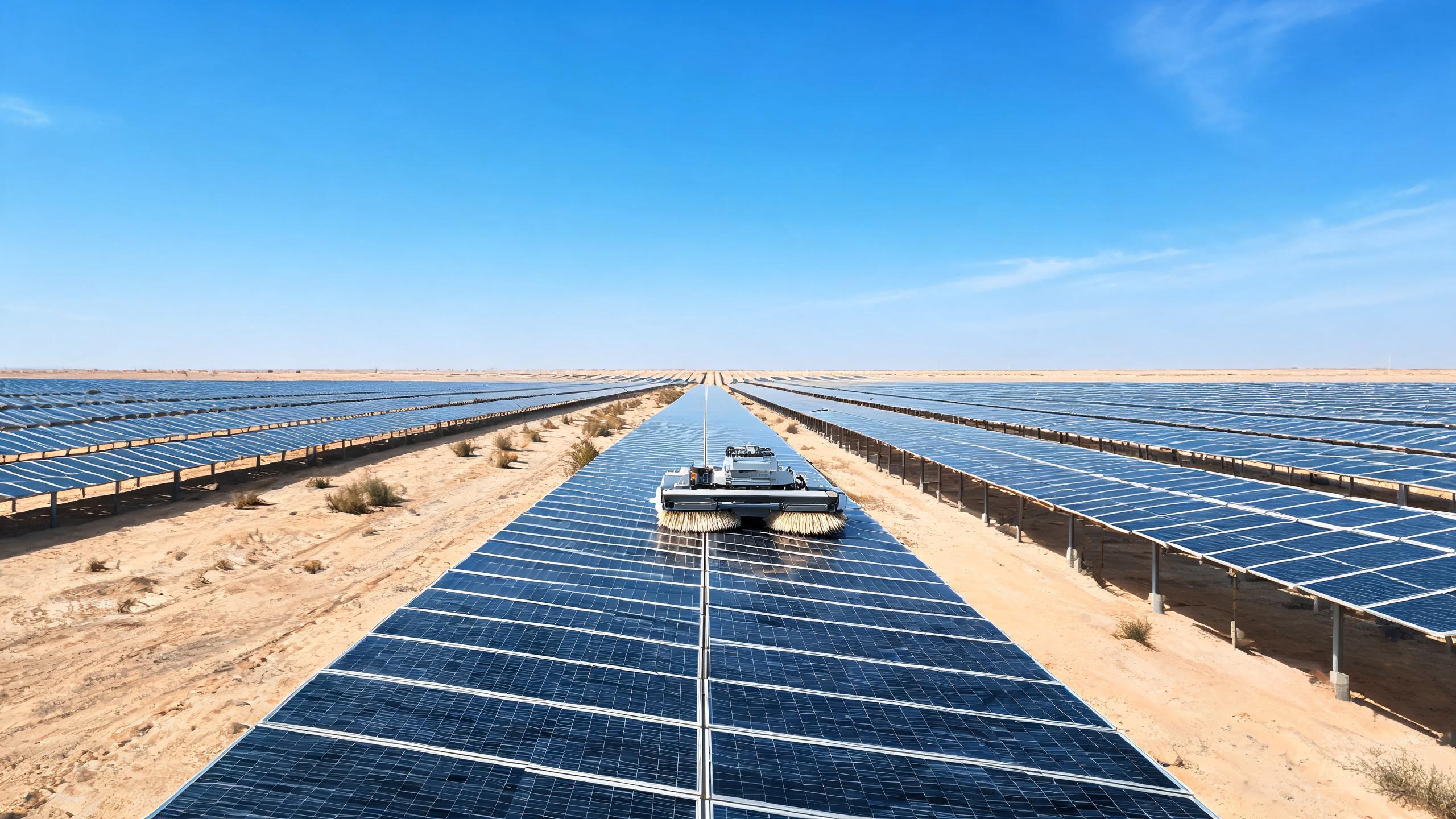
Solar panel cleaning robots are transforming how we maintain PV arrays, but their effectiveness hinges on one critical factor: the cleaning schedule. In 2026, with the best solar panel cleaning robot models offering advanced autonomy, the question isn't whether to automate—it's when and how often to clean. This guide dives into optimal schedules for waterless and wet systems, explores the dry vs wet solar panel cleaning debate, and reveals how proper scheduling directly answers: does solar panel cleaning improve output? We'll reference top-rated robots like Ecoppia T4, SolarCleano F1, and IFBOT X3 to illustrate real-world applications.
Why Cleaning Schedules Matter for Solar Panel Output
Dust, pollen, and bird droppings can reduce solar panel efficiency by up to 25% in arid regions. Does solar panel cleaning improve output? Absolutely—but only if timed correctly. Cleaning too frequently wastes water and energy; too infrequently allows soiling to harden, requiring aggressive scrubbing that may damage panels. In 2026, smart scheduling integrates weather data, soiling sensors, and robot telemetry. For utility scale PV cleaning robot deployments, schedules are often dynamic: robots like Ecoppia T4 (rating 9.5) operate daily during high-dust seasons, using waterless microfiber to avoid water scarcity issues. Residential systems, such as those using IFBOT X3 (8.8), may clean monthly or after storms. The key is to match frequency to local soiling rates and energy price peaks—cleaning before high-value generation hours maximizes ROI.
Dry vs Wet Solar Panel Cleaning: Which Schedule Works Best?
The dry vs wet solar panel cleaning debate is central to scheduling. Waterless solar panel cleaner robots, like Ecoppia T4, use controlled microfiber brushes to remove dust without water—ideal for desert utility farms where water is scarce. These robots can clean daily, often at night to avoid production interruptions. Wet cleaning, exemplified by SolarCleano F1 (9.0) and GEKKO Solar Fox (8.7), uses water and sometimes detergent to tackle stubborn grime, bird droppings, or coastal salt. Wet schedules are typically less frequent—biweekly or monthly—but more thorough. For steep roofs, IFBOT X3 (8.8) excels at dry cleaning, while Neexgent NXR-IV (8.5) offers flexible wet/dry with PLC control. The optimal schedule often combines both: dry cleaning for routine dust, wet cleaning for seasonal deep cleans. This hybrid approach, used by service fleets with GEKKO Fox, balances water conservation and performance.
Optimal Schedules by Robot Type and Scale
Schedules vary by robot autonomy and site size. For utility scale PV cleaning robot fleets, autonomous models like SDZ NCE Fugo X1 (8.3) with 7-hour runtime can execute nightly cleaning cycles across entire arrays, completing a full pass in 1-2 days. These schedules are often managed by central software that adjusts based on soiling sensors. Semi-autonomous robots like TEAMANTS TAR01 (7.2) require human oversight, so schedules are limited to daytime shifts, perhaps 3-4 times per week. Handheld units like Tengda TT-1500 (7.0) for RV panels need manual scheduling—typically monthly or before trips. Budget options like Lovsun PV Cleaner Robot (7.5) may lack advanced scheduling but can be deployed on-demand. For ground-mounted plants, X8 Robotics X8 Plus (6.8) tracked cleaner follows a weekly route. The best solar panel cleaning robot 2026 models feature adaptive scheduling: they learn soiling patterns and optimize routes, reducing labor and water use.
Cost Implications and ROI of Scheduled Cleaning
Solar panel cleaning robot cost varies widely: from budget handhelds like Tengda TT-1500 to premium utility robots like Ecoppia T4. But the real cost is total cost of ownership, which depends heavily on scheduling. Over-cleaning increases wear and energy consumption; under-cleaning loses generation revenue. A well-designed schedule—say, weekly dry cleaning plus quarterly wet cleaning—can extend robot lifespan and maximize output. For utility farms, the ROI is clear: a 1% output gain from cleaning can translate to millions in additional revenue. For residential, the payback is slower but still positive in dusty areas. When evaluating solar panel cleaning robot cost, factor in water, labor, and maintenance savings from optimized schedules. In 2026, robots with adaptive scheduling (e.g., SDZ NCE Fugo X1) offer the best long-term value by minimizing unnecessary cleaning.
Our verdict
Optimizing cleaning schedules is the key to unlocking the full potential of solar panel cleaning robots. Whether you choose a waterless solar panel cleaner like Ecoppia T4 for daily dust control or a wet/dry workhorse like SolarCleano F1 for periodic deep cleans, the schedule determines your return on investment. In 2026, the best solar panel cleaning robot is one that adapts to your site's soiling patterns and energy goals. Remember: does solar panel cleaning improve output? Yes—but only with smart scheduling. Evaluate your soiling rate, water availability, and robot capabilities to design a schedule that keeps your panels at peak performance.