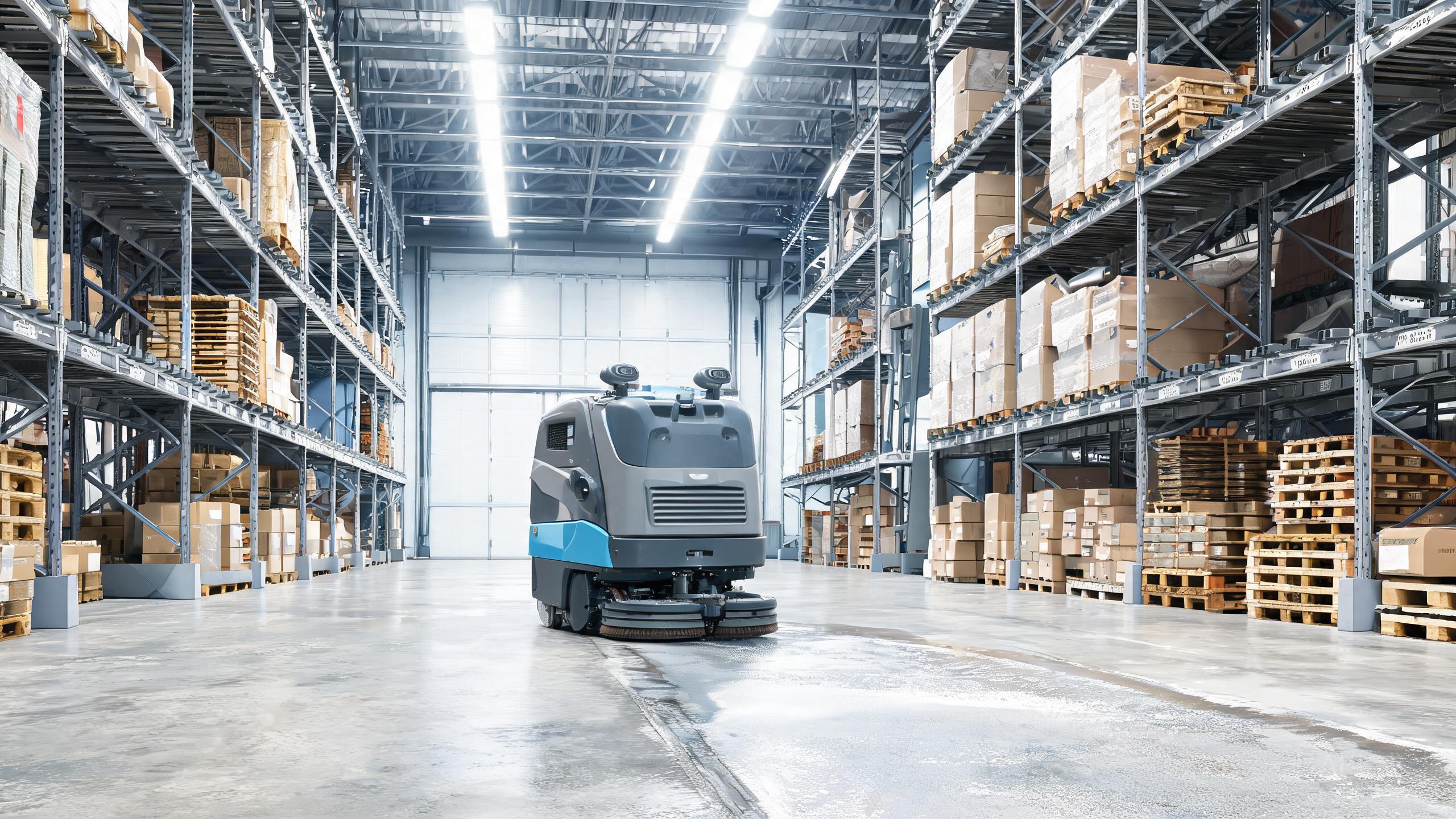
The Nilfisk Liberty SC50 arrives at a moment when facility managers are weighing every dollar of automation spend. As one of the more established robotic floor scrubber brands, Nilfisk positions this machine as a certified safety-first scrubber rather than a raw-throughput champion. Our commercial cleaning robot review breaks down what the CSA/ANSI 336 certification and CopyCat teach-and-repeat mapping actually mean for daily operations, how the autonomous scrubber vs manual cleaning comparison plays out, and whether the SLAM floor scrubber cost is justified for structured sites. If you are shortlisting a best autonomous floor scrubber 2026 candidate for warehouses, retail floors, or logistics hubs, this 7.8-rated machine deserves a close look.
Certified Safety: The SC50's Core Selling Point
The headline spec is the CSA/ANSI 336 certification, a safety standard specifically written for autonomous floor scrubbers operating around people. In practice, this matters for insurance, compliance audits, and night-shift deployments where a robot shares aisles with forklifts and pedestrians. Nilfisk pairs that certification with CopyCat mapping, a teach-and-repeat system: an operator drives the route once, the machine records it, and the SC50 redeploys that path autonomously day after day. It is not full free-roaming SLAM navigation, and Nilfisk does not pretend otherwise. For structured, repeatable environments, that limitation is rarely a problem. The trade-off shows up in the cons column: a dated interface and slower throughput than rivals. Buyers chasing maximum square meters per hour should compare carefully, but buyers chasing audit-ready safety have a clear answer.
Autonomous Scrubber vs Manual Cleaning: Real Cost Math
The autonomous scrubber vs manual cleaning debate usually comes down to labor. A manual scrubber needs a trained operator for every shift, and turnover in janitorial roles is brutal. The SC50 needs an operator only to teach the route and to handle refills and maintenance, which changes the labor model from one-to-one to one-to-many. That said, the slower throughput noted in our testing means the machine covers less ground per hour than faster competitors, so the labor savings depend on how many routes one operator can supervise. Transparent pricing is a genuine plus here: Nilfisk publishes figures rather than forcing a quote process. When you are calculating SLAM floor scrubber cost against headcount, that openness shortens the evaluation cycle considerably.
Warehouse Cleaning Robot ROI and Who Should Buy
Warehouse cleaning robot ROI hinges on three variables: shift count, floor regularity, and the cost of the manual alternative. The SC50 fits sites with fixed, repeatable routes, such as distribution centers, big-box retail, and manufacturing floors with marked aisles. It fits less well in cluttered, constantly reconfigured spaces, because CopyCat depends on the route staying the same. If your site runs multiple cleaning shifts and struggles to staff them, the payback window shortens quickly. If your site cleans once a week with a single operator, the math is harder to justify. Among robotic floor scrubber brands, Nilfisk is not the cheapest nor the fastest, but the certification story is unusually strong, and for regulated industries that alone can decide the purchase.
Verdict: A Compliance-First 7.8
The Liberty SC50 earns its 7.8 by doing one thing exceptionally well: certified, repeatable, safe autonomy. It loses points for a dated interface and throughput that trails rivals. For a best autonomous floor scrubber 2026 shortlist focused on compliance, it belongs near the top; for a shortlist focused on raw speed, look elsewhere.
Our verdict
Nilfisk's Liberty SC50 is the compliance-minded pick in the autonomous scrubber market. CSA/ANSI 336 certification and CopyCat teach-and-repeat mapping make it predictable and audit-friendly, while transparent pricing simplifies the SLAM floor scrubber cost calculation. Accept the slower throughput and dated interface, and you get a dependable machine for structured warehouses and retail floors. For buyers who value safety certification over raw speed, it is a solid 7.8.