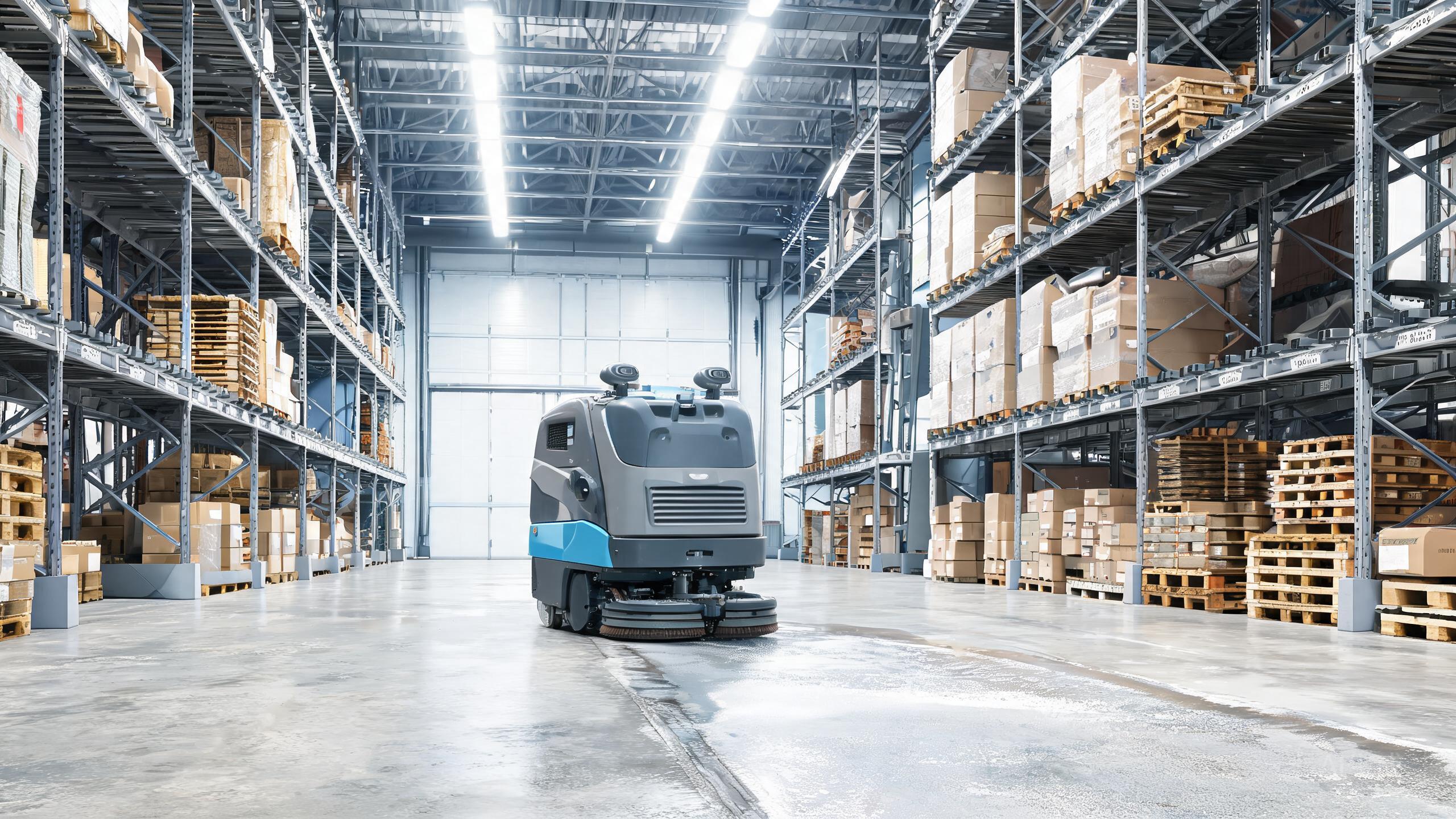
The Kärcher KIRA B 50 rarely appears with a sticker price, and that alone tells you something about how this class of machine is bought. This breakdown focuses purely on cost, pricing structure and value for money — not specs you have read elsewhere. If you are weighing a best autonomous floor scrubber 2026 shortlist for a mid-size facility, the real question is not what the KIRA B 50 costs on paper, but what it costs per cleaned square meter over its service life compared with the labor it replaces.
Why the KIRA B 50 Has No Public Price — and What That Means for Budgeting
Kärcher sells the KIRA B 50 through contact-only pricing, which is standard for commercial autonomous equipment but frustrating for anyone building a capex case. In practice this means the quote is assembled from the machine itself plus configuration choices, and it is negotiated rather than listed. For budgeting purposes, treat the KIRA B 50 as a mid-size autonomous roller-brush scrub-and-sweep unit positioned between walk-behind scrubbers and Kärcher's flagship B 200. That positioning is the single most useful pricing signal: it will sit above entry walk-behind machines and below the large flagship platform. Because the B 200 carries a larger tank and a bigger chassis, part of the KIRA B 50's value case is that you are not paying for capacity you do not need. Any SLAM floor scrubber cost comparison should therefore start from the same area class, not from the cheapest autonomous unit on the market.
The Real Cost Driver: Roller-Brush Scrub-and-Sweep in One Pass
The KIRA B 50 combines roller-brush scrubbing and sweeping in a single mid-size chassis. From a cost perspective, that combination is the core of its value argument: one autonomous pass handles debris and scrubbing together, which reduces the number of separate cleaning cycles a facility must schedule. Fewer cycles means fewer machine hours, less operator involvement and less disruption to daytime operations. This is where an autonomous scrubber vs manual cleaning comparison becomes concrete. Manual cleaning costs scale linearly with labor hours and turnover, while an autonomous unit front-loads cost into the purchase and then runs on a comparatively flat operating curve. The KIRA B 50's robust build quality supports that curve — durable hardware is a cost variable, because it stretches the interval between replacements. Its smaller tank than the B 200 is the trade-off: in very large or heavily soiled areas you may need more refill cycles, which is precisely why Kärcher positions the B 200 above it.
Building a Warehouse Cleaning Robot ROI Case Around the KIRA B 50
A credible warehouse cleaning robot ROI model for this machine rests on three levers. First, routine coverage: the KIRA B 50 is built for dependable daily floor care, so its value compounds through consistent scheduled runs rather than occasional deep cleans. Second, labor displacement: the hours currently spent on repetitive scrubbing and sweeping are the hours the machine absorbs, and those are the easiest labor hours to quantify. Third, redeployment: staff freed from routine floor care move to tasks a robot cannot do, which is where much of the real return sits. Because pricing is contact-only, ask Kärcher for a quote that separates the machine, configuration and any service agreement, then divide total cost of ownership by expected annual cleaned square meters. Compare that figure against your current labor cost per square meter. If the gap is thin, the case rests on consistency and redeployment rather than pure headcount savings — and that is a legitimate reason to buy, as long as you state it honestly in the business case.
Where the KIRA B 50 Sits Among Robotic Floor Scrubber Brands on Value
Value for money in this category is not about the lowest number on a quote. It is about fit. The KIRA B 50 is a mid-size machine, and mid-size is where many facilities actually operate: large enough to justify autonomy, small enough that a flagship platform would be oversized. Against other robotic floor scrubber brands, Kärcher's advantage in this segment is the combination of roller-brush scrub-and-sweep capability, a mid-size footprint and robust build quality in one package. The honest limitations are equally part of the value picture: contact-only pricing makes comparison harder, and the smaller tank than the B 200 means the machine is not the right answer for every large-area duty cycle. For a commercial cleaning robot review focused on money rather than features, the verdict is that the KIRA B 50 earns its 8.5 rating on fit and durability rather than on headline price — and buyers should insist that any competing quote is normalized to the same area class before declaring a winner.
Our verdict
The Kärcher KIRA B 50 is a value proposition built on fit, not on a low sticker price. Its contact-only pricing means you must do the work of normalizing quotes, and its mid-size positioning means you are deliberately not paying for flagship capacity. Build the case on cleaned square meters per year, labor hours absorbed, and staff redeployed — then compare that against your current manual cost per square meter. If the numbers are close, buy it for consistency and durability, and say so plainly. That is a stronger argument than a discount.