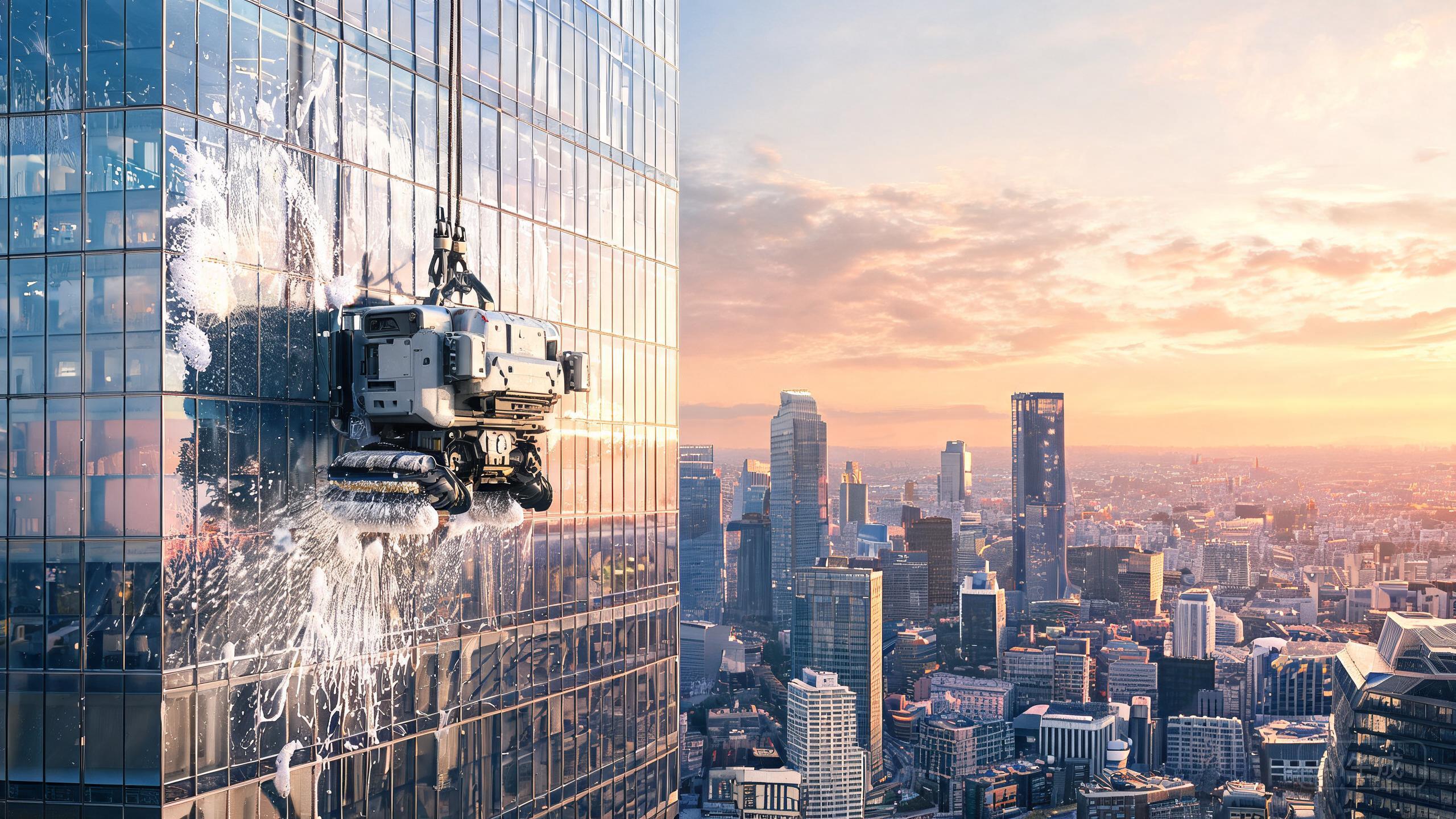
The Kite Robotics Kite is a climbing facade cleaning robot designed for the most challenging high-rise structures. With a maximum height of 200 meters and the ability to handle both flat glass and complex facade geometries, it targets landmark buildings where conventional rigs fall short. This building facade cleaning robot review breaks down its technical specs, operational strengths, and where it fits in the growing field of high rise facade cleaning automation.
Technical Specifications: What Makes the Kite Climb 200 Meters
At its core, the Kite is a climbing robot with a single-minded focus: reaching heights and geometries that other facade cleaning robots cannot. Its 200-meter maximum height puts it in a class of its own for high-rise facade cleaning automation. Unlike wheeled or rail-based systems, the climbing locomotion allows it to navigate vertical surfaces without permanent infrastructure. The target is clear: glass and complex facades, not just the flat curtain walls that simpler robots handle. This makes it suitable for landmark towers with intricate architectural features, where a glass facade cleaning robot must adapt to curves, protrusions, and non-standard panel layouts. The robot's design prioritizes coverage of these difficult areas, ensuring that no section of the facade is left dirty.
Complex Facade Geometries: Beyond Flat Glass
Most facade cleaning robots are built for flat glass. The Kite is different. Its climbing mechanism and control algorithms are engineered to handle complex structures—think fins, mullions, recessed panels, and curved sections. This capability is a direct response to modern architecture, where landmark buildings rarely feature simple flat facades. For building owners, this means one robot can clean areas that would otherwise require multiple systems or extensive manual work. In robotic facade cleaning vs rope access, the Kite offers a compelling alternative for these intricate surfaces: no human suspended at height, no risk of swinging into protrusions, and consistent cleaning pressure. While it may be slower on simple flat glass, its ability to cover complex geometries without additional setup makes it a versatile tool for mixed-facade towers.
Operational Considerations: Setup, Speed, and Cost Factors
The Kite is not a plug-and-play solution. It requires project-specific setup, meaning each building's facade must be assessed to configure the robot's climbing path and cleaning parameters. This upfront work is the trade-off for its ability to handle complex structures. On simple flat glass, the Kite is slower than dedicated flat-glass robots like the Ozmo window cleaning robot, which is optimized for speed on uniform surfaces. However, for buildings with intricate facades, the Kite's coverage reduces the need for multiple machines or risky manual methods. When evaluating glass facade cleaning robot cost, consider not just the unit price but the total cost of ownership: setup, maintenance, and the labor savings from high rise facade cleaning automation. The Kite's project-specific nature means it is best suited for long-term deployments on landmark towers where its unique capabilities justify the investment.
Where the Kite Fits in the 2026 Facade Cleaning Robot Landscape
In the 2026 facade cleaning robot market, the Kite occupies a niche for complex, high-rise landmarks. It is not competing with flat-glass specialists on speed, nor with rope access on simplicity. Instead, it offers a unique combination: 200-meter reach, climbing locomotion, and the ability to clean glass and beyond. For facility managers evaluating 幕墙清洁机器人排名 2026, the Kite stands out for projects where conventional methods are impractical. Its rating of 8.5 reflects strong performance in its intended use case, with deductions for project-specific setup and slower flat-glass speed. As high rise facade cleaning automation matures, the Kite represents a step toward robots that can handle the architectural diversity of modern skylines, not just the easy surfaces.
Our verdict
The Kite Robotics Kite is a specialized tool for a specific challenge: cleaning the complex, high-rise facades that other robots cannot reach. Its 200-meter climbing capability and handling of intricate geometries make it a valuable asset for landmark buildings. While it requires project-specific setup and is not the fastest on flat glass, its ability to replace risky rope access and cover mixed facades justifies its 8.5 rating. For those prioritizing high rise facade cleaning automation on challenging structures, the Kite is a compelling choice.