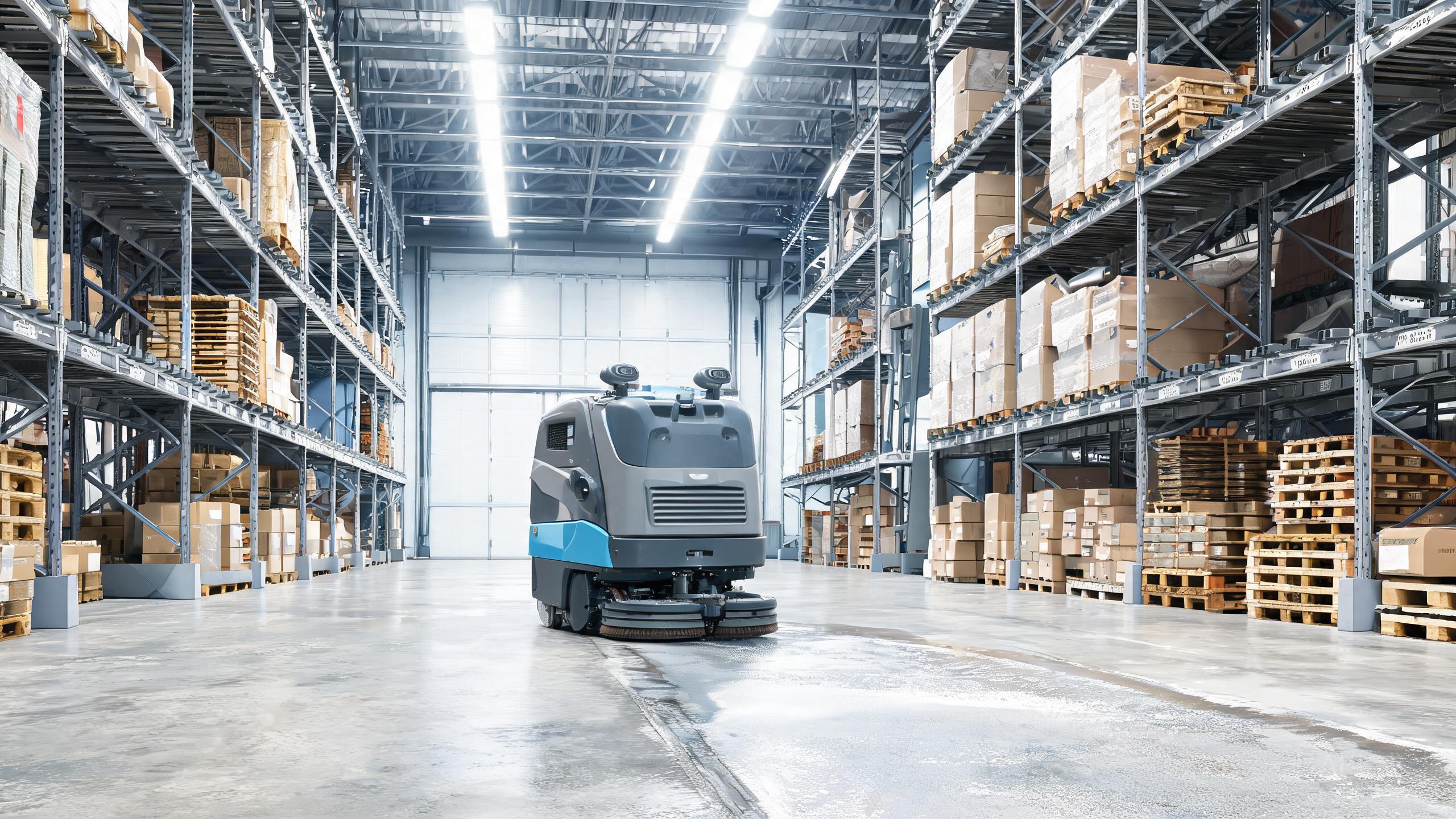
Choosing between the Kärcher KIRA B 200 and Nilfisk Liberty SC50 means weighing full autonomy against certified safety. Both are leading robotic floor scrubber brands in 2026, but they target different facilities. This commercial cleaning robot review breaks down performance, features, value, and who each suits best, so you can decide which is the best autonomous floor scrubber 2026 for your operation.
Performance and Navigation: Full Autonomy vs Teach-and-Repeat
The KIRA B 200 runs fully autonomous routes and supports VDA 5050 for fleet-level coordination, making it ideal for large areas where multiple robots or dynamic paths are needed. Its autonomous routing handles sprawling layouts without manual intervention. The Liberty SC50 uses CopyCat teach-and-repeat mapping: an operator records a route once, and the robot repeats it safely. This is reliable for structured, repetitive cleaning but less flexible in changing environments. In raw throughput, the SC50 is slower than rivals. If you need maximum autonomy and scalability, the KIRA B 200 wins; if you prefer predictable, operator-driven route capture, the SC50 delivers.
Features and Safety: VDA 5050 Fleet Interface vs CSA/ANSI 336 Certification
The KIRA B 200's standout feature is its VDA 5050 interface, enabling fleet coordination for large-scale operations. It also benefits from Kärcher's extensive service network. The Liberty SC50 counters with CSA/ANSI 336 safety certification—a significant advantage for compliance-minded facilities—and a safety-first design. However, its interface feels dated. Neither robot is a budget pick: the KIRA B 200 is contact-priced, while the SC50 offers transparent pricing. For buyers comparing SLAM floor scrubber cost, note that the KIRA B 200 uses autonomous routing (not explicitly SLAM) and the SC50 uses CopyCat mapping; both are premium investments. If certification and safety are paramount, the SC50 leads; if fleet integration and modern autonomy matter more, the KIRA B 200 is ahead.
Value and ROI: Which Delivers Better Warehouse Cleaning Robot ROI?
When evaluating autonomous scrubber vs manual cleaning, both robots reduce labor costs, but their ROI profiles differ. The KIRA B 200's fleet coordination and large-area design suit sprawling warehouses where manual cleaning is slow and costly; its ROI scales with area size and multi-robot deployment. The SC50's transparent pricing and certified safety may lower insurance or compliance costs, benefiting structured facilities like retail or healthcare. However, its slower throughput could mean longer cleaning cycles. For pure warehouse cleaning robot ROI in very large sites, the KIRA B 200's autonomy and fleet interface likely pay off faster. For smaller, compliance-driven sites, the SC50's transparent price and certification may offer a quicker payback. Consider your facility size and labor rates before deciding.
Who Each Robot Suits Best
The Kärcher KIRA B 200 is for sprawling facilities—large warehouses, airports, malls—that need deep scrubbing with minimal staffing and can benefit from fleet coordination. It's overkill for small sites. The Nilfisk Liberty SC50 is for structured environments—retail chains, hospitals, schools—where safety certification, transparent pricing, and predictable routes matter more than raw speed. If you're browsing 洗地机器人品牌推荐 (robotic floor scrubber brands), both are reputable, but your facility's size and compliance needs should drive the choice.
Our verdict
Verdict: For large-scale facilities prioritizing full autonomy, fleet coordination, and high throughput, the Kärcher KIRA B 200 is the best autonomous floor scrubber 2026. For compliance-focused, structured environments that value certified safety and transparent pricing over speed, the Nilfisk Liberty SC50 is the smarter pick. Assess your facility size, labor costs, and safety requirements—then choose the robot that aligns with your ROI goals.