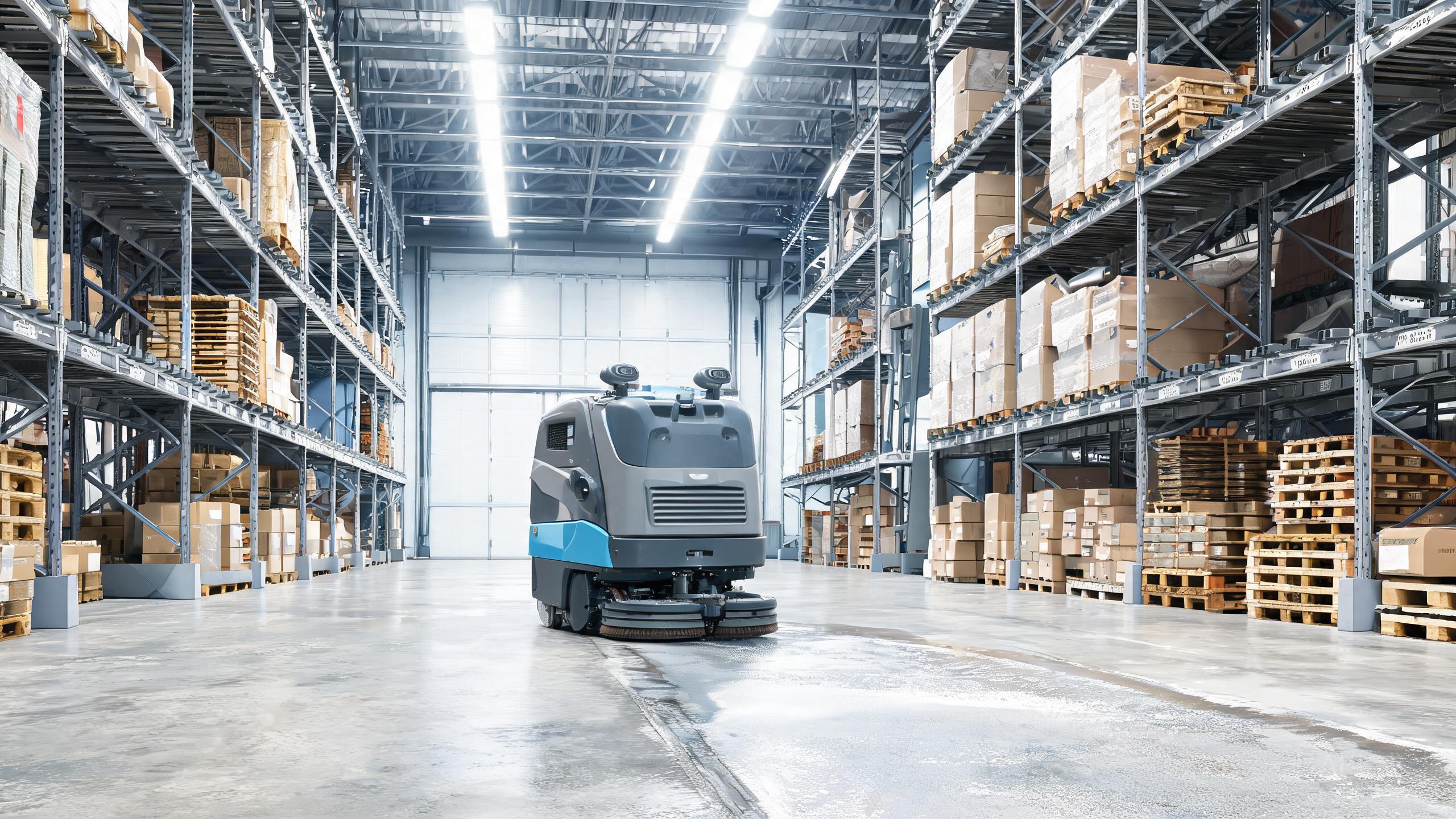
Most reviews of the Kärcher KIRA B 200 ask the same question: is it a good scrubber? This one asks a different question — is it a good fleet member? The KIRA B 200 is built around fully autonomous routing and a VDA 5050 fleet interface, which means its real value shows up not in a single aisle but across an entire facility. For operators comparing a best autonomous floor scrubber 2026 shortlist, that distinction matters more than any single cleaning spec.
Why VDA 5050 Changes the Buying Decision
The headline feature here is not autonomy — plenty of robotic floor scrubber brands offer that. It is the VDA 5050 interface, a fleet-level coordination standard. In practice, this means the KIRA B 200 is designed to be scheduled and dispatched alongside other compatible machines rather than run as a standalone unit. For a large distribution center, that reframes the purchase: you are not buying one scrubber, you are adding a node to a managed cleaning system. If your facility already runs VDA 5050 equipment, integration friction drops sharply. If it does not, the interface is still a forward-looking hedge, but you will not capture its full value on day one.
Autonomous Scrubber vs Manual Cleaning at Scale
The autonomous scrubber vs manual cleaning debate usually gets settled by area size. The KIRA B 200 is explicitly classed for large areas, and that is where manual scrubbing breaks down: shift coverage, route consistency, and the cost of covering the same square meters night after night. An autonomous machine runs the same route repeatably, which matters for audit trails and for facilities where cleaning quality must not drift between operators. Where manual cleaning still wins is edge cases — tight corners, cluttered zones, one-off spills. The KIRA B 200 is not positioned as a replacement for every task; it is positioned as the bulk-coverage layer that frees staff for the exceptions.
Where the ROI Actually Comes From
Warehouse cleaning robot ROI rarely comes from the sticker price — and here there is no sticker price at all, since the KIRA B 200 is contact-priced. That alone tells you the deal is scoped, not catalogued. The return case rests on three levers: labor hours redirected from repetitive scrubbing, consistent coverage that reduces rework, and fleet scalability without proportional headcount growth. The VDA 5050 interface is the third lever's enabler — adding a second or third unit is a scheduling change, not a retraining project. On SLAM floor scrubber cost, buyers should expect a scoped quote that bundles navigation setup, route mapping, and service. The honest caveat: for small sites, this machine is overkill, and the ROI math will not close.
A Realistic Fit Check Before You Request a Quote
Before treating the KIRA B 200 as a contender in your 商用清洁机器人成本 comparison, run a fit check. Large, open, repetitive floor plans: strong fit. Multi-building or multi-zone operations already thinking about fleet coordination: strongest fit. Sites that need deep scrubbing with minimal staffing on long shifts: strong fit. Small retail units, tight floor plans, or facilities with no interest in fleet-level scheduling: poor fit, and the contact-priced model will feel like unnecessary complexity. The Kärcher service network is a genuine advantage here — for a machine this dependent on correct setup and route mapping, local service coverage is not a footnote, it is part of the product.
Our verdict
The Kärcher KIRA B 200 earns its 8.8 rating by being judged on the right terms. It is not the cheapest path to clean floors, and for small sites it is overkill. But as a fleet-ready, fully autonomous large-area scrubber with a VDA 5050 interface, it targets a specific buyer: the sprawling facility that wants deep scrubbing with minimal staffing and a path to scaling coverage without scaling headcount. If that is your profile, it belongs on your shortlist. If it is not, no amount of autonomy will make the math work.