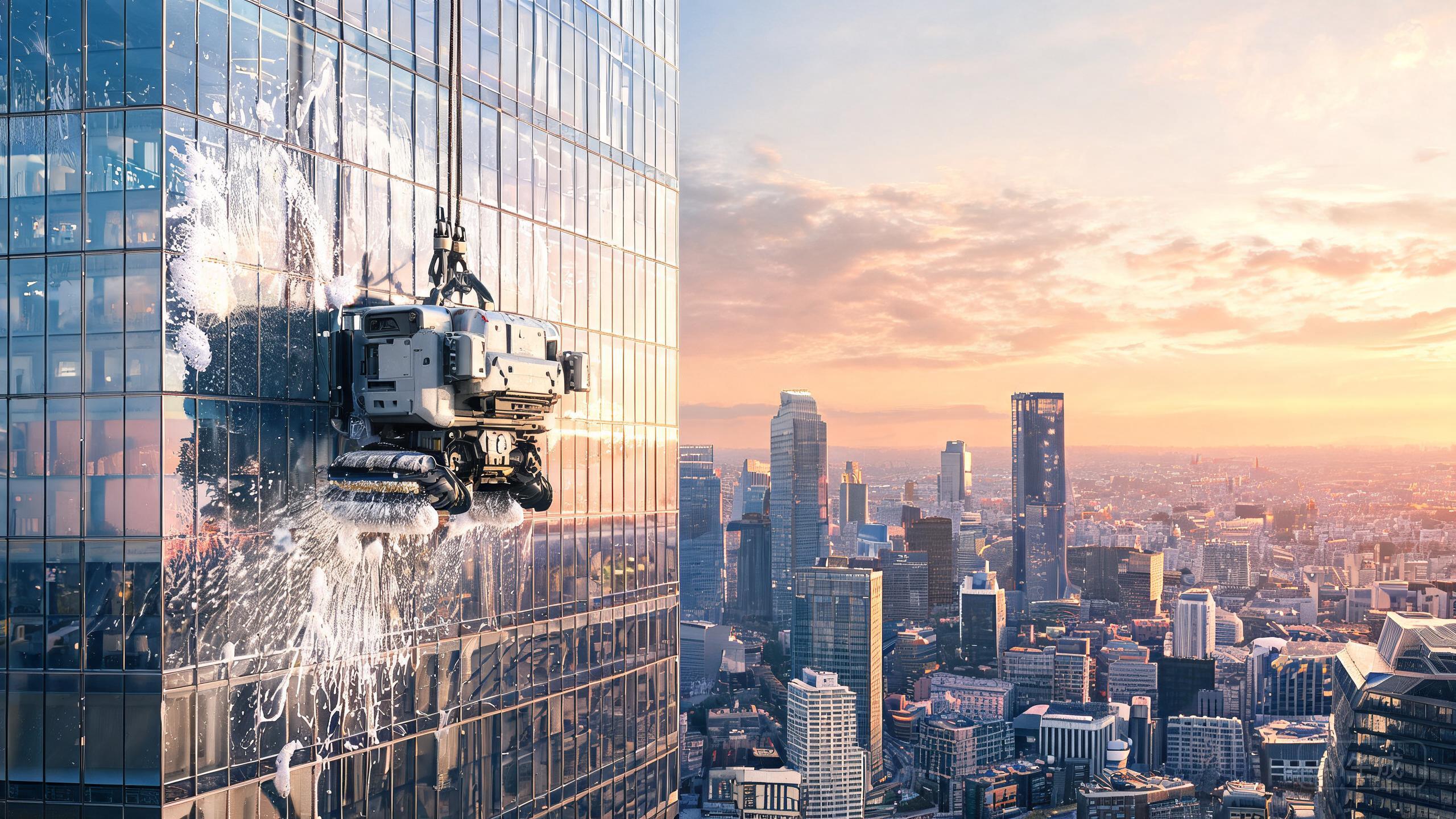
The Jacky's K3 arrives in the facade cleaning robot 2026 market with two headline numbers that are hard to ignore: a 600-meter working height and a 720 m²/h throughput. This building facade cleaning robot review examines what those figures mean for supertall towers, how the K3 fits the shift toward high rise facade cleaning automation, and where its broad claims still need real-world proof. We also place it beside the wider conversation around robotic facade cleaning vs rope access and glass facade cleaning robot cost, plus how it compares with alternatives such as the Ozmo window cleaning robot.
Jacky's K3 Specs and Positioning
The K3 is built around four core data points: a 600 m working height, a 720 m²/h throughput, a target of supertall facades, and a use case of large commercial towers. In the context of high rise facade cleaning automation, that combination points to industrial-pace maintenance rather than boutique jobs. A 600-meter reach covers the vast majority of the world's tallest curtain-wall buildings, while 720 m²/h suggests the unit is designed to move across large glass surfaces quickly instead of lingering on small residential panes. The K3's positioning is therefore clear: it is a facade cleaning robot aimed at commercial portfolios, not a household gadget. That said, the manufacturer's claims remain unverified, and the broad wording leaves room for interpretation about real-world conditions such as wind, suction, tether management, and water supply.
Robotic Facade Cleaning vs Rope Access
The central argument for the K3 is the same one driving the whole category: robotic facade cleaning vs rope access. Rope access crews are flexible and can reach complex geometries, but they are slow, weather-sensitive, and carry inherent safety exposure. A robot rated for 600 m and 720 m²/h promises to compress schedules and reduce the number of people dangling above street level. For asset managers running multiple towers, that trade-off is the heart of the business case. High rise facade cleaning automation also improves predictability: a machine can be scheduled, tracked, and repeated with consistent coverage. The caveats matter, though. Rope teams handle corners, ledges, and mixed materials that a single robot may not. The K3's broad claims mean buyers should ask for documented trials on their own facade type before assuming the headline throughput translates to their building.
Glass Facade Cleaning Robot Cost and Market Context
Glass facade cleaning robot cost is rarely a simple sticker price. It includes the unit, tether and safety systems, water and power logistics, operator training, maintenance, and the downtime when weather halts operations. The K3's industrial throughput suggests it is aimed at buyers who can amortize those costs across large surface areas, where a 720 m²/h rate shortens the payback window. In the broader facade cleaning robot 2026 landscape, the K3 competes on reach and speed rather than on being a low-cost entry. It also sits in a different class from the Ozmo window cleaning robot, which targets residential glass rather than supertall curtain walls. For procurement teams, the practical question is not only price but total cost per square meter cleaned per year, including the risk reduction that robotic facade cleaning vs rope access can deliver.
Verdict: Who Should Consider the K3
The Jacky's K3 earns a 7.8 rating for a reason: its 600 m working height, 720 m²/h throughput, and supertall capability are genuinely ambitious for a facade cleaning robot. For owners of large commercial towers and curtain-wall portfolios, it is a credible candidate for high rise facade cleaning automation, provided the unverified headline specs hold up in documented trials. Buyers weighing glass facade cleaning robot cost should model total cost per square meter, not just purchase price. And anyone comparing robotic facade cleaning vs rope access should treat the K3 as a complement to, not an automatic replacement for, human crews on complex geometries. If your priority is residential glass, the Ozmo window cleaning robot remains a more appropriate class of product.
Our verdict
The Jacky's K3 is a supertall-focused facade cleaning robot with standout claimed numbers: 600 m working height and 720 m²/h throughput. It fits the 2026 push toward high rise facade cleaning automation and offers a compelling alternative narrative to rope access, but its headline specs are unverified and its claims are broad. Treat it as a strong candidate for large commercial towers, demand documented trials, and compare total glass facade cleaning robot cost before committing.