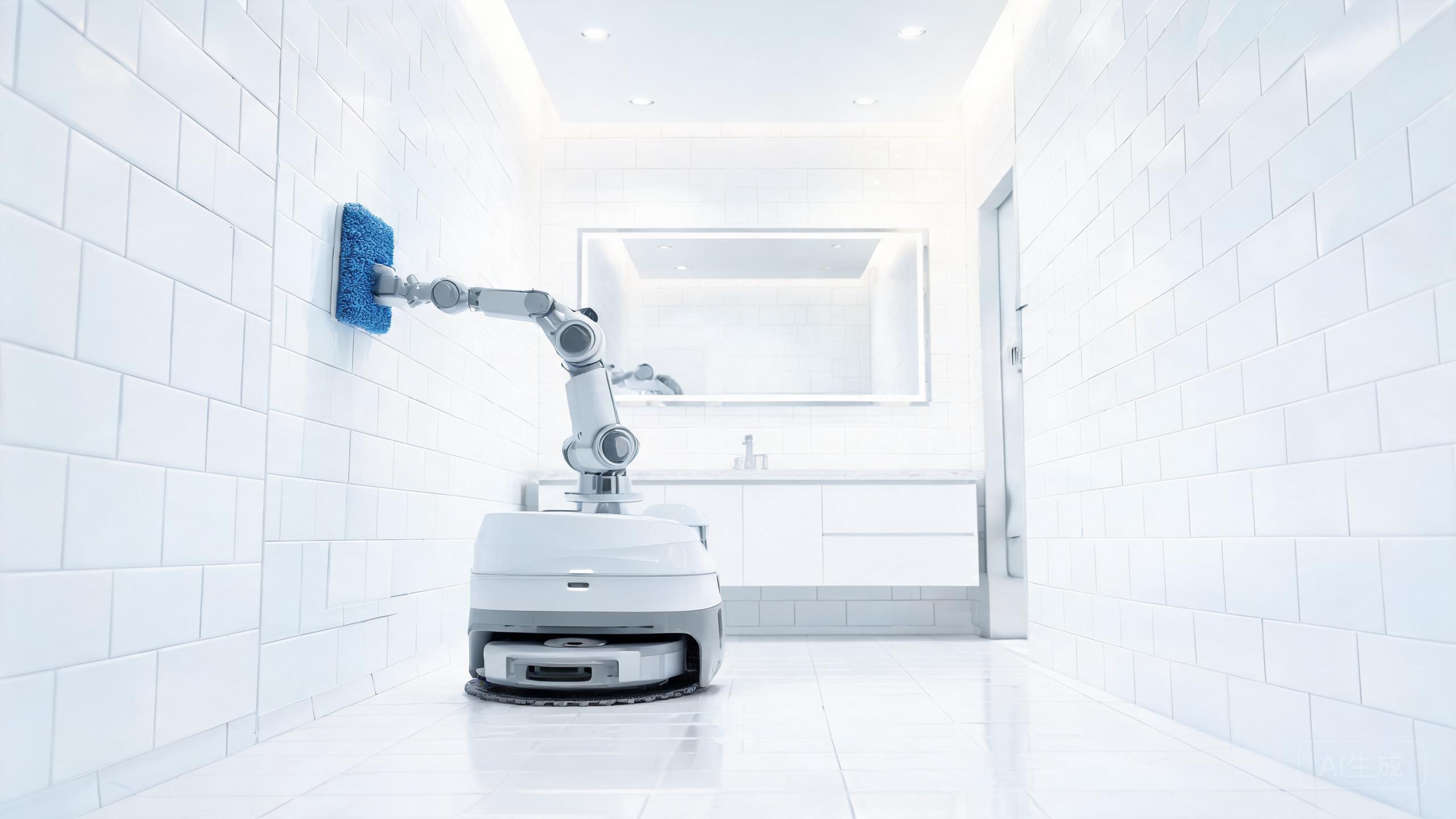
The Abluo Mark 2 is HiveBotics' second-generation autonomous toilet cleaning robot, pairing LiDAR navigation with a 6-DoF arm to cover toilets and urinals. Most field problems reported by commercial buyers are not hardware failures but setup, mapping, and maintenance issues that appear once a unit moves from a demo room into a real restroom. This guide walks through the most common symptoms, what causes them, and the checks to run before you contact support. It complements our other coverage and focuses only on fixing problems in day-to-day operation.
LiDAR Mapping and Navigation Problems
If the robot stops mid-route, circles a fixture, or reports a map error, the cause is usually the LiDAR's view of the room rather than the navigation stack. Mirrors, glossy stall partitions, and floor-to-ceiling glass reflect the scan and create phantom obstacles, so the unit treats open floor as blocked. Start by re-running a mapping pass with stall doors open and reflective surfaces temporarily covered or flagged. Keep the LiDAR window clean; a film of soap residue or hard-water mist from nearby sinks is enough to degrade returns. Check that no new fixture, bin, or signage has been placed inside the mapped footprint, since the Abluo Mark 2 plans against its stored map and will stall when reality diverges. If the unit repeatedly fails at the same doorway, verify the threshold height and lighting, then remap that zone only.
6-DoF Arm and Cleaning Coverage Faults
Arm-related complaints usually show up as missed spots on the bowl rim, incomplete urinal passes, or an arm that aborts a cycle. Because the 6-DoF arm works to taught positions relative to each fixture, any shift in fixture position, seat height, or wall-mounted urinal angle can push the arm outside its expected envelope. Re-teach the affected fixture rather than remapping the whole room. Check that the arm's joints move freely through their range with the unit powered down, and inspect the end effector for buildup that changes its reach. If cycles abort only on certain fixtures, confirm the fixture is on the supported target list and that nothing obstructs the arm's path, such as a dispenser or grab bar. Coverage gaps on toilets and urinals are more often geometry and teaching issues than motor faults.
Docking, Power, and Cycle Interruption Issues
Failed returns to the dock, short cycles, and mid-task shutdowns typically trace to power and dock placement. Confirm the dock sits on level floor with clear approach space and is not inside a stall where the door can block the final approach. Clean the charging contacts on both the dock and the unit; restroom humidity and cleaning chemistry leave residue that raises contact resistance. If the robot drains faster than expected, check whether it is running extra passes caused by a stale map or by fixtures flagged as dirty, both of which extend runtime. Schedule deep cycles outside peak restroom traffic so doors and occupants do not interrupt navigation. For commercial restroom cleaning automation planning, log each interruption with time and location; patterns across a week usually reveal a single environmental cause rather than a battery problem.
When to Escalate to HiveBotics Support
Some symptoms should go straight to support rather than on-site troubleshooting: repeated arm joint errors after re-teaching, LiDAR faults that persist after cleaning and remapping, and charging failures after contact cleaning and dock relocation. Before you call, gather the unit's logs, the map version in use, the fixtures affected, and a short description of the restroom layout, since layout dependence is a known limitation of this generation. Buyers evaluating restroom robot cost should factor in the time staff spend on remapping after renovations and fixture changes; that recurring labor, not the purchase price alone, shapes the real total. Keep firmware current, since HiveBotics' second-generation refinements arrive through updates, and record any change in behavior after each one so support can trace it quickly.
Our verdict
Most Abluo Mark 2 problems in commercial bathrooms come down to three things: a map that no longer matches the room, fixtures that have moved outside the arm's taught positions, and power or dock conditions degraded by restroom humidity. Working through mapping, arm teaching, and docking checks in that order resolves the majority of issues without a service call. Treat remapping after layout changes as routine maintenance, keep the LiDAR window and charging contacts clean, and escalate only persistent arm, LiDAR, or charging faults with logs in hand.