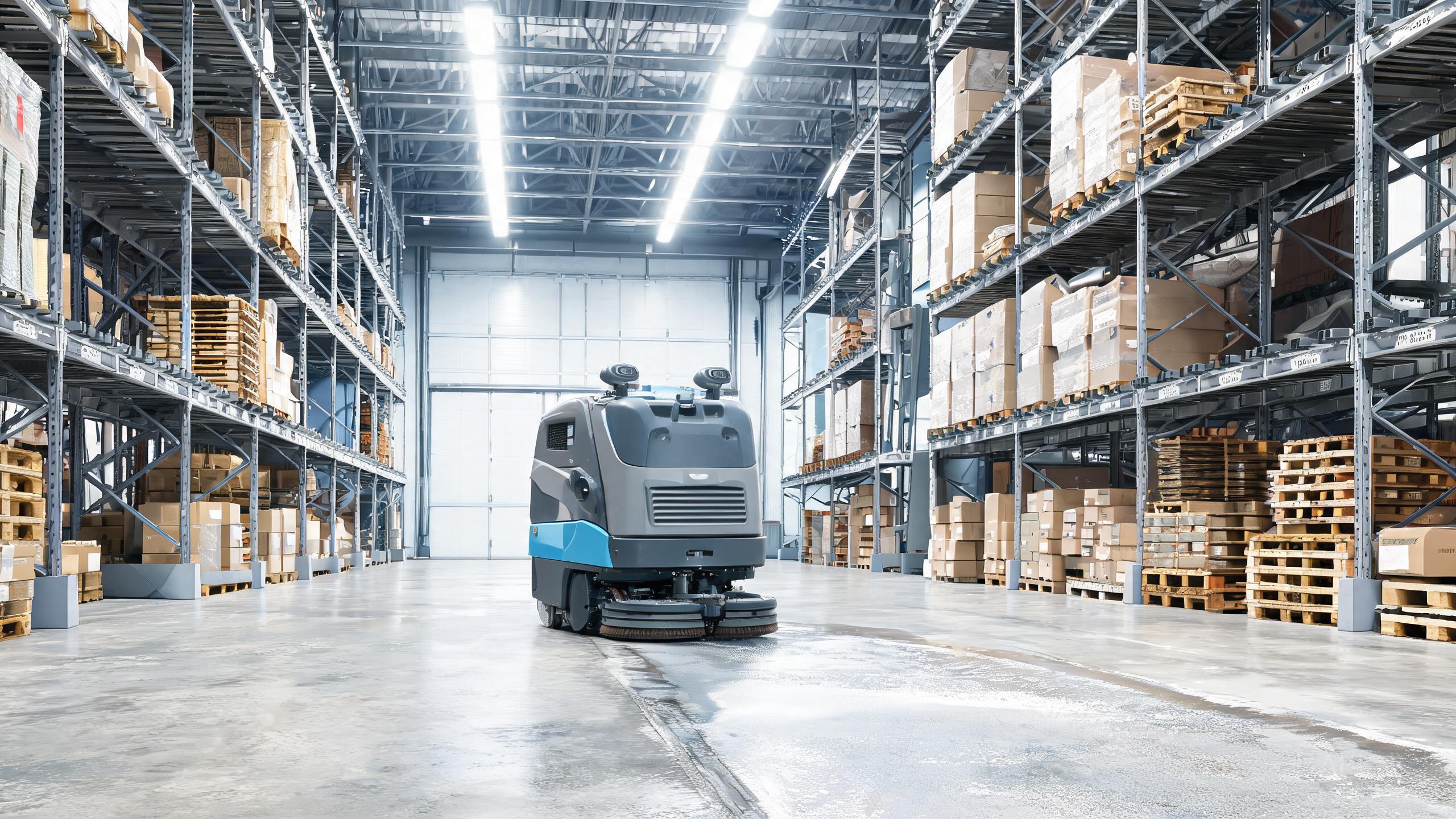
If you manage a facility where the floors never stop getting dirty, the Avidbots Neo 2 was designed with you in mind. This is not a lightweight household helper dressed up for commercial duty; it is a heavy-duty autonomous floor scrubber rated at 4,400 square metres per hour with a 105-litre tank, built for long, uninterrupted runs. In this commercial cleaning robot review, we look past the spec sheet and examine what the Neo 2 actually means for large venues, how it stacks up in the broader field of robotic floor scrubber brands, and where it earns its keep.
Throughput and Tank Size: Why 4,400 m²/h Matters
The headline number is 4,400 square metres per hour. In practice, that figure separates the Neo 2 from smaller autonomous units that need frequent pit stops. Combine that throughput with a 105-litre tank and you get a machine that can run for extended stretches without a refill, which is exactly what airports, big-box retail floors, and large warehouses demand. For anyone comparing an autonomous scrubber vs manual cleaning, the math is stark: a manual scrubber operator covers a fraction of that area per hour and needs breaks, shift changes, and supervision. The Neo 2 keeps going, and its remote monitoring means a supervisor can track progress without walking the floor. That combination is why it remains a serious contender for the best autonomous floor scrubber 2026 has to offer in the heavy-duty tier.
Remote Fleet Monitoring: The Hidden Productivity Lever
One of the Neo 2's most underrated features is remote fleet monitoring. When you deploy more than one unit, the ability to see status, location, and performance from a dashboard changes how you schedule cleaning. Instead of dispatching staff to check machines, you allocate labour to the tasks robots cannot do. This is where warehouse cleaning robot ROI starts to look attractive: the robot handles the repetitive, large-area scrubbing, while your team focuses on edges, spills, and high-touch areas. The Neo 2 is autonomous by design, so once routes are configured it works with minimal intervention. That said, the upfront cost is real, and the system requires trained setup, so the ROI case depends on your square footage and labour rates.
Autonomous Scrubber vs Manual Cleaning: The Real Cost Picture
Discussions about SLAM floor scrubber cost often focus on the purchase price alone, which misses the point. The relevant comparison is total cost of ownership over several years. A manual cleaning programme scales with headcount: more area means more staff, more training, more turnover. An autonomous scrubber scales with routes and battery cycles. The Neo 2's 4,400 m²/h throughput and 105-litre tank mean fewer refills and fewer interruptions per shift, so one unit can cover ground that would otherwise require a small crew. Where the Neo 2 stands out is consistency: it scrubs the same path the same way every time, which matters in venues where appearance and hygiene are audited. The trade-off is clear: high upfront cost and a trained setup requirement, but lower marginal cost per square metre over time.
Where the Neo 2 Fits Among Robotic Floor Scrubber Brands
The commercial cleaning robot market is crowded, and robotic floor scrubber brands increasingly compete on autonomy, data, and service. The Neo 2's pitch is narrower and stronger: continuous heavy scrubbing in large venues. It is not trying to be the cheapest entry point or the most nimble small-space unit. It is aiming at airports and big-box retail, where proven reliability matters more than novelty. If your facility runs long shifts, has wide open floors, and struggles to keep manual crews staffed, the Neo 2's combination of throughput, tank capacity, and remote oversight is compelling. If your space is small or highly cluttered, you may be paying for capability you cannot fully use. In our 商用洗地机器人排名 2026 assessment, it earns a solid 8.0 for doing one job exceptionally well rather than many jobs adequately.
Our verdict
The Avidbots Neo 2 is a specialist, not a generalist. Its 4,400 m²/h throughput, 105-litre tank, and remote fleet monitoring make it a proven workhorse for airports, big-box retail, and large warehouses that need continuous heavy scrubbing. The high upfront cost and trained setup requirement are genuine barriers, so the decision comes down to scale: if you have the square footage and the labour pressure, the ROI case is strong. If you need a budget-friendly or small-space solution, look elsewhere. For facilities that fit its profile, the Neo 2 remains one of the most credible heavy-duty autonomous scrubbers available in 2026.