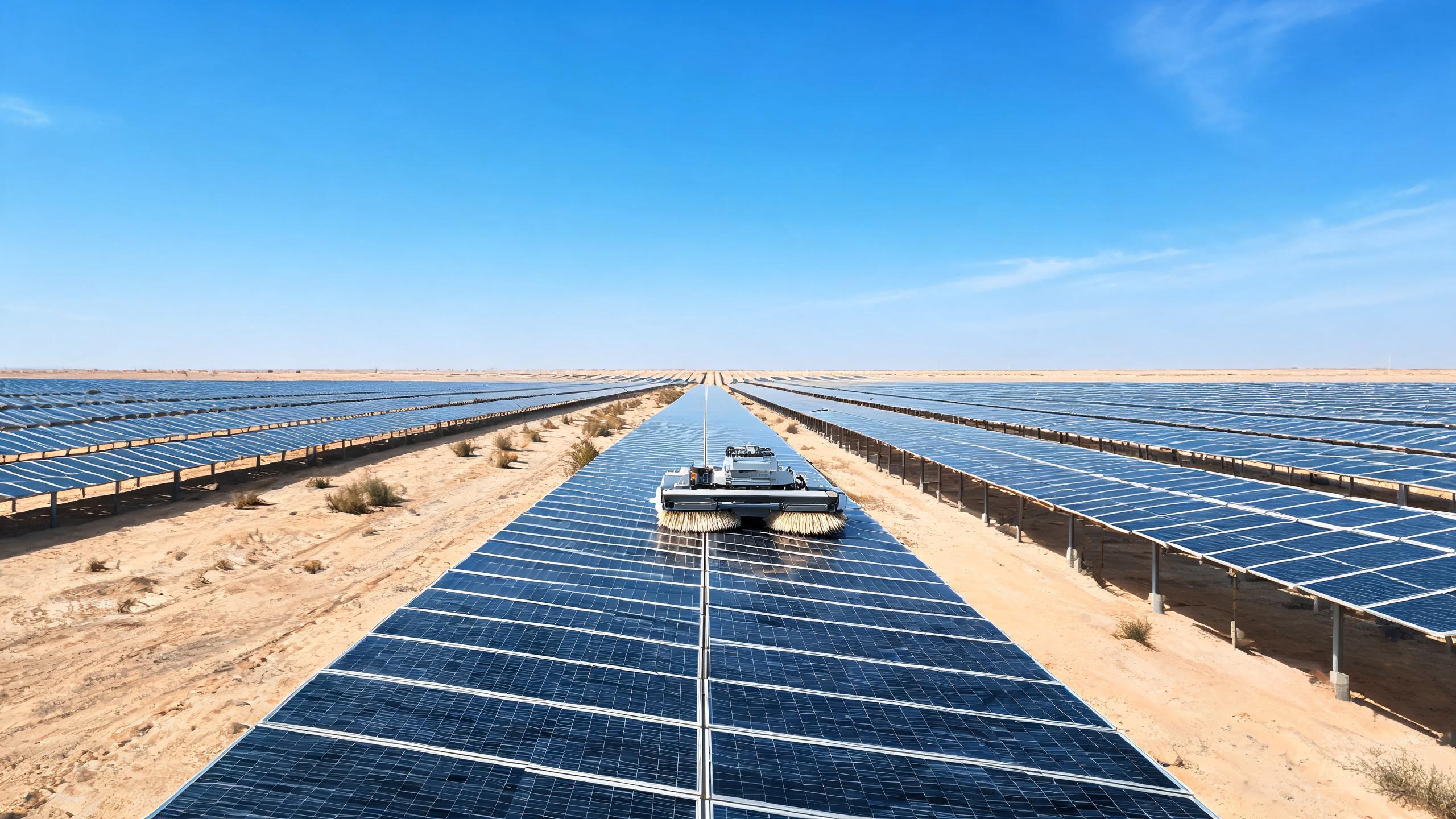
When solar panels sit low on dusty ground, cleaning robots often slip, stall, or damage the array. X8 Robotics' X8 Plus takes a different approach: instead of wheels, it uses tracks. This tracked ground-plant cleaner is engineered for rough and dusty terrain, making it a niche contender in the utility-scale PV cleaning robot market. But does it deliver enough to be called the best solar panel cleaning robot 2026? We break down its design, cleaning method, and cost considerations.
Why Tracked Design Wins on Dusty Solar Farms
Wheeled robots often struggle on loose soil, gravel, and uneven ground common in ground-mounted plants. The X8 Plus uses a tracked drive system, which distributes weight more evenly and provides better traction. This allows it to traverse dusty fields where wheeled robots might get stuck or slip. For operators managing large flat sites, this tracked design reduces downtime and prevents damage to panels or the robot itself. The simple mechanical design also means fewer electronic components that can fail in harsh environments. While not the flashiest option, its robustness is a key selling point for those prioritizing reliability over advanced features.
Waterless Cleaning and Output Impact
The X8 Plus is a brush-based cleaner, and it operates as a waterless solar panel cleaner. This is a major advantage in arid regions where water is scarce or expensive. But does solar panel cleaning improve output? Yes, studies consistently show that dust accumulation can reduce PV efficiency by up to 25% in dry climates. By using a dry brush system, the X8 Plus removes dust and debris without the need for water, which also eliminates the risk of water spots and mineral residue. When comparing dry vs wet solar panel cleaning, dry methods like this are faster and more sustainable, though they may be less effective on sticky or caked-on dirt. For most dusty solar farms, however, dry brushing is sufficient to restore significant output.
Cost and Market Positioning
One of the biggest questions for any operator is solar panel cleaning robot cost. Unfortunately, X8 Robotics does not publish pricing for the X8 Plus; it uses a contact-only pricing model. This lack of transparency can be a hurdle for budget planning. However, for large utility-scale sites, the cost of a robot like this is often justified by reduced labor and water expenses. The X8 Plus is positioned as a niche option—it lacks the market presence and polish of major brands, which may affect resale value and support availability. Still, for operators who need a rugged, waterless solution for flat, dusty terrains, the X8 Plus could be a cost-effective choice despite the opaque pricing.
Pros and Cons at a Glance
The X8 Plus excels in its intended environment: rough, dusty ground-mounted plants. Its tracked drive is a clear advantage over wheeled rivals, and the simple brush mechanism is easy to maintain. However, its limited market presence and contact-only pricing are significant drawbacks. For those considering the best solar panel cleaning robot 2026, the X8 Plus is not a top-tier all-rounder but a specialized tool. If your site is flat, large, and dusty—and you can negotiate a fair price—this robot could be a valuable addition to your maintenance fleet.
Our verdict
The X8 Robotics X8 Plus is a purpose-built answer to a specific problem: cleaning solar panels on dusty, uneven terrain without water. While it may not win awards for polish or support, its tracked design and waterless operation make it a strong candidate for utility-scale PV cleaning robot applications. If you can look past the opaque pricing, it deserves a spot on your shortlist for challenging environments.