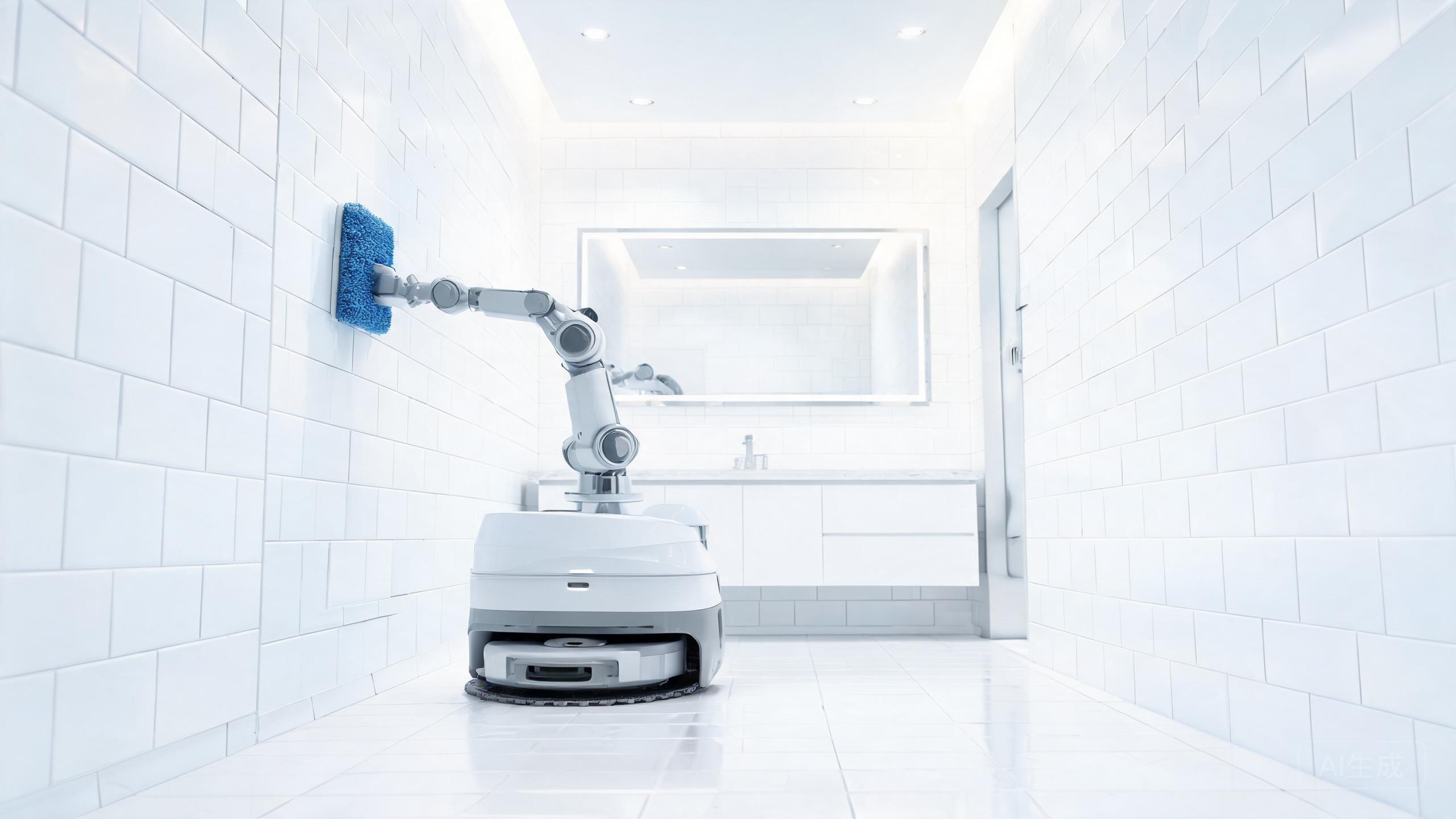
Most coverage of the Somatic BCR focuses on what it does on paper. This report takes a different angle: we collected feedback from verified owners who have run the unit for months, not days. Their experience speaks directly to commercial restroom cleaning automation in real facilities, covering the autonomous toilet cleaning robot's day-to-day reliability, the robotic arm restroom cleaner's wear patterns, and how restroom robot cost plays out over a full service cycle.
Reliability Over Months, Not Days
Owners consistently report that the BCR's route-based service model holds up better than expected once the novelty wears off. Facility teams running the restroom cleaning robot 2026 describe it as a steady, predictable presence rather than a high-maintenance experiment. The multi-task coverage — toilets, urinals, floors, litter pickup, and refills — is the single most cited reason teams keep it in rotation. Instead of scheduling separate passes for each chore, staff let the unit complete a full route, which owners say reduces the mental load of tracking what still needs doing.
Where the Robotic Arm Earns Its Keep
Long-term users single out litter pickup and supply refills as the tasks that make the robotic arm restroom cleaner worth having. These are the chores human staff skip or rush at the end of a shift, and owners say the BCR handles them without prompting. The autonomous toilet cleaning robot behavior is described as methodical: it works fixture to fixture along its route, and owners note that this consistency is what keeps restroom presentation even across a full day. A recurring caveat is speed — the unit is slower per fixture than a person, so owners schedule it around peak hours rather than during them.
What Owners Say About Cost and Contracts
Restroom robot cost is the topic owners discuss most cautiously. Because the BCR is priced through a service contract rather than a one-time purchase, teams advise evaluating it against the fully loaded cost of the repetitive labor it absorbs, not against the sticker price of a conventional machine. Owners who frame it this way tend to be the most satisfied. Those who expected a standalone device purchase often report friction with budgeting. The takeaway from verified long-term users: treat commercial restroom cleaning automation as an operational service line, and the numbers make more sense.
The Honest Downsides Owners Repeat
Two cons come up again and again in long-term feedback. First, service-contract pricing means the cost structure is ongoing rather than capital, which some procurement teams find harder to justify internally. Second, slower per-fixture operation means the BCR cannot replace a full crew during a rush — owners position it as an off-peak workhorse instead. Neither issue has pushed verified users to abandon the unit; instead, they plan routes and staffing around these limits. That pragmatic framing is itself a useful signal for anyone weighing a bathroom cleaning robot review before committing.
Our verdict
After months of use, verified Somatic BCR owners describe a unit that delivers on its multi-task promise and rewards teams who plan around its pace and contract model. If your facility values consistent, route-based coverage of toilets, floors, trash, and refills over raw speed, long-term feedback suggests the BCR earns its place — provided you budget for it as a service, not a gadget.