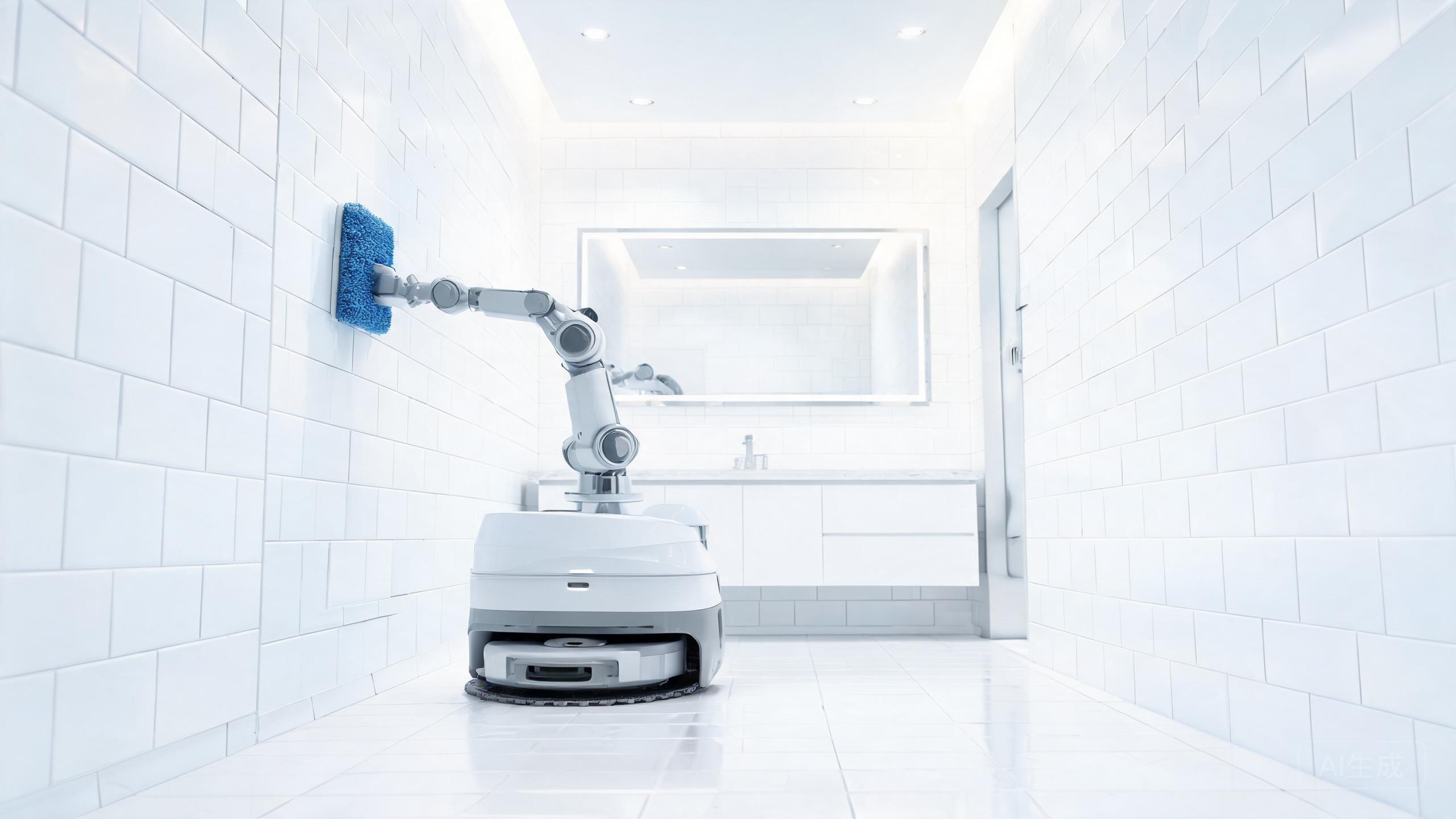
Somatic has quietly moved the conversation from hardware specs to service design. Its BCR is not sold as a gadget you charge in a closet; it is positioned as a route-based autonomous cleaning service that handles toilets, urinals, floors, litter pickup and supply refills in one shift. For facility managers watching commercial restroom cleaning automation mature in 2026, that shift matters more than any single cleaning head. This update looks at the company's product direction, the operational logic behind the BCR, and what a bathroom cleaning robot review should actually measure when the robot arrives as a service rather than a machine.
From Machine Sales to Route-Based Service Contracts
The most important company-level story around the Somatic BCR is its operating model. The unit is described as route-based service, meaning the value proposition is a scheduled sweep of restroom fixtures rather than a one-off deep clean. In practice, a facility signs up for recurring coverage, and the BCR works through toilets, urinals and floors on a defined loop, also picking up litter and refilling supplies along the way. That model explains both the praised route-based service strength and the noted service-contract pricing con. Buyers are not comparing a sticker price against a manual cart; they are comparing a contracted automation line item against labor hours. For procurement teams building a restroom robot cost case in 2026, the relevant math is cost per covered fixture per shift, not cost per robot.
Why Multi-Task Coverage Changes Restroom Cleaning Robot 2026 Planning
Most autonomous floor scrubbers stop at the floor. The BCR's stated task range is broader: toilet, floor, trash and refill, with toilets, urinals and floors as explicit targets. That breadth is the product's real differentiator and its main planning challenge. On the plus side, one route can offload several of the most repetitive restroom chores, which is exactly where staff turnover and compliance risk concentrate. On the minus side, the cons list flags slower per-fixture performance, so the BCR is not a speed play. The practical implication for an autonomous toilet cleaning robot deployment is that it fits steady, predictable restroom traffic better than peak-event surges. Facilities should map fixture counts, restroom density and shift windows before assuming one unit replaces one full-time role.
What a Bathroom Cleaning Robot Review Should Measure Now
A useful bathroom cleaning robot review in 2026 should stop grading robots like appliances and start grading them like service providers. Three metrics matter for the BCR. First, coverage reliability: does the route actually complete toilets, urinals, floors, litter and refills within the shift window, given the slower per-fixture pace? Second, handoff clarity: who restocks consumables when the robot's refill task runs out of supply, and who verifies a fixture the robot flags? Third, contract transparency: how is service-contract pricing structured across restroom count, fixture count and visit frequency? The BCR's rating of 8.5 reflects a strong multi-task concept with a service-shaped cost structure. Reviewers who ignore that structure will misjudge the product in both directions, overpraising the autonomy and undercrediting the offload.
Commercial Restroom Cleaning Automation: Where the BCR Fits
The BCR is best understood as an infrastructure play for commercial restroom cleaning automation, not a replacement for every cleaning task. Its natural fit is facilities with many similar restrooms on repeatable routes: offices, campuses, transit hubs, venues and large retail. In those settings, a robotic arm restroom cleaner that also handles floors, litter and refills can absorb the dullest part of the shift and free staff for detail work, inspections and customer-facing duties. The mismatch case is a small site with two restrooms and irregular traffic, where service-contract pricing rarely beats a manual cart. As Somatic's product line matures, the company's real competition is less other robots than the staffing model it is asking facilities to renegotiate.
Our verdict
Somatic's BCR update is less about a new attachment and more about a maturing commercial model. The restroom cleaning robot 2026 conversation is shifting from whether robots can clean restrooms to how they are bought, scheduled and verified. With multi-task coverage, route-based service and a service-contract cost structure, the BCR rewards facilities that plan by shift and fixture count rather than by sticker price. Teams evaluating commercial restroom cleaning automation should treat the 8.5 rating as a starting point for a service-level discussion, not a final verdict on a machine.