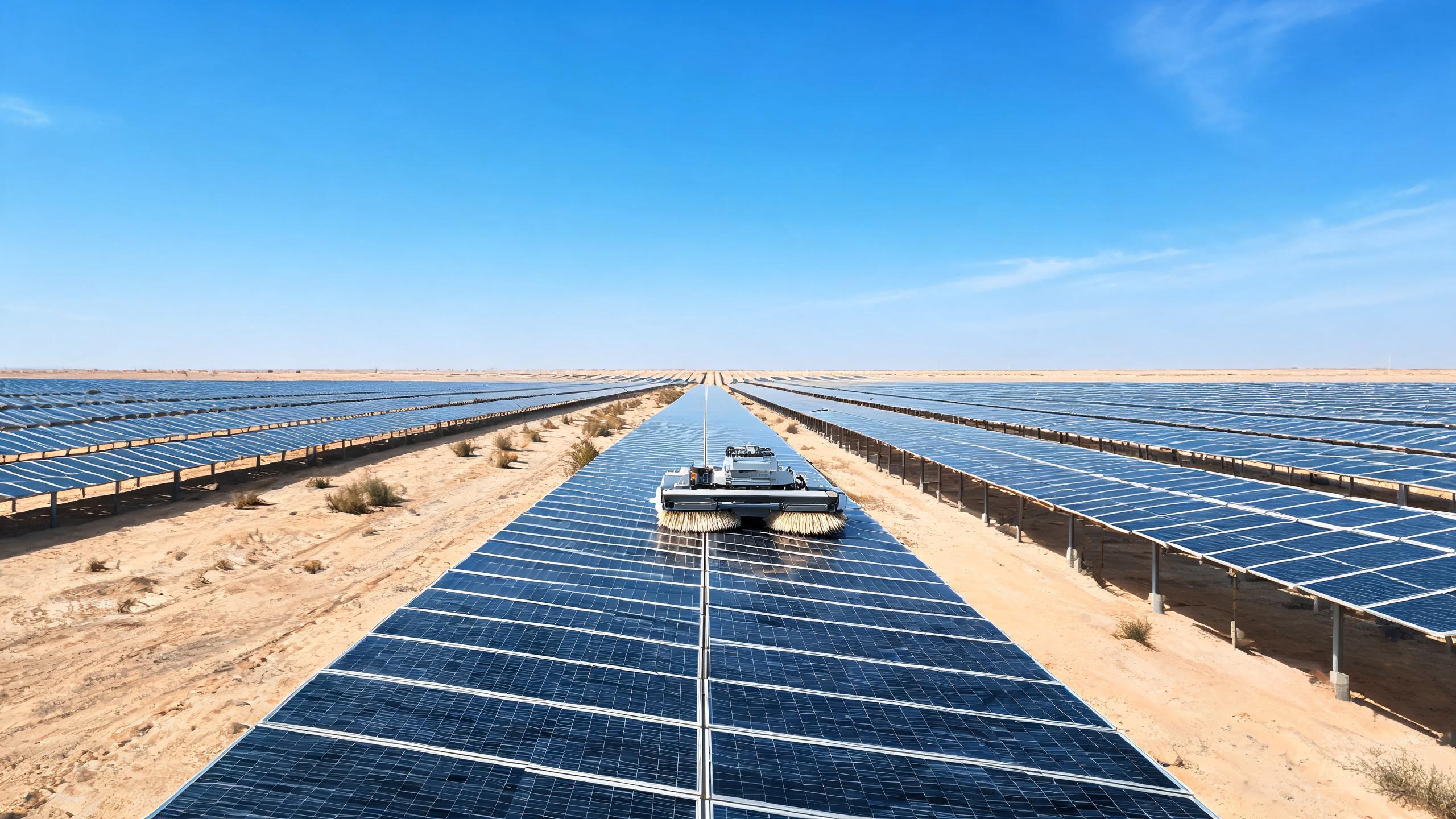
Solar panels lose output when dust, pollen, and bird droppings block sunlight. But cleaning too often wastes water and labor, while cleaning too rarely wastes energy. This editorial explains how often solar panels should be cleaned, whether waterless or wet methods win, and how the best solar panel cleaning robot 2026 lineup changes the math for both rooftop and utility scale PV cleaning robot fleets.
How Often Should Solar Panels Be Cleaned?
There is no single answer, but a practical rule is every 2–8 weeks in dusty or agricultural regions, and every 3–6 months in clean, rainy climates. The key question is does solar panel cleaning improve output. Yes, meaningfully: a heavily soiled array can lose a double-digit percentage of production, and even light dust reduces yield. Frequency should follow soiling rate, not the calendar. Rain helps but does not replace cleaning, because it often leaves streaks and does not remove caked-on dirt. For utility scale PV cleaning robot operations, most sites clean on a scheduled loop, often every 4–6 weeks, while rooftop systems can stretch to quarterly if soiling is mild.
Dry vs Wet Solar Panel Cleaning: Which Method Fits Your Site?
Dry vs wet solar panel cleaning is the biggest operational decision. Dry cleaning uses rotating brushes and air, consuming no water. It is ideal for arid regions, steep roofs, and daily dust cycles. Wet cleaning adds water and sometimes detergent, which removes sticky bird droppings and pollen better but risks water spots and freezing. A waterless solar panel cleaner such as the Ecoppia T4 (9.5) is built for utility-scale waterless cleaning, while the SolarCleano F1 (9.0) is the best remote wet/dry panel robot, switching modes as needed. The IFBOT X3 (8.8) is best for steep roofs and dry cleaning, and the GEKKO Solar Fox (8.7) is a service-fleet wet/dry workhorse. In practice, many sites run dry most of the year and switch to wet after pollen season.
Solar Panel Cleaning Robot Cost and ROI
Solar panel cleaning robot cost varies widely. Budget handheld units like the Tengda TT-1500 (7.0) and Lovsun PV Cleaner Robot (7.5) start low, while autonomous utility robots like the Ecoppia T4 carry enterprise pricing. Mid-range options include the Neexgent NXR-IV (8.5) with PLC control, the SDZ NCE Fugo X1 (8.3) with long runtime, the TEAMANTS TAR01 (7.2) with CE-certified semi-autonomous brushing, and the X8 Robotics X8 Plus (6.8) tracked ground-plant cleaner. ROI depends on labor savings, water savings, and recovered generation. If cleaning improves output by even a few percent on a large array, the payback can be under two years. For 2026, the best solar panel cleaning robot 2026 choices balance autonomy, runtime, and dry/wet flexibility rather than price alone.
Building a Cleaning Schedule That Actually Works
Start by measuring soiling loss: compare a cleaned test string against a dirty one. Then set frequency by season. In high-dust months, run the utility scale PV cleaning robot every 4 weeks; in mild months, every 8–12 weeks. Use a waterless solar panel cleaner for routine passes and reserve wet cleaning for stubborn contamination. Track water use, labor hours, and generation before and after each cycle. If you operate a fleet, standardize on one or two models to simplify parts and training. The GEKKO Solar Fox and SolarCleano F1 suit mixed fleets, while the Ecoppia T4 fits large deserts. Rooftop owners can pair the IFBOT X3 for steep dry work with a handheld for spot cleaning. The goal is not maximum cleaning, but maximum net output per dollar.
Our verdict
How often should solar panels be cleaned? Match frequency to soiling, not habit. In dusty regions, every 2–8 weeks; in clean climates, every 3–6 months. Choose dry vs wet solar panel cleaning based on contamination type and water availability, and let robots handle the routine. With the best solar panel cleaning robot 2026 options spanning waterless utility units to flexible wet/dry rooftop machines, the right schedule plus the right machine will improve output and lower cost per kWh.