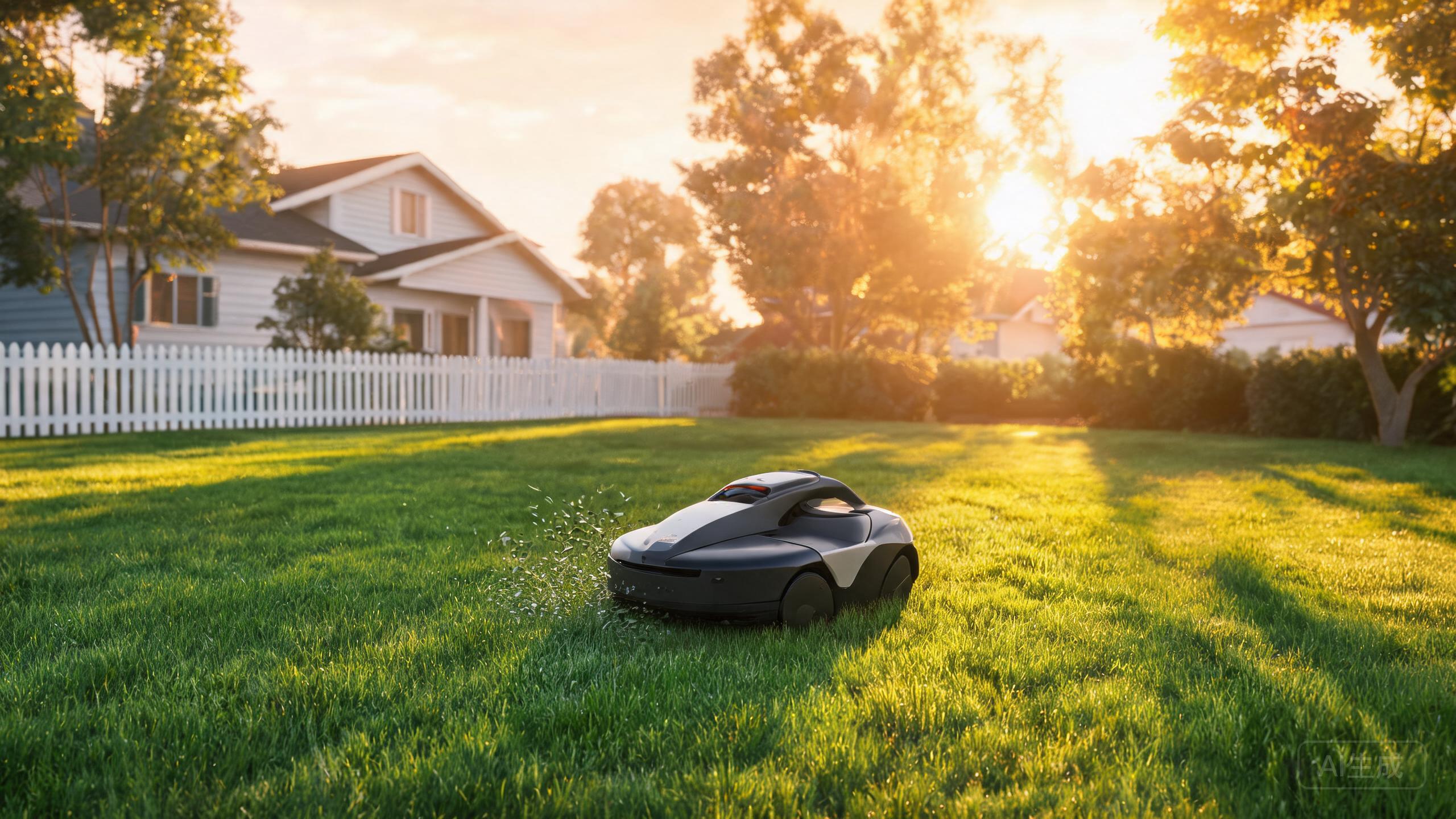
Most coverage of the Segway Navimow i105N focuses on price and the novelty of going wire-free. This deep dive takes a different angle: the positioning stack itself. We break down what 'RTK + Vision' actually changes versus a GPS-only design, how the wire-free architecture reshapes robotic lawn mower installation, and where the i105N's small-yard rating and average cut-height range place it in the best robotic lawn mower 2026 conversation. Every claim below is anchored to the published spec sheet: RTK + Vision navigation, no perimeter wire, small-yard sizing, battery power, and a rating of 8.0.
RTK vs GPS robotic mower: what the i105N's positioning stack actually changes
The headline spec is 'RTK + Vision', and it deserves a proper explanation rather than a bullet point. Standard GPS positioning drifts by meters under tree cover or near walls, which is why many mowers rely on a buried boundary wire as a physical backstop. RTK (real-time kinematic) corrects that drift by comparing the mower's position against a fixed reference, tightening accuracy to a usable working tolerance. Layering vision on top adds local awareness of obstacles and edges that satellite correction alone cannot see. In a wireless robotic mower review, this combination is the single most important differentiator: it is what makes a wire-free design credible rather than aspirational. The trade-off to note is that RTK still depends on a clear view of the sky for its reference signal, so dense overhead canopy is a real-world consideration. For buyers comparing RTK vs GPS robotic mower options, the i105N sits on the stronger side of that line at a mid-tier price, which is exactly why it earns the 'best RTK value pick' tagline.
Wire-free architecture and robotic lawn mower installation
Removing the perimeter wire changes the installation workflow more than any other design decision. A conventional robotic lawn mower installation means trenching or pegging hundreds of meters of cable, planning loops around flower beds, and accepting that any later landscaping change means re-laying wire. The i105N's wire-free approach replaces that physical boundary with the RTK + Vision positioning layer, so setup becomes a matter of placing the reference hardware and mapping the lawn rather than digging. That is a meaningful difference for renters, for gardens that are redesigned often, and for anyone who has postponed buying a mower purely because of the cable job. The practical caveat is that the reference unit needs a sensible mounting spot with a clear sky view, so installation planning shifts from 'where does the wire go' to 'where does the antenna go'. For a full breakdown of the mapping walkthrough, see our separate installation-focused coverage; here the point is architectural: the i105N trades buried copper for a positioning dependency, and that trade is the product's defining engineering choice.
Slope handling, yard size and the honest limits
Spec sheets are where marketing meets physics, and the i105N's published data is refreshingly modest: it is rated for small yards, not acreage. That is an important correction for anyone searching for the best robot mower for large lawn use cases, because this model is not positioned there. Buyers with expansive open turf should look at higher-tier units in our rankings rather than stretch this one beyond its intended footprint. On gradients, the RTK + Vision stack is an asset: visual obstacle detection and continuous position correction help the mower hold a consistent path on uneven ground, which is why it appears in discussions of a robotic mower for steep slopes even though Segway does not market it as an extreme-terrain machine. Treat slope capability as 'well-managed undulation' rather than 'hillside'. The other honest limit is the cut-height range, which our review notes as average: fine for routine maintenance, less flexible for seasonal deep cuts. Battery power keeps the platform simple and cable-free, with runtime tied to the small-yard rating.
Where the i105N fits in the 2026 rankings
An 8.0 rating is a specific statement: strong, not flawless. The strengths are structural — RTK + vision positioning, genuinely wire-free operation, a trusted brand, and a mid-tier price that undercuts most RTK-equipped rivals. The weaknesses are equally clear: an average cut-height range and occasional app quirks, both noted in our verdict. For a small-yard owner who wants modern positioning without a cable project, the value case is unusually clean. For a large-property owner or someone who needs wide cut-height flexibility, the same specs argue for looking elsewhere. That is the honest framing for the best robotic lawn mower 2026 shortlist: the i105N is not the most capable machine on the list, but on positioning technology per dollar it is one of the hardest to beat.
Our verdict
The Segway Navimow i105N is best understood as a positioning-first mower. Its RTK + Vision stack is what makes the wire-free design work, and that architecture is the real story behind its 8.0 rating. Buy it for a small yard, a clean installation, and strong RTK value; skip it if you need large-lawn coverage or a wide cut-height window.