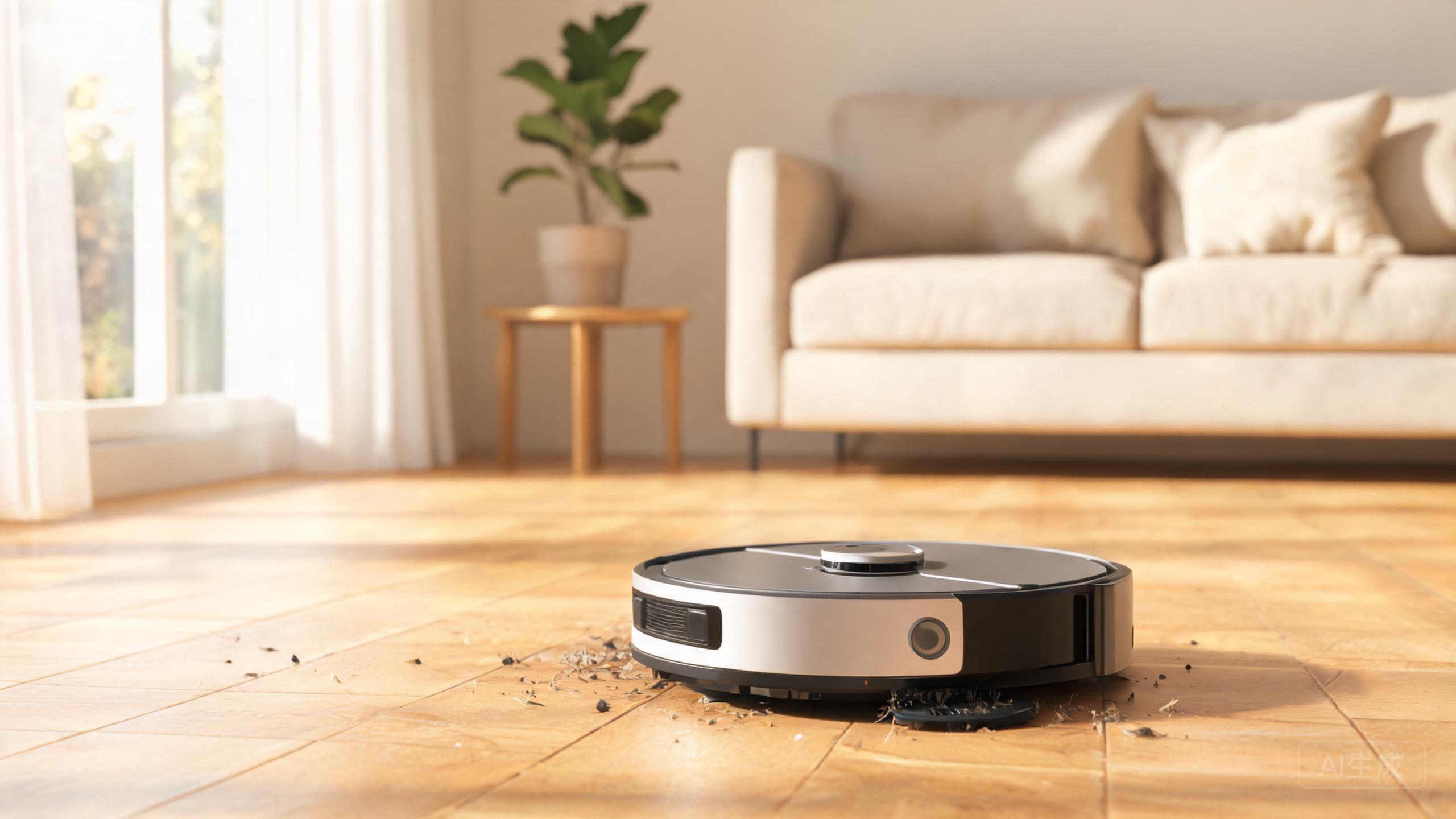
The Roborock Q7 M5 arrives at a moment when flagship robots cost more than a laptop, and that alone makes it interesting. Priced under $150, it promises 10,000 Pa suction, LiDAR navigation, and an extending side brush — the essentials of a robot vacuum and mop combo review, minus the dock. In this review we look past the spec sheet and ask a narrower question: for a small apartment or a first-time buyer, is the Q7 M5 the best robot vacuum 2026 has to offer at this price?
LiDAR vs vSLAM: Why Navigation Matters More Than Suction at This Price
At budget prices, the biggest difference between a robot you tolerate and one you actually use is navigation. The Q7 M5 uses LiDAR, mapping rooms with a spinning laser instead of a camera. In practice, that means faster, more consistent maps and better performance in low light than vSLAM rivals. The LiDAR vs vSLAM robot vacuum debate usually favors LiDAR for structured homes with defined walls and furniture — exactly the kind of space the Q7 M5 targets. The trade-off is a slightly taller turret on top, which can matter under very low sofas, but for most small homes it is a non-issue. If you want a reliable map without paying flagship prices, this is the strongest argument for the Q7 M5.
Suction, Side Brush, and the Pet Hair Question
10,000 Pa is a headline number, and in this class it is genuinely high. On hard floors it lifts crumbs, cereal, and fine dust without drama; on low-pile carpet it pulls up surface debris but, like most robots at this price, it will not deep-clean plush carpet the way a corded vacuum does. The extending side brush is the quieter hero: it reaches along baseboards and into corners where fixed brushes miss, which matters if you are hunting for the best robot vacuum for pet hair. Pet owners should note two practical points. First, hair wraps around the roller over time, so a weekly cleanup keeps suction strong. Second, with no self emptying robot vacuum dock, you empty the bin yourself after most full-home runs. That is the honest cost of the low price.
Mopping Performance Test: What the Q7 M5 Can and Cannot Do
In our robot vacuum mopping performance test, the Q7 M5 handled light, everyday messes well: dust films on tile, dried water spots, and small sticky patches came up after a slow pass. It is a maintenance mop, not a scrubber. Dried-on stains and grout lines need a second pass or a manual touch-up. The bigger caveat is mop management. There is no dock to wash or refill the pad, so you wet it, run the robot, then rinse and dry it yourself. If you mop daily, this routine gets old fast; if you mop weekly, it is a minor chore. For buyers weighing 拖地机器人性价比, the Q7 M5 makes sense when mopping is occasional and vacuuming is the main job.
Who Should Buy the Q7 M5 — and Who Should Not
The Q7 M5 fits a clear profile: a studio, one-bedroom, or small two-bedroom home with mostly hard floors and a few rugs; a first robot vacuum buyer who wants real navigation without a $600 commitment; or a second robot for a specific zone. It is also a sensible pick if you already own a corded vacuum for deep cleans and want daily upkeep on autopilot. It is not the right choice if you have multiple pets and a large home, if you want a self emptying robot vacuum so you can ignore the bin for weeks, or if you expect a mop to replace manual scrubbing. In those cases, spend more. In its lane, the Q7 M5 is one of the better-value entry robots of the year.
Our verdict
The Roborock Q7 M5 is not trying to be everything. It trades the dock, the self-washing mop, and deep-carpet power for LiDAR navigation, 10,000 Pa suction, and a genuinely useful extending side brush — all under $150. For small homes, first-time buyers, and pet owners with mostly hard floors, that trade is easy to accept. If you need automation that handles its own maintenance, look higher up the range; if you want the best robot vacuum 2026 offers at entry level, the Q7 M5 earns its place on the shortlist.