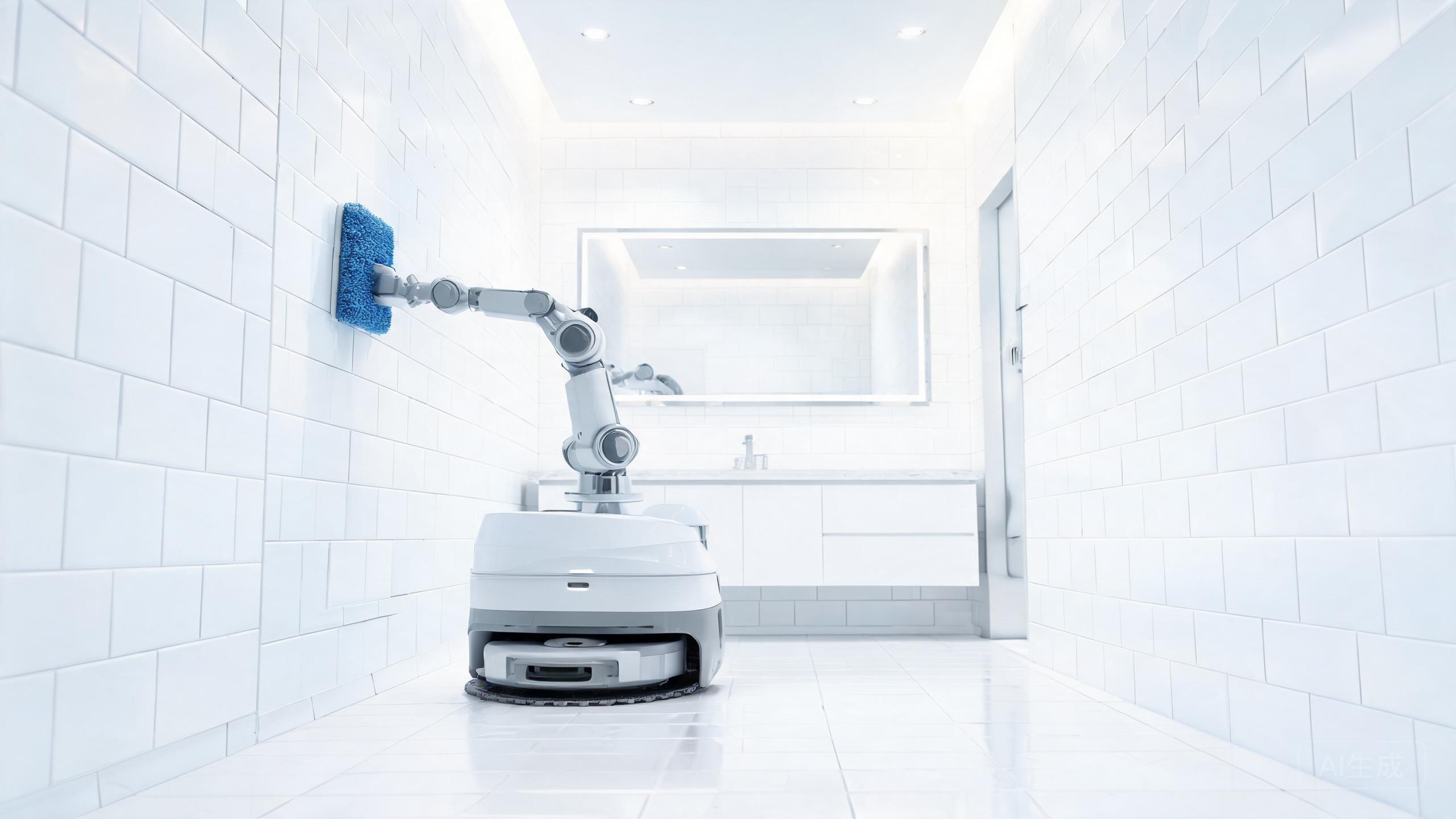
Contactless sanitation has moved from luxury to baseline expectation in commercial facilities. The restroom cleaning robot 2026 generation is built around that shift, pairing autonomous navigation with robotic arms, LiDAR, and on-demand disinfectants. This editorial review examines the leading autonomous toilet cleaning robot platforms, what they actually clean, and how commercial restroom cleaning automation changes labor, water use, and hygiene outcomes.
Why Contactless Sanitation Is Redefining the Restroom Cleaning Robot in 2026
The core promise of the restroom cleaning robot 2026 category is simple: no human hands on shared surfaces during routine cleaning. That matters in high-traffic restrooms where cross-contamination risk peaks between scheduled manual visits. Today's autonomous toilet cleaning robot uses sensors to map stalls, urinals, and sinks, then applies disinfection without a worker touching a single fixture. The Primech AI Hytron, rated 9.5 in our category, illustrates the direction clearly: a 6-axis arm with electrolyzed-water disinfection. Electrolyzed water is generated on board, which reduces reliance on stored chemicals and supports continuous contactless sanitation between human deep-clean cycles. For facility managers, this is less about replacing staff and more about removing the riskiest touchpoints from the daily routine.
Robotic Arm Restroom Cleaner vs. Multi-Surface Robots: What the 2026 Lineup Delivers
Not every platform in this category solves the same problem. A robotic arm restroom cleaner targets fixtures directly, while multi-surface robots prioritize floors and vertical surfaces. The HiveBotics Abluo Mark 2 (9.0) combines LiDAR-guided navigation with a 6-axis bathroom cleaning arm, positioning it as a direct competitor to the Hytron for fixture-level work. The Somatic BCR (8.5) takes a broader task list: toilets, floors, trash, and refills. That scope makes it attractive for facilities that want one unit to cover multiple restroom chores rather than specializing. The HiveBotics Abluo M1 (8.0) represents first-gen autonomous toilet cleaning and remains a useful reference point for buyers comparing maturity against newer arms. The Pudu SH1 (7.5) sits at the other end of the spectrum: multi-surface vertical cleaning with 80% water saving, a strong fit where water cost and surface variety matter more than toilet-specific automation. In practice, the best bathroom cleaning robot review conclusion is that fixture-level arms and multi-surface units complement each other rather than compete.
Commercial Restroom Cleaning Automation: Coverage, Water, and Labor Realities
Commercial restroom cleaning automation succeeds or fails on three practical axes: what gets cleaned, how much water is used, and how much staff time is freed. On coverage, the Somatic BCR's four-task scope (toilets, floors, trash, refills) is the broadest in this lineup, while the Abluo Mark 2 and Hytron concentrate on fixture disinfection with 6-axis precision. On water, the Pudu SH1's 80% water saving is the standout figure and a meaningful lever for facilities with high restroom turnover. On labor, contactless sanitation reduces the number of touchpoints a worker must handle, but it does not eliminate the need for periodic human inspection and deep cleaning. The realistic framing for 2026 is hybrid: autonomous units handle routine, high-frequency sanitation; staff handle exceptions, restocking oversight, and quality checks. Facilities evaluating this shift should also weigh restroom robot cost against water savings, chemical reduction, and the risk-adjusted value of fewer surface-contact incidents.
How to Choose: Matching Robot Capability to Restroom Traffic and Budget
Start with the dominant cleaning task. If toilet and urinal disinfection is the priority, a 6-axis arm platform such as the Hytron or Abluo Mark 2 is the logical shortlist, and both bring contactless sanitation to the highest-risk fixtures. If your restrooms need broad daily coverage with less fixture specialization, the Somatic BCR's combined toilet, floor, trash, and refill workflow may reduce the number of separate machines required. If water consumption and vertical surfaces dominate your cost model, the Pudu SH1's 80% water saving deserves a close look. Buyers comparing generations should note that the Abluo M1 reflects first-gen autonomous toilet cleaning, which can be a budget-friendly entry point but may lack the refinement of newer arms. Across all options, request a site trial that measures actual cycle time, water use, and staff intervention frequency before committing, and treat restroom robot cost as a total-cost-of-ownership figure rather than a sticker price.
Our verdict
Contactless sanitation is now the organizing principle of the restroom cleaning robot 2026 market. The Primech AI Hytron and HiveBotics Abluo Mark 2 lead on fixture-level precision with 6-axis arms and electrolyzed-water or LiDAR-guided disinfection, the Somatic BCR wins on breadth of tasks, and the Pudu SH1 addresses water efficiency with 80% savings. The Abluo M1 remains a useful first-gen benchmark. For facilities adopting commercial restroom cleaning automation, the smartest path is a hybrid deployment: autonomous units for routine contactless sanitation, human staff for inspection and exceptions. Evaluate restroom robot cost against water, chemical, and risk savings, and pilot before you scale.