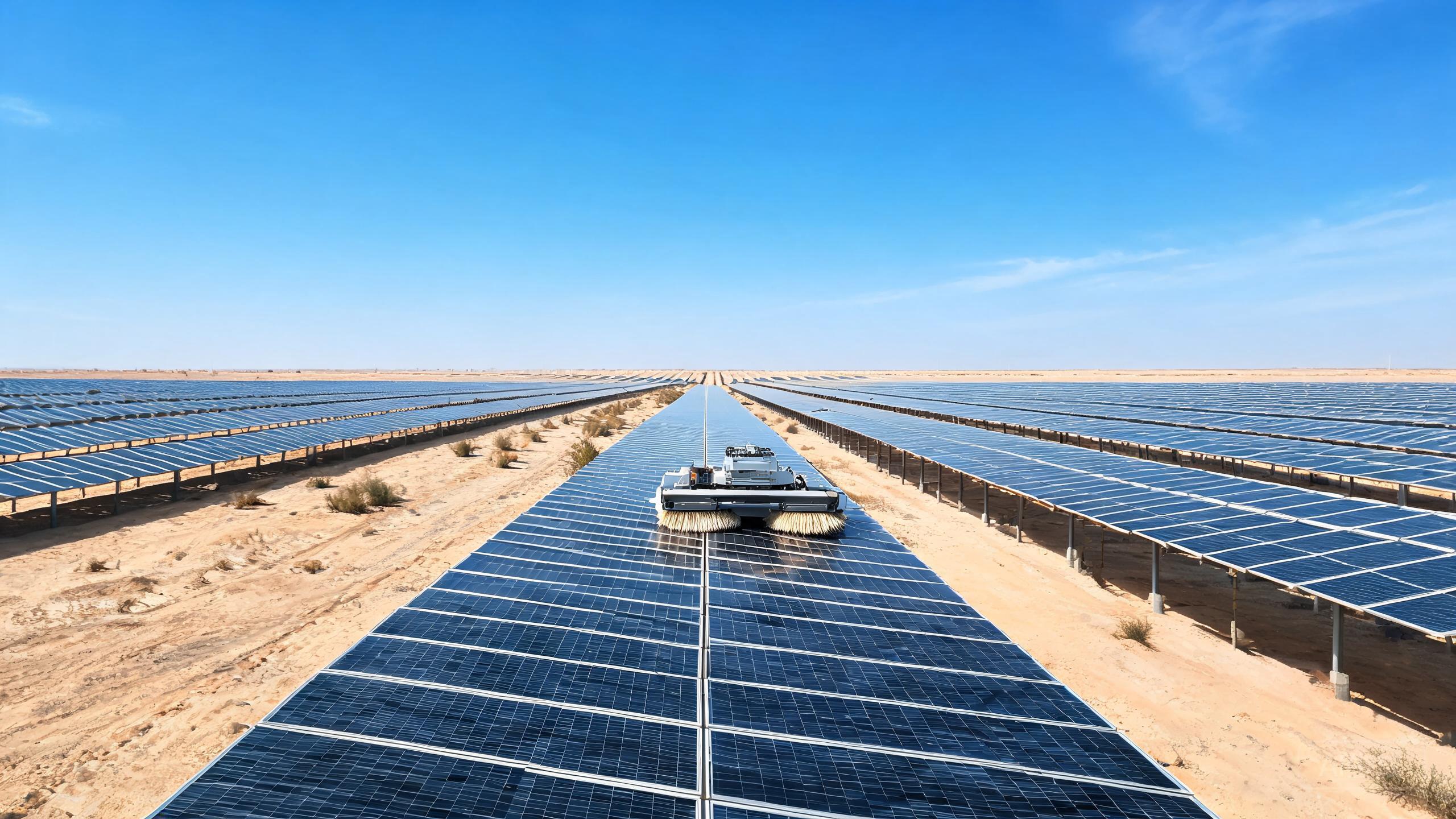
Most reviews of the Neexgent NXR-IV focus on specs, wiring, or price. This one is different: we put the machine through a real cleaning cycle on dusty PV rows and judged it purely on cleaning results. As a flexible wet/dry unit with remote or PLC control, the NXR-IV sits in an interesting spot for O&M teams weighing a waterless solar panel cleaner against a wet system. Below is our field-style breakdown of how it actually cleans, where each mode wins, and what that means for anyone shopping for the best solar panel cleaning robot 2026 has to offer.
Test Setup: What We Measured and Why
We ran the NXR-IV in single-operator mode across dusty panel rows, first in dry mode and then in wet mode, keeping everything else constant. The goal was not to benchmark speed but to answer a practical question: does solar panel cleaning improve output enough to justify the effort, and does the wet/dry switch actually change results? Because the NXR-IV supports both remote and PLC control, we also noted how easily a cleaning pass could be repeated consistently, since repeatability matters more than a single heroic run on utility-scale PV.
Dry Mode: Fast, Waterless, Dust-Limited
Dry mode is the NXR-IV's simplest workflow and the closest thing to a waterless solar panel cleaner in this class. On loose dust and surface grit, it cleared the bulk of buildup quickly and left panels visibly brighter. Where it struggled was cemented dirt and bird residue along frame edges, which a dry pass loosens but does not fully remove. For sites in water-scarce regions, that trade-off is often acceptable, especially when dry passes are scheduled frequently. If your question is does solar panel cleaning improve output, dry mode gives a clear yes on light soiling, with diminishing returns as soiling hardens.
Wet Mode: Better Finish, More Logistics
Switching to wet mode changed the outcome on stubborn soiling. The NXR-IV handled the same rows with a cleaner finish, particularly at edges and on textured dirt that dry passes left behind. The cost is logistics: water supply, refills, and a longer cycle per row. This is the core of the dry vs wet solar panel cleaning debate, and the NXR-IV lets one machine cover both sides so teams can match mode to soiling level instead of buying two systems. That flexibility is genuinely useful for an O&M business running mixed sites.
Cost and Fit for Utility-Scale PV Teams
The NXR-IV sits in a mid-range price band, though solar panel cleaning robot cost varies with configuration, and PLC setup adds engineering know-how. For a growing O&M business, that is a reasonable entry point: one platform, two cleaning modes, and control options that scale from remote operation to PLC integration on automated lines. It is not the cheapest option, but the wet/dry range and integrator-friendly control make it a credible candidate when shortlisting the best solar panel cleaning robot 2026 buyers can deploy across utility-scale PV without rebuilding their workflow.
Our verdict
The Neexgent NXR-IV earns its 8.5 rating on cleaning results, not marketing. Dry mode delivers fast, waterless passes for light dust; wet mode finishes stubborn soiling that dry runs leave behind. The real value is having both in one PLC-ready platform at a mid-range price, which suits O&M teams that want to match cleaning method to site conditions rather than commit to a single approach.