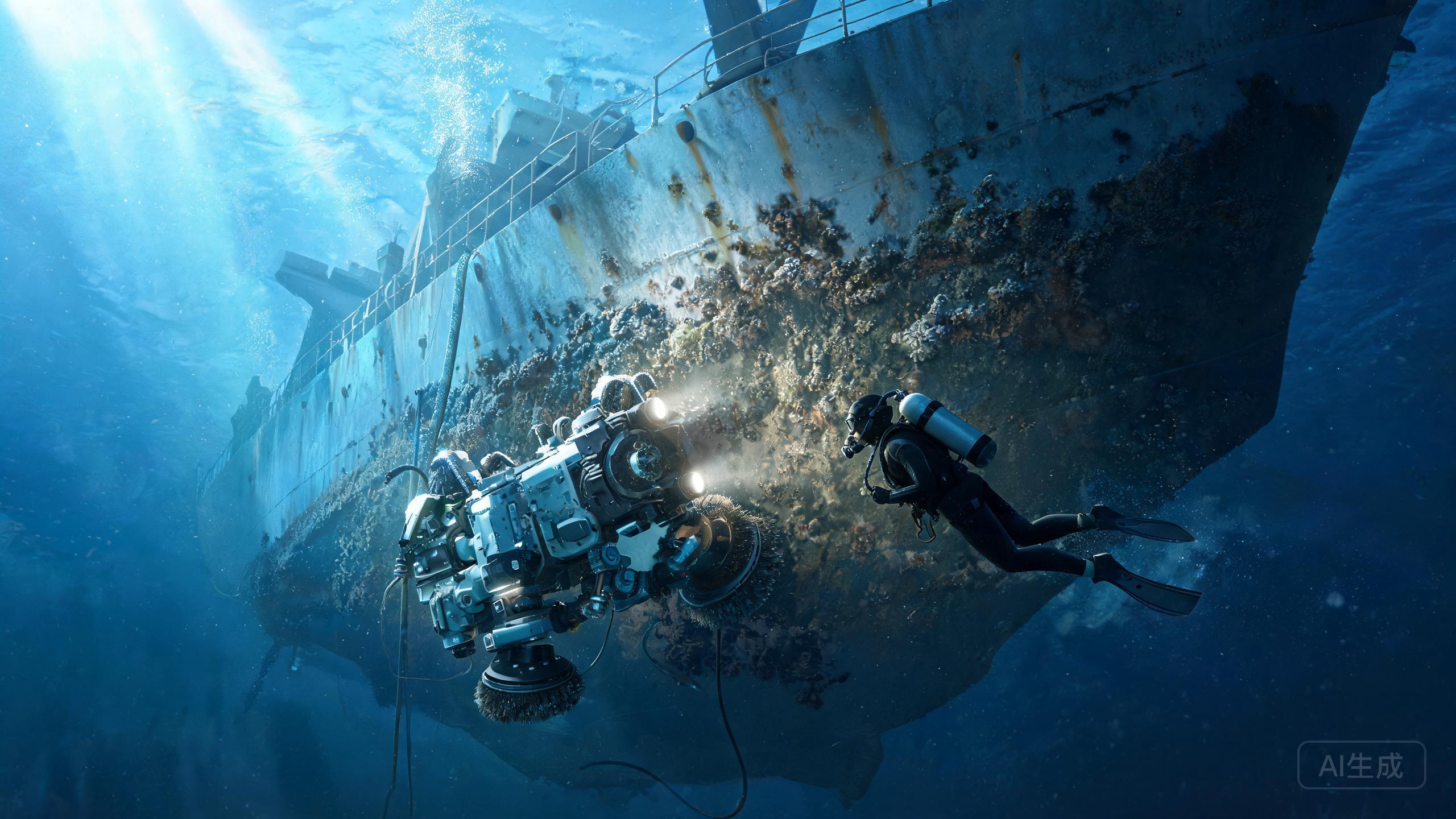
Most ship hull cleaning drone review articles focus on the drone itself. This review takes a different angle: the money. The Nautica Technologies HYDRA is not a single machine you buy and park in a shed. It is a Swiss-built autonomous fleet coordinated by AI, rated 8.3 on our scale, and designed to run continuously, 24/7, with minimal crew. That framing changes everything about how you evaluate it. Instead of asking how fast one unit cleans a hull, operators should ask how a continuously working fleet reshapes the cost of keeping a hull free of biofouling across an entire year. Below we break down the automation-first economics, the operational trade-offs, and who should actually consider this platform in 2026.
Why the Fleet Model, Not the Robot, Is the Real Story
Specs here are deliberately simple: autonomous fleet operation, AI-coordinated control, Swiss origin, continuous 24/7 duty. There is no single-unit hero spec because the value lives in coordination. A traditional magnetic hull crawling robot works one hull at a time and stops when its operator stops. HYDRA is built around the opposite assumption: cleaning never really stops. An AI layer schedules units across hulls and berths, so the fleet keeps working while crews change, weather shifts, and vessels move. That is the core claim of this ship hull cleaning drone review, and it is also the core risk. You are not buying a tool, you are adopting a logistics system. Operators who think in shifts and single-vessel jobs may find the model oversized. Operators who think in fleet-wide uptime will recognize the logic immediately.
Crew Costs, Fuel Savings, and the Biofouling Math
Two cost lines dominate hull maintenance: labor and fuel. On labor, HYDRA's minimal-crew design attacks the largest recurring expense in conventional cleaning. A diver team needs tenders, safety oversight, and downtime between dives; an ROV hull cleaner vs diver comparison usually favors the ROV on safety and repeatability, but still requires a pilot. HYDRA pushes further by removing the pilot from the loop for routine passes. On fuel, the logic is well established: a fouled hull drags, and drag burns fuel. The hull cleaning fuel savings from keeping a hull consistently clean rather than cleaning it in bursts can be substantial over a year, because biofouling regrows fastest right after cleaning. A 24/7 fleet model targets exactly that regrowth window. As for biofouling cleaning robot cost, HYDRA is not priced like a single unit, so the honest comparison is cost per hull per year against diver contracts, not sticker price against sticker price.
Operational Complexity: The Honest Trade-Off
The cons list is short but heavy: fleet-scale commitment and higher operational complexity. This is not a knock on engineering, it is a description of the category. A magnetic hull crawling robot that you own outright can sit idle for months and cost you nothing but storage. A continuously operating AI-coordinated fleet demands scheduling discipline, clear berth access, and someone accountable for uptime. If your vessels are scattered across many ports with irregular schedules, the coordination burden grows. If your fleet runs predictable routes and you control berthing, the model compounds in your favor. The 8.3 rating reflects this split: excellent fit for large, disciplined operators, awkward fit for small or highly irregular ones.
Who Should Consider HYDRA in 2026
This underwater hull cleaning robot 2026 platform makes sense for operators who already think in fleets, already track fuel penalties, and already have the discipline to schedule preventive maintenance. It is a poor first purchase for someone experimenting with hull cleaning automation. The strongest signal is this: if you can describe your hull cleaning plan as a calendar rather than a reaction, HYDRA's continuous model fits. If your plan is a phone call after you notice speed loss, start with a simpler ROV or a service contract instead.
Our verdict
The Nautica Technologies HYDRA earns its 8.3 by being honest about what it is: not a gadget, but a Swiss autonomous fleet with AI coordination, built for continuous 24/7 operation and minimal crew. Judged as equipment, it looks overbuilt. Judged as a logistics system for keeping hulls clean year-round, it addresses the two costs that matter most, labor and fuel, in a single model. For fleet-scale operators in 2026, that is a compelling proposition. For everyone else, it is a clear signal of where hull cleaning is heading.