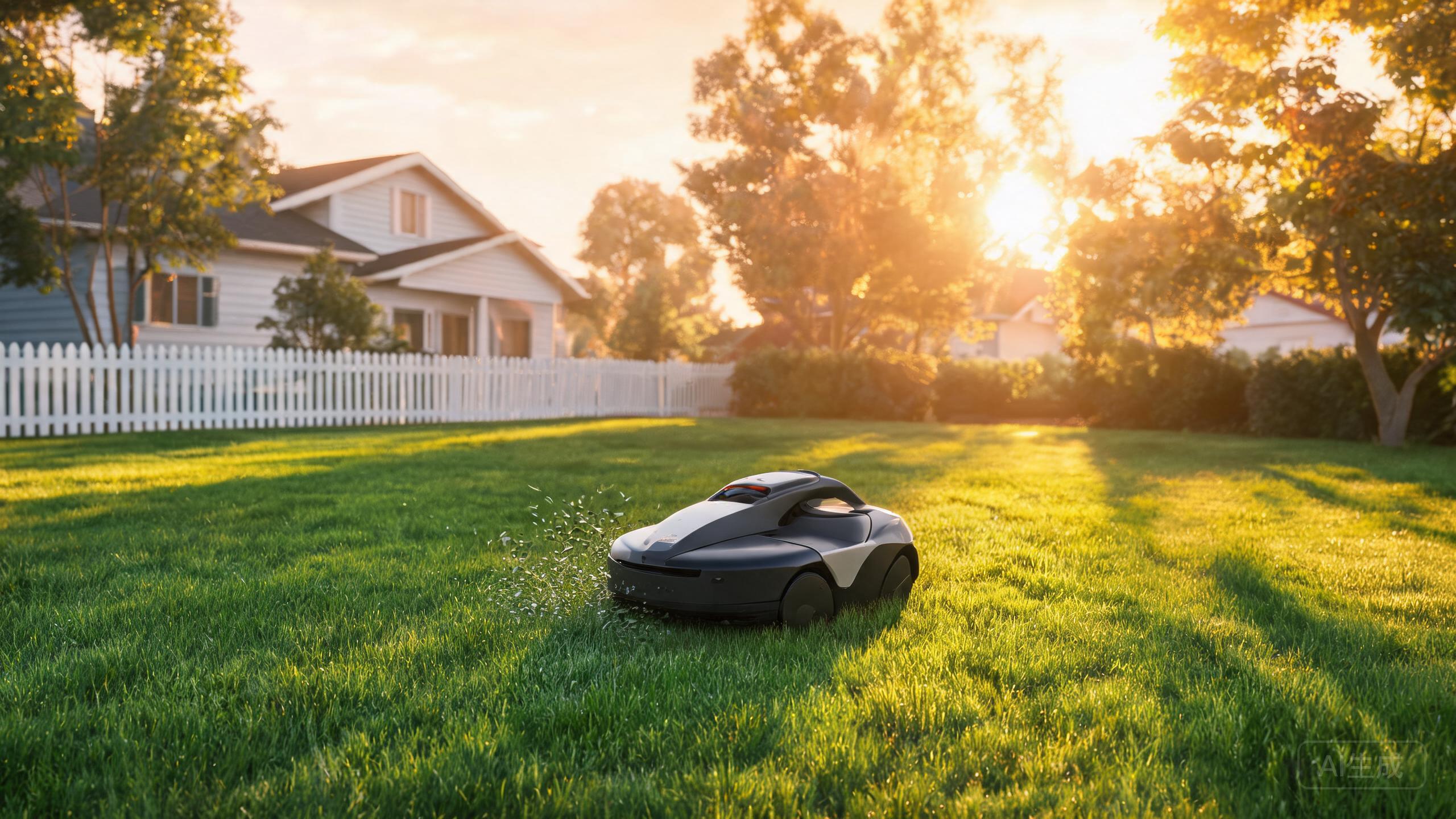
Mulching is the quiet superpower of modern robot mowers. Instead of collecting clippings, a robotic mower snips tiny pieces of grass and drops them back into the turf, where they break down and feed the soil. But not every machine mulches equally well, and the result depends on blade design, cutting frequency, navigation accuracy, and how the mower handles your specific terrain. In this editorial guide, we explain how mulching actually works, what separates a great mulching cut from a mediocre one, and how to match a mower to your lawn. We reference real models from our 2026 rankings, including the ECOVACS Goat A3000 LiDAR Pro, the Mammotion LUBA 3 AWD 3000S, and the Sunseeker Elite X7 Plus Gen 2, so you can see how these ideas play out in practice.
How Robot Mower Mulching Actually Works
A mulching robotic mower uses a spinning blade disc to cut grass into fine fragments rather than long clippings. Because robot mowers cut frequently, often every day or two, they remove only a small amount of growth each pass. That means the fragments are already tiny, and they settle quickly into the canopy instead of clumping on the surface. The key variables are blade sharpness, deck airflow, and cutting height. A sharp blade produces clean cuts that heal fast and resist disease; a dull blade tears grass and leaves it prone to stress. Cutting height matters too: mulching works best when you never remove more than roughly a third of the blade height in a single pass. This is why scheduling matters as much as hardware. A mower that runs regularly at a sensible height will always mulch better than one that runs rarely at an aggressive low setting.
Blades, Frequency, and Cut Quality: What Separates the Best
Cut quality is where the best models pull ahead. In our 2026 testing, the Sunseeker Elite X7 Plus Gen 2 earned its rating of 8.8 largely on cut quality combined with wire-free mapping, which keeps passes consistent and avoids missed strips. The ECOVACS Goat A3000 LiDAR Pro, our 9.3-rated best all-around wireless mower, pairs accurate navigation with dependable mulching across varied lawn shapes. Consistency is the real story: a mower that follows the same lines accurately returns to the same height and overlap, so clippings are distributed evenly rather than dumped in patches. Regularity also reduces the need for bagging entirely. If you run a mulching mower on a sensible schedule, you should rarely see visible clippings, and you gain the soil-feeding benefit without extra work. The trade-off is that you must keep blades sharp and keep the schedule honest; mulching rewards discipline more than any other mowing style.
Matching Mulching to Your Terrain: Slopes, Size, and Navigation
Terrain changes everything. On flat, simple lawns, almost any competent mower mulches well. On slopes and uneven ground, the robotic mower for steep slopes category matters: the Mammotion LUBA 3 AWD 3000S, rated 9.2 and described as best for steep, uneven lawns, uses all-wheel drive to keep blade load and cutting height stable on inclines, which prevents scalping and uneven clipping distribution. Lawn size is the second factor. For a large property, the best robot mower for large lawn should combine enough runtime with accurate mapping so every zone gets regular, even passes; the Yarbo Lawn Mower Pro, a multi-purpose estate robot rated 8.2, targets exactly this kind of workload. Navigation technology is the third. The RTK vs GPS robotic mower debate matters for mulching because positioning accuracy determines overlap consistency: the Segway Navimow i105N, our best RTK value pick at 8.0, and the Kress EyePilot RTKn KR250ES, a security-focused hybrid at 7.3, show how RTK-based systems hold lines tightly. Visual and LiDAR systems, such as the eufy E18 (8.3, minimal-setup visual mower) and the Husqvarna Automower 308V (7.5, AI-vision multi-zone mower), trade some absolute precision for easier setup. Finally, robotic lawn mower installation affects results: a clean boundary map and sensible no-go zones prevent the mower from clipping edges badly or wandering into beds, which keeps mulching tidy. Budget options like the AirSeekers Tron (8.5, best wire-free value) and the Anthbot M9 (7.8, small-yard budget pick) can still mulch well on simple, small lawns if you keep the schedule tight.
Practical Tips for Better Mulching Results
First, set your cutting height higher than you think you need, especially in summer heat; taller grass shades soil and reduces stress. Second, run the mower often enough that it never faces long grass. Third, keep blades sharp and check them seasonally. Fourth, use the mower's zone and schedule features to give high-traffic areas more frequent passes. Fifth, avoid mulching wet grass, which clumps and smears. If you are still comparing machines, read a wireless robotic mower review carefully for real-world navigation behavior, not just specs, and check how each model handles boundaries and obstacles. For most homeowners, the practical winner is the mower that runs reliably every couple of days at a sensible height, because that single habit delivers most of the mulching benefit regardless of which model you choose.
Our verdict
Mulching is less about a single feature and more about a system: sharp blades, frequent passes, accurate navigation, and terrain-appropriate hardware. Get those right and your lawn feeds itself while you do nothing. Use our 2026 rankings as a starting point, match the machine to your slope, size, and setup preferences, and let consistency do the rest.