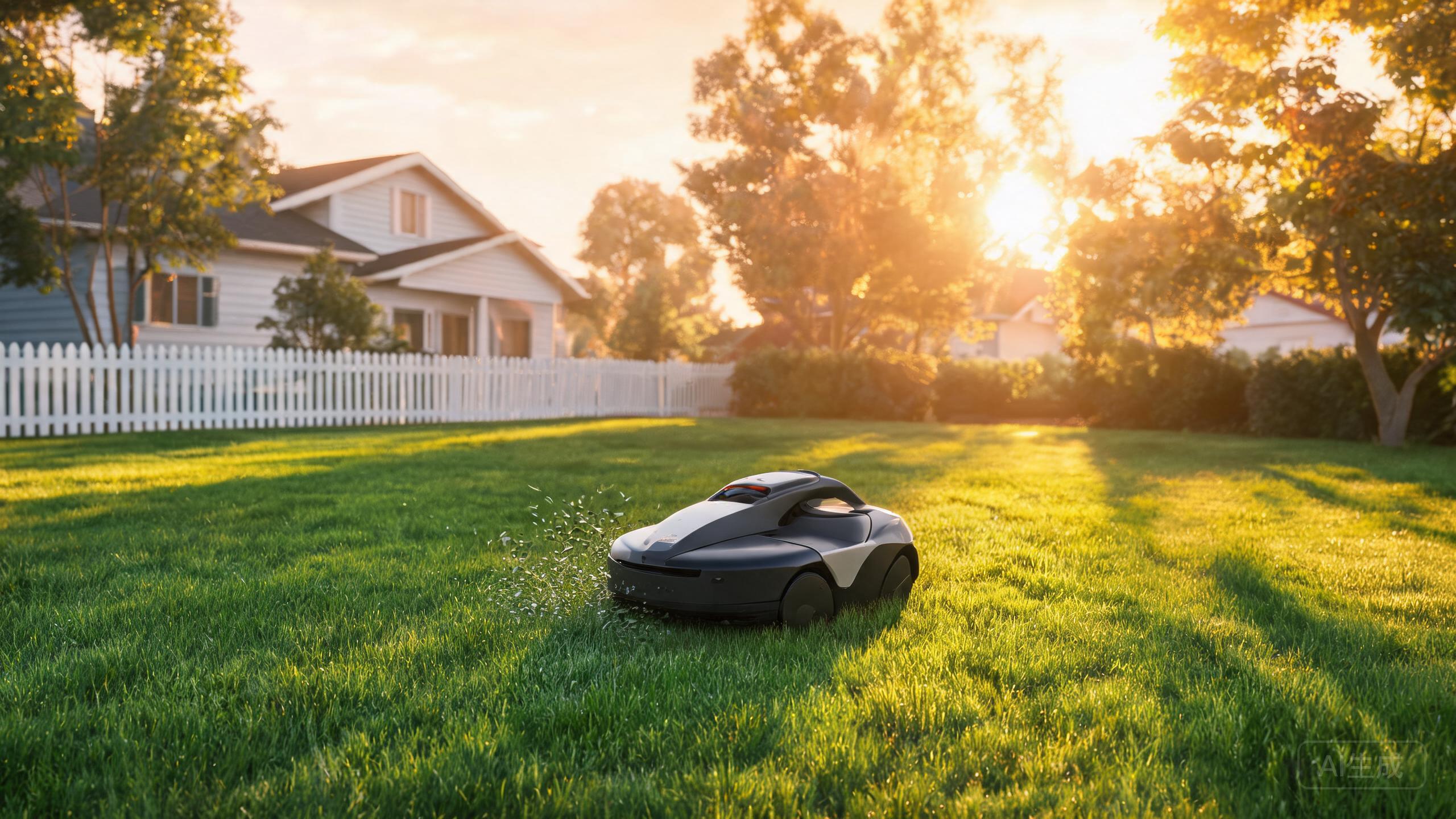
Cutting patterns are the quiet engine behind every good robot mower. Two mowers with identical blades can leave wildly different lawns simply because one plans its routes better. In this editorial we break down how modern robotic mowers decide where to go, why RTK vs GPS robotic mower debates matter, and which models in our 2026 rankings handle patterns best. Whether you want the best robotic lawn mower 2026 has to offer or a budget pick, understanding patterns helps you choose wisely.
How Robot Mowers Plan Their Cutting Patterns
Most robot mowers rely on one of three navigation approaches: boundary-wire systems, camera-based visual mapping, or satellite positioning. Pattern quality depends on how well the mower knows its map. Wire-free models such as the ECOVACS Goat A3000 LiDAR Pro (9.3) build a detailed map first, then run systematic back-and-forth stripes rather than random wandering. The eufy E18 (8.3) takes a minimal-setup visual approach, which is convenient but can produce less uniform stripes on complex lawns. In our wireless robotic mower review testing, systematic patterns consistently reduced missed patches and re-cutting, which saves battery and time.
RTK vs GPS Robotic Mower: Why It Changes Patterns
The RTK vs GPS robotic mower question is really about precision. Standard GPS alone drifts by meters, which forces wider overlaps and messier patterns. RTK correction brings centimeter-level accuracy, enabling tight, parallel stripes and clean zone transitions. The Segway Navimow i105N (8.0) is our best RTK value pick, proving you do not need a flagship budget to get precise patterns. The Kress EyePilot RTKn KR250ES (7.3) pairs RTK with a security-focused hybrid design. Precision matters most on large properties, where drift compounds across long runs.
Patterns on Slopes and Large Lawns
Slope handling is where pattern planning gets physical. A robotic mower for steep slopes must adjust direction, speed and turn radius to avoid slipping and scalping. The Mammotion LUBA 3 AWD 3000S (9.2) is our top pick here, with all-wheel drive that keeps stripe lines stable on uneven ground. For the best robot mower for large lawn coverage, pattern efficiency becomes a battery game: the ECOVACS Goat A3000 LiDAR Pro and the Sunseeker Elite X7 Plus Gen 2 (8.8, best cut quality with wire-free mapping) both favor long, efficient passes over frequent turns. The Yarbo Lawn Mower Pro (8.2) suits estate-scale work, while the Anthbot M9 (7.8) is a sensible small-yard budget pick where simple patterns suffice.
Installation and Mapping Set the Stage for Good Patterns
No pattern algorithm can rescue a poor map. Robotic lawn mower installation and mapping quality directly shape stripe consistency. For wire-free models, place the charging station with a clear sky view if the mower uses satellite positioning, and keep visual mowers' cameras unobstructed. During setup, define zones and no-go areas carefully so the mower does not improvise awkward turns. The Husqvarna Automower 308V (7.5) uses AI vision for multi-zone work, and its pattern quality depends heavily on how zones are drawn during setup. Take the extra ten minutes at installation; it pays back all season.
Our verdict
Cutting patterns are not marketing fluff; they determine coverage, battery life and lawn health. Prioritize precise navigation if you want tidy stripes, choose all-wheel drive for slopes, and invest setup time in a clean map. From the ECOVACS Goat A3000 LiDAR Pro as the best all-around wireless mower to the Mammotion LUBA 3 AWD 3000S for tough terrain, our 2026 rankings reflect real pattern performance. Match the pattern engine to your lawn, and the results will show.