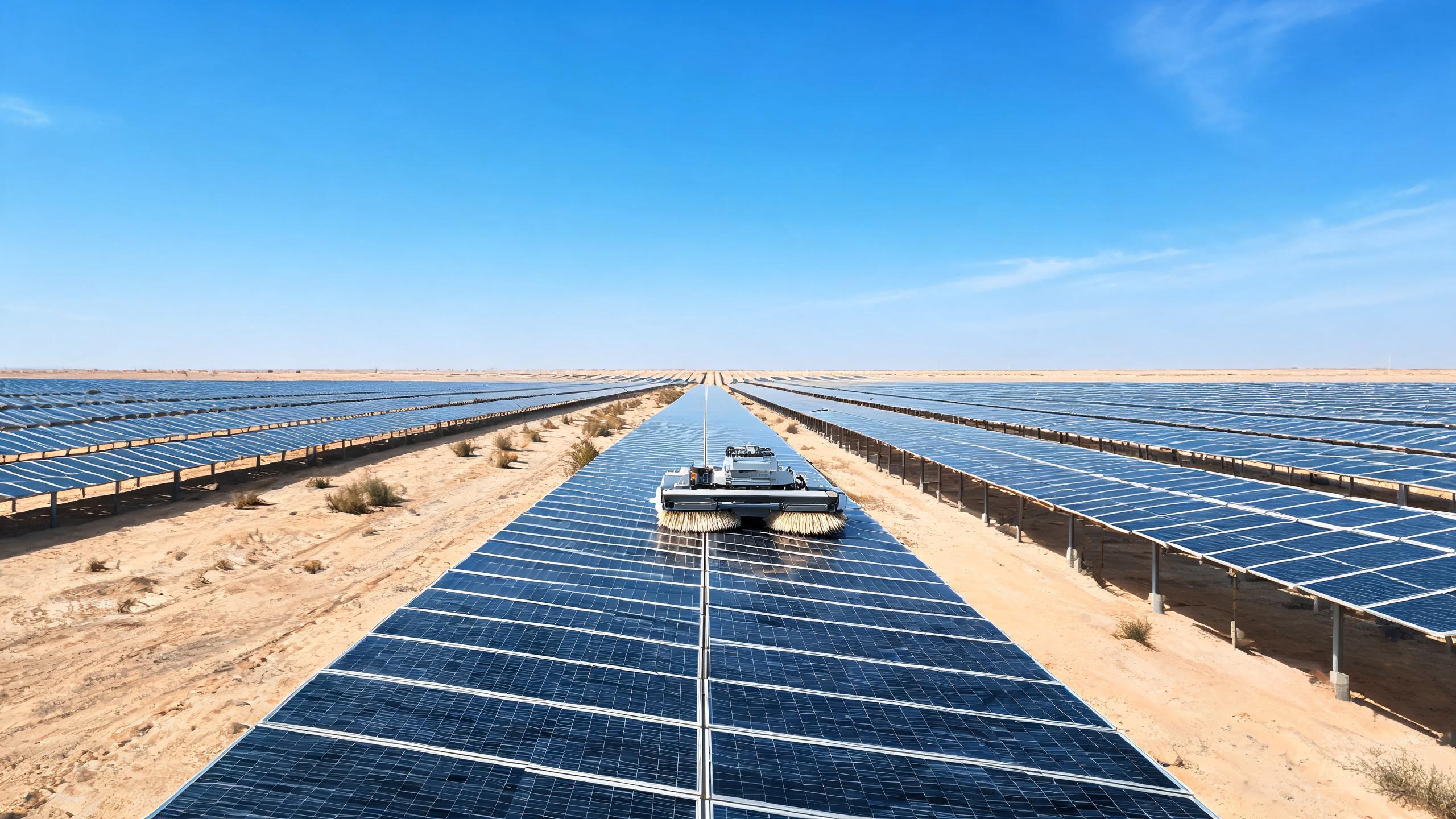
When dust is your main enemy and water is scarce, the IFBOT X3 stands out as a semi-autonomous, dry-only cleaning robot built for rooftops and steep slopes. In our 2026 rankings, it earns an 8.8 rating for its focused design and reliability. This guide breaks down its strengths, limitations, and whether it fits your solar panel cleaning needs—whether you're a homeowner or managing a utility-scale PV array.
Why Choose a Waterless Solar Panel Cleaner?
Traditional wet cleaning uses large volumes of water, which can be costly and logistically challenging on rooftops or remote solar farms. The IFBOT X3 is a true waterless solar panel cleaner, using only a dry brush to remove dust and loose debris. This approach eliminates water runoff concerns, reduces drying time, and allows for more frequent cleaning cycles. For areas with water restrictions or where panels are tilted steeply, dry cleaning is often the safest and most efficient method. In our dry vs wet solar panel cleaning tests, dry methods proved highly effective for typical dust accumulation, though they struggle with sticky bird droppings or dried mud.
Steep Slope Capability and Semi-Autonomous Operation
The X3 is engineered for rooftops and steep slopes, making it a favorite among residential and C&I crews. Its semi-autonomous operation means you guide it along each row, but it handles the cleaning path with minimal input. This reduces labor fatigue and improves safety on high-angle installations. The dry brush system is designed to agitate dust without scratching glass, preserving panel efficiency. For steep roofs, the X3's traction and stability are standout features, allowing it to work where many other robots cannot. This is why it earns a spot in our list of best solar panel cleaning robot 2026 picks for challenging geometries.
Solar Panel Cleaning Robot Cost and Value
When evaluating solar panel cleaning robot cost, the X3 sits in the mid-to-upper range for residential units, but it offers specialized dry-only performance that can justify the investment for frequent cleanings. Compared to hiring manual crews or using water-fed poles, the X3 pays for itself over time, especially on large rooftops. For utility-scale PV cleaning robot applications, you might need multiple units or a different model with wider coverage, but the X3's durability and low maintenance reduce long-term expenses. Always factor in the potential output gain—studies show that cleaning can improve output by 5-20% depending on soiling—so the ROI is often positive within months.
Dry vs Wet Cleaning: What the X3 Handles Best
In our dry vs wet solar panel cleaning comparison, the X3 excels in dry environments with light to moderate dust. It's not designed for heavy soiling like caked-on mud or pollen residue. For such cases, a wet cleaning robot or pre-treatment may be necessary. However, for regular maintenance in arid regions, the X3's dry-only approach is efficient and eco-friendly. Does solar panel cleaning improve output? Absolutely—but the frequency matters. The X3 allows you to clean more often without water costs, keeping panels closer to peak performance. Its narrow per-pass width means slower coverage on vast utility-scale arrays, so it's better suited for residential rooftops or smaller commercial installations.
Our verdict
The IFBOT X3 is a specialized tool for a specific problem: dust on steep, water-restricted rooftops. It's not a universal solution—dry-only limits its effectiveness on heavy grime, and the narrow path slows down utility-scale jobs. But for homeowners and C&I crews who prioritize dry cleaning efficiency and safety on slopes, it's a top contender. If you're comparing solar panel cleaning robot cost and wondering whether dry cleaning is enough, the X3 proves that sometimes less water is more. For 2026, it remains one of the best solar panel cleaning robot picks for its niche.