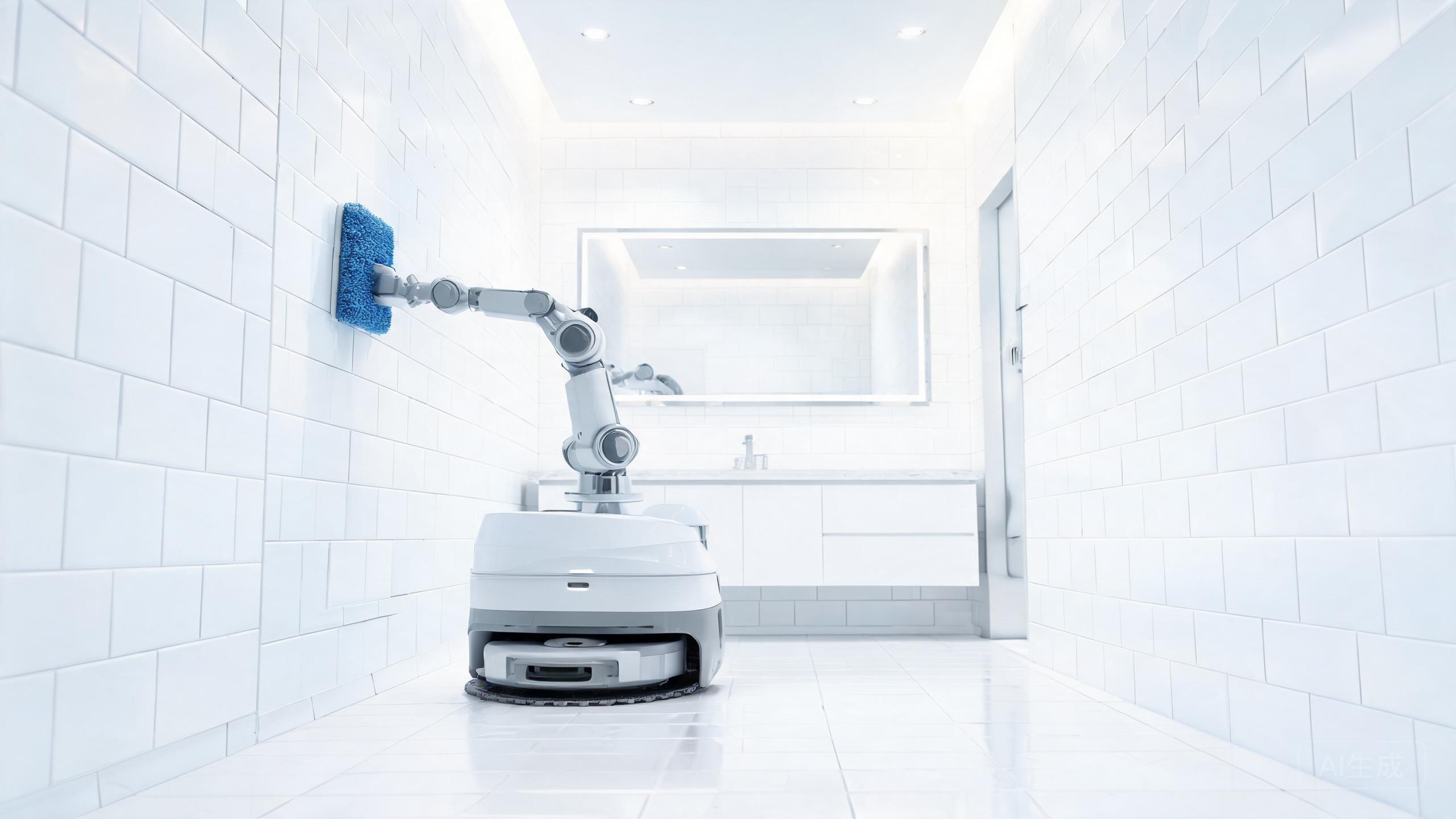
The HiveBotics Abluo Mark 2 arrives as a second-generation restroom cleaning robot 2026 contender, pairing LiDAR navigation with a 6-DoF arm to autonomously clean toilets and urinals. According to HiveBotics, the Abluo Mark 2 refines the coverage and reliability of the earlier M1, making it a notable entry in the autonomous toilet cleaning robot category. In this bathroom cleaning robot review, we break down what the Abluo Mark 2 does, where it fits in commercial restroom cleaning automation, and what buyers should weigh before adopting it.
LiDAR Navigation and 6-DoF Arm: Core Specs
The Abluo Mark 2's headline specification is LiDAR navigation, which maps restroom geometry and guides the unit between fixtures. Combined with a 6-DoF arm, it functions as a robotic arm restroom cleaner rather than a simple scrubber. HiveBotics lists the cleaning targets as toilets and urinals, and identifies this as a second-generation (2nd gen) model. That spec sheet is intentionally narrow: the Abluo Mark 2 is not a general-purpose floor scrubber, but a focused autonomous toilet cleaning robot aimed at the fixtures that dominate restroom labor costs. For teams evaluating commercial restroom cleaning automation, that focus is the point.
Pros: Where the Abluo Mark 2 Excels
HiveBotics highlights four strengths: LiDAR navigation, a 6-DoF arm, toilet and urinal coverage, and second-generation refinement. In practice, LiDAR navigation matters most in restrooms with stalls, partitions, and tight sightlines where camera-only systems can struggle. The 6-DoF arm provides the articulation needed to reach bowl interiors and urinal surfaces, which is why this class of robotic arm restroom cleaner is gaining attention in commercial restroom cleaning automation. The jump from M1 to Mark 2 signals iterative engineering rather than a first attempt, a meaningful signal in a category where reliability determines whether a restroom cleaning robot 2026 deployment survives its pilot phase.
Cons and Adoption Considerations
Two limitations stand out. First, HiveBotics notes that the commercial ramp is ongoing, meaning large-scale deployments are still developing rather than mature. Second, performance is restroom layout dependent: LiDAR navigation needs enough structural consistency for mapping to hold up, and highly irregular or cramped restrooms may require site assessment before deployment. These are not defects so much as adoption realities. Any organization weighing restroom robot cost against labor savings should pilot the Abluo Mark 2 in a representative restroom first, then scale. That approach also gives facilities teams time to integrate the unit into existing commercial restroom cleaning automation workflows.
Who Should Consider the Abluo Mark 2?
The Abluo Mark 2 suits facility operators with repetitive, high-frequency restroom cleaning demands: airports, malls, offices, and transit hubs where toilets and urinals are cleaned on a fixed schedule. Because the unit targets toilets and urinals specifically, it complements rather than replaces floor-cleaning robots. Buyers comparing options in our 卫生间清洁机器人排名 2026 coverage should treat the Abluo Mark 2 as a fixture-focused specialist. If your restroom portfolio is standardized and your labor model is strained, it is a credible candidate for a pilot; if your restrooms vary wildly in layout, budget extra time for site validation.
Our verdict
The HiveBotics Abluo Mark 2 earns a 9.0 rating by doing something specific well: LiDAR-guided, 6-DoF cleaning of toilets and urinals. Its second-generation refinement over the M1 and its fit within commercial restroom cleaning automation make it a strong autonomous toilet cleaning robot candidate. The caveats are real, though: the commercial ramp is ongoing and results depend on restroom layout. For facilities ready to pilot, the Abluo Mark 2 is one of the more credible restroom cleaning robots of 2026.