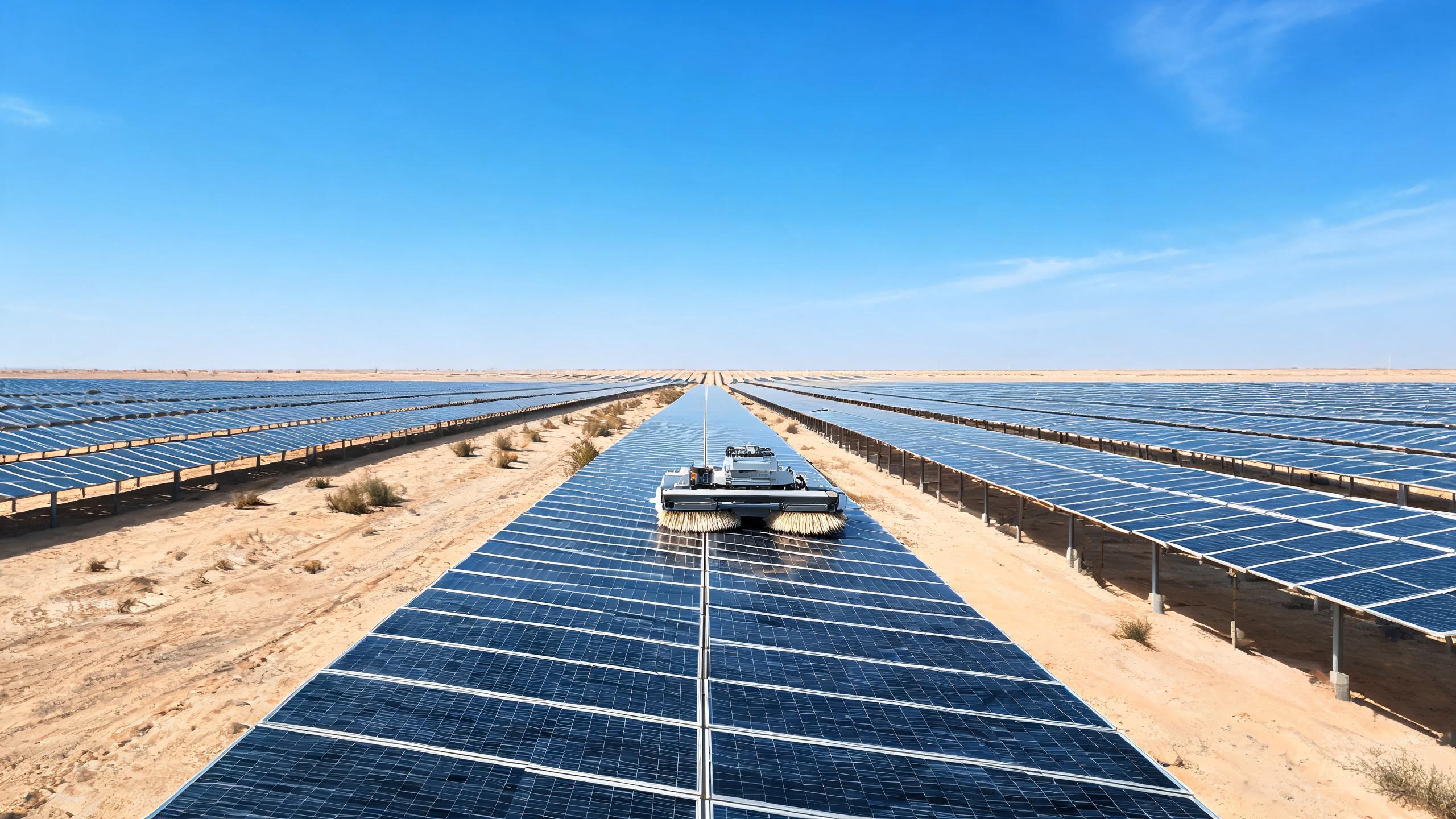
Most GEKKO Solar Fox reviews focus on cleaning performance. This guide takes a different angle: what happens after the invoice is paid. If you run a professional O&M service company, warranty terms, spare-part logistics and operator support decide whether a robot makes money across a fleet or becomes a workshop ornament. Here is how to evaluate the Fox as a long-term asset, and how its after-sales model compares with the wider utility scale PV cleaning robot market in 2026.
Warranty and Support: What Fleet Buyers Should Verify
GEKKO positions the Fox as a service-fleet workhorse with remote control, wet and dry modes, and single-operator deployment. Because the robot is sold through configuration tiers rather than one fixed SKU, warranty coverage can differ between a basic unit and a fully optioned build. Before signing, confirm in writing: the warranty length for the robot body, drive system and remote controller separately; whether wear items such as brushes and seals are covered or treated as consumables; and whether coverage transfers if you resell or redeploy the unit to another site. For a fleet, the more important question is turnaround time. Ask how fast replacement parts ship, whether advance-exchange is available, and whether a loaner unit can be provided during repairs. A robot that cleans well but sits idle for three weeks costs more than a slightly pricier model with faster service. Also clarify who pays return freight and what proof of maintenance is required to keep the warranty valid.
After-Sales Costs and the Real Solar Panel Cleaning Robot Cost
The headline solar panel cleaning robot cost is only the entry ticket. For service fleets, total ownership includes operator training, spare brushes, replacement seals, remote-control batteries, transport cases and downtime. The Fox's wide price span mirrors the configurations fleets actually buy, so two quotes for the same model can differ substantially once options are added. Build a three-year cost model before purchase: purchase price, consumables per 1,000 panels cleaned, expected repair frequency, and the labor cost of one operator per robot. Then compare that figure against the revenue you can bill. If you charge per site visit, faster deployment directly increases margin; if you charge per panel, brush life and water consumption matter more. This is also where dry vs wet solar panel cleaning becomes a financial question, not just a technical one: dry mode reduces water logistics on remote sites, while wet mode may be required for stubborn soiling. A robot that supports both lets one fleet serve more contract types without buying two machines.
Does Solar Panel Cleaning Improve Output — and How Support Protects That Gain
Fleet clients rarely buy cleaning for its own sake; they buy the output gain. The industry question does solar panel cleaning improve output has a practical answer: soiling losses vary by site, climate and season, so the gain must be measured per contract, not assumed. That makes after-sales service part of the value proposition. A robot with consistent brush pressure, calibrated wet and dry modes and a stable remote-control link delivers repeatable results, which is what lets you prove performance to a client and renew the contract. If support is slow or spare parts are unavailable, cleaning intervals slip, soiling accumulates and the measured gain shrinks. When evaluating the Fox against the best solar panel cleaning robot 2026 alternatives, ask vendors for documented maintenance schedules, recommended calibration intervals and response-time commitments. Those details protect the output gain you are selling far more than a spec-sheet advantage does.
Choosing Between Dry and Wet Support Models
For a waterless solar panel cleaner workflow, support needs are simpler: fewer pumps, hoses and water sources to maintain, but brush wear and dust control become the critical service items. For wet operation, add water filtration, seal integrity and pump servicing to the after-sales checklist. The Fox covers both, so your decision is really about which mode dominates your contracts and how well your service partner supports it. Fleet buyers should request a trial period, confirm operator training is included, and verify that consumables can be sourced locally rather than imported per order. Training matters more than many buyers expect, since the Fox is remote-controlled and expects a trained single operator; untrained crews cause more warranty claims than hardware faults do.
Our verdict
The GEKKO Solar Fox is built for service fleets, and its after-sales model should be judged the same way. Get warranty terms, spare-part logistics and training commitments in writing, model three-year ownership costs rather than just the purchase price, and tie support response times to the output gain you promise clients. Do that, and the Fox can earn its place across many sites; skip it, and even a capable wet/dry robot becomes an expensive lesson in procurement.