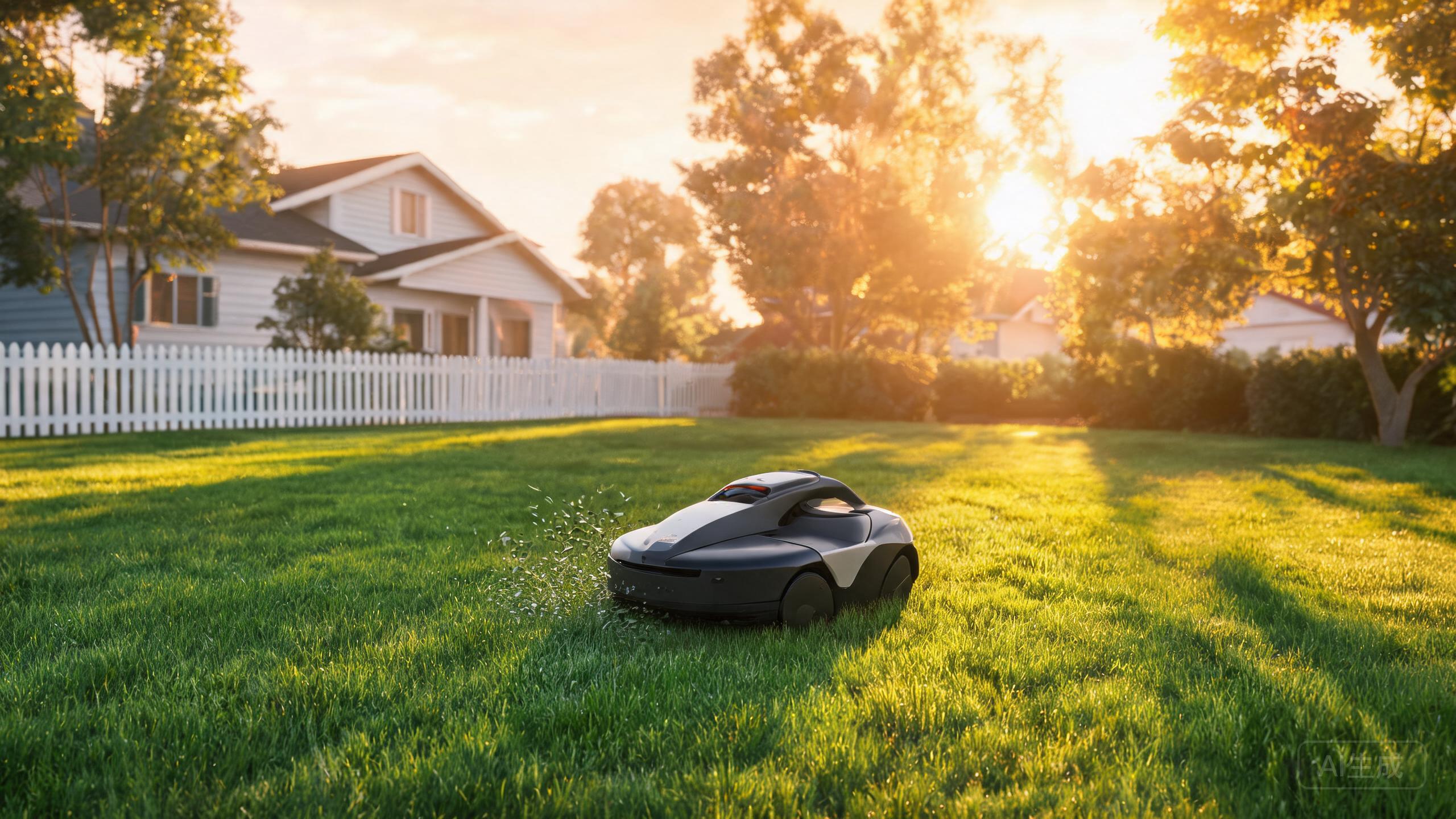
If you are shopping for the best robotic lawn mower 2026 has to offer on a tight budget, the Anthbot M9 keeps showing up next to the same handful of rivals. Instead of another spec sheet, this head-to-head asks a simpler question: for a small, slightly awkward yard, which budget machine actually earns its spot? We put the M9 against the two closest alternatives in its price band — a wire-free RTK rival and a classic boundary-wire model — and scored them on navigation, slopes, setup, and long-term fit.
Navigation: Full-Band RTK + Vision vs. Single-Band and Wired Rivals
The RTK vs GPS robotic mower debate usually comes down to signal stability, and this is where the M9 punches above its price. Its full-band RTK plus vision setup gives it two independent ways to know where it is: satellite correction for position, camera vision for close-range obstacles. The wire-free RTK rival in this comparison relies on a narrower signal band, which means more hesitation under tree cover or beside tall walls. The wired competitor is rock-solid in open lawns but blind the moment a hedge grows over its boundary wire. In a small yard with a shed, a fence, and a couple of flower beds, the M9's dual approach simply makes more decisions per minute — and that shows up as fewer stuck alerts rather than faster cutting.
Slope Handling and Terrain: Where Budget Mowers Separate
A robotic mower for steep slopes lives or dies by traction and route planning, not by raw power. The M9 is positioned for small yards, so treat it as a flat-to-gentle-slope machine: it handles mild inclines and tight turns well, but it is not the pick for a terraced hillside. The wired rival climbs more confidently on sustained gradients because its boundary wire gives it a fixed reference, yet it needs that wire buried along every contour. The wire-free RTK rival matches the M9 on gentle slopes but loses time re-planning when the sky view narrows. For a compact lawn with one sloped bank and a narrow side passage, the M9's vision layer helps it recover from wheel slip faster than either alternative.
Installation and Daily Use: Wire-Free Setup Changes the Math
Robotic lawn mower installation is the hidden cost nobody prices in. The wired rival needs a boundary loop trenched or pegged around the entire lawn, plus a docking station near power — an afternoon job that gets harder with every flower bed and path crossing. The wire-free RTK rival skips the loop but still wants a clear sky view at the dock. The M9 goes wire-free too, and because it is aimed at small yards, its setup is the least fussy of the three: place the dock, let it map, and adjust zones from the app. That matters if you rent, move the dock seasonally, or simply refuse to dig up a lawn you just finished landscaping.
Yard Size, Coverage, and Who Should Actually Buy It
Here is the honest split. If you need the best robot mower for large lawn coverage, none of these three budget machines is the right answer — step up a tier. The M9 is explicitly a small-yard tool, and its cons list says so: limited coverage and fewer premium features. The wired rival covers more ground per charge but costs you installation flexibility. The wire-free RTK rival sits between them, often at a higher price. Choose the M9 if your lawn is compact, mostly flat, and you value a wireless robotic mower review that ends with “setup took twenty minutes.” Skip it if you have acres, serious slopes, or a wishlist of premium automations.
Our verdict
The Anthbot M9 does not win every category, and it does not try to. Against its closest budget rivals, it wins on setup simplicity and obstacle awareness, ties on gentle slopes, and loses on raw coverage. For a small, cluttered, mostly flat yard, that trade is the right one — and it is why the M9 stays on our shortlist for the best robotic lawn mower 2026 buyers can get without overspending.